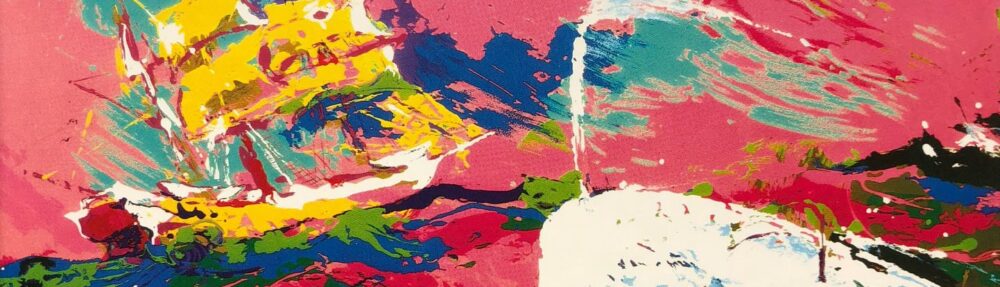
I find myself coming back over and over to chapter 42 “The Whiteness of the Whale” trying to decipher what it could mean. The last paragraph is pointing me in the direction of this whiteness being a kind of blank canvas for us to project our own thoughts and meanings upon. Melville asks “or is it, that as in essence whiteness is not so much a color as the visible absence of color, and at the same time the concrete of all colors; is it for these reasons that there is such a dumb blankness, full of meaning, in a wide landscape of snows– a colorless, all-color of atheism from which we shrink?” (212). What’s striking to me here is the contrast which Melville seems to love: this absence of, yet concrete of all colors, the “colorless, all-color”. It seems that this whiteness is another of the unanswerable questions, ungraspable phantoms of life that we are left to define for ourselves. This “dumb blankness, full of meaning” is nothing yet everything at the same time.
I’m sure there’s a better or more technical term for this, but I’m imagining this whiteness as a zero, its in this neutral state, without any “subtile deceits” of color, but it has the potential to go anywhere? It’s why white can be seen as pure, innocent, noble, even divine, but at the same time there’s this uneasiness because of its association to ghostly apparitions and overall the emptiness that it suggests. The whiteness of the whale suggests more about us than the whale itself, which we see in Ahab’s decision that this whale is everything that is evil as he projects all of his hatred and anger upon it, while others such as Ishmael continue to question the conflicting feelings that this whiteness puts upon us, perhaps a way of showing the indefinite nature of life itself.
This certainly is a chapter to return to, perhaps one of the most important in the novel. You’re right to grapple with it, and I hope you lead us in conversation about it in class!