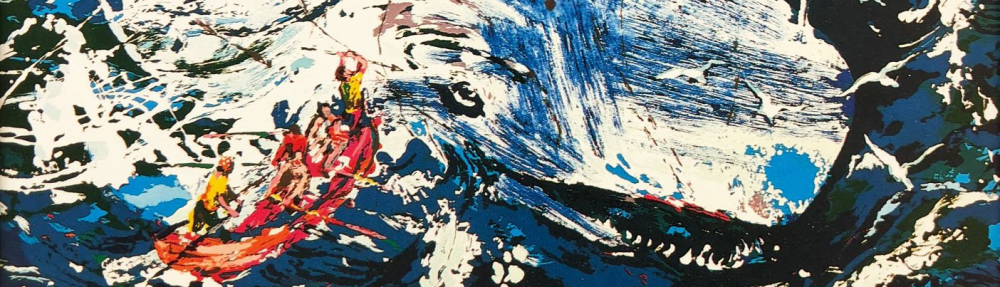
In chapter 35 when describing the languidness induced by the mast-head Melville brings up an interesting word: Pantheist. Pantheist, meaning someone who believes that God is identical with the universe or nature. Immediately I was drawn towards the characterization of Ahab. One who is described as god-like and numerously referenced through the lens of nature: “a maned sea lion, last of the grisly bears, leader of a pack of wolves” etc. He is this pantheistic god-like piece of nature. But in his rallying speech of hate he cries out “I’d strike the sun if it insulted me.” He hates the whale, and he hates nature. But, he is nature. He hates himself, hates what he has become: a beast, a “pegging lubber”. Turned into a beast by a beast. And what a beast it is: “white-headed whale with a wrinkled brow and crooked jaw… three holes punctured in his starboard fluke… and corkscrewed harpoons lie twisted and wrenched in him.” The whale sounds demonic. But it is a true representation of industrialized nature. A beautiful creature that has been ravaged by the need to fuel our fiendish industry. Staked and plundered. And more than a representation of nature, the whale is also a representation of another demonic white beast. One that has taken away mobility and freedom from a group of people as Moby Dick has taken mobility away from Ahab. This frenzied quest of a boat full of savages, “noble savages”, and northern men chasing this “white-headed”, seemingly immortal whale is Melville’s representation of a war against slavery. It is a premonition of the looming civil war. Is it backwards to say then, that the hate in Ahab’s heart is a warning against the hatred of the other or the monsters society creates? Perhaps it is a warning to slave owners, of the hate that grows in the heart of the cruelly treated and the vengeance that they will exact.
Moby-Dick
ECL 522: Fall 2025. Professor Pressman
Another great blog post! You are certainly onto something here: ‘This frenzied quest of a boat full of savages, “noble savages”, and northern men chasing this “white-headed”, seemingly immortal whale is Melville’s representation of a war against slavery.” You could definitely turn this blog post into a midterm essay, and this topic into a final one.