Herman Melville delivers Moby Dick at the most pivotal time in America’s history. It is an era of industrial and societal upheaval. Melville’s whaling novel alludes to a struggle at sea. But the theme of his novel actually resonates right on American soil. His title character, Moby Dick, serves to represent young, naïve America’s two largest pitfalls: industrialism and slavery. The demonic depiction of the “white-headed” whale brings to light these two pivotal matters in 19th century America. The whale represents the industrialization of nature, but also warns of the looming war on slavery. Ultimately, this double-sided drawing surfaces the problems of supremacy. Senseless exploitation leads to one’s own demise.
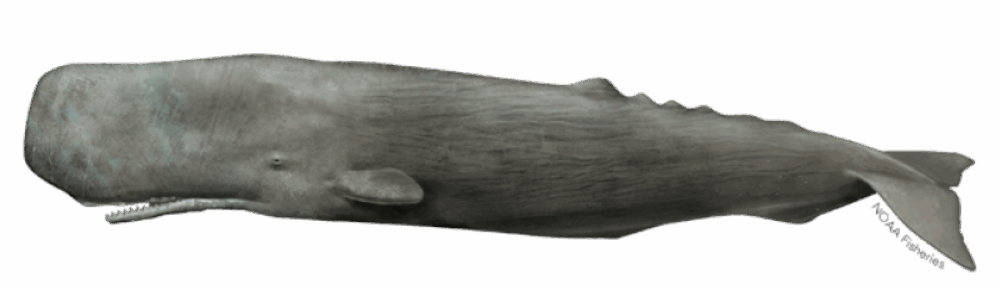
The reader is tantalized for 176 pages before even getting a drop of description of the so-called antagonist. Before this story became iconic and notoriously referenced in pop culture, the reader had no frame of mind for what this whale was going to look like. The 19th century reader, whom the morals are directed at, was blindly thrust into the demonic depiction of this massive “white-headed whale with a wrinkled brow and a crooked jaw… with three holes punctured into his starboard fluke— the harpoons lie all twisted and wrenched in him; his spout… a big one, like a whole shock of wheat, and white as a pile of our Nantucket wool…”(176-177) Ahab vs. the whale is a rendition of man vs. nature. The whale mutilated with harpoons corkscrewed and wrenched in him is a picture of what nature has become at the hands of industrialization. Like the whale, she has been staked and plundered. Men have wrenched borders into the earth, tied her with fences. Train tracks have corkscrewed their way around the country; carrying smog trailing trains from waste ridden city to waste ridden city. Like the whale, nature has become ugly and evil, ravaged to fuel fiendish industries. It has become something that humans must conquer and subdue. Ahab, who seeks vengeance on this horrific creature, is the colonial hero. Ahab has been mutilated by nature and now he hates it. Nothing can soothe him. He feels justified in his revenge since its infliction is upon a monster, just as imperialism is justified. By depicting the whale as an ugly representation of nature, Melville shows the ease in which to be disgusted by nature. To be disgusted by it turns to contempt. Industrialization conditions us, like Ahab, to hate nature. We destroy and dismantle what we hate. We would “strike the sun down if it insulted” us. Yet this revenge becomes Ahab’s own demise. This ugliness is man-inflicted, giving the whale and therefore nature a sense of forgiving qualities. Melville warns his audience that continued egregious acts against the massive, powerful force of nature will not end well. Plundering nature will only drown us in the end.
The heinous rendering of Moby Dick does not only function as an allegory for industrialized nature, the whale is also a representation of another wicked white beast. One that has taken away mobility and freedom from a group of people as Moby Dick has taken away mobility away from Ahab. This frenzied quest of a boat full of savages, “noble savages”, and northern men chasing this “white-headed”, seemingly immortal whale is Melville’s representation of a war against slavery. It is a premonition of the looming civil war. Here is where the coin flips. The whale no longer has the redeeming qualities as its comparison with nature does. It is the beast that Melville portrays, and its monstrosity is self-inflicted. The harpoons twisted into him are representative of the poisoned morals that run deep in the cruel slave owner; wrenched through his very soul. The “wrinkled brow and crooked jaw” personifying the whale, reminiscent of a southern man, furrowing his brow with tobacco in his mouth as he punishes humans he thinks he owns. But what is most notable is, as the description continues, his spout, “like a shock of wheat” and him “white as Nantucket wool”. Wheat and wool, two harvests that are designated to slaves. Choosing wheat and wool in the characterization of Moby Dick explicitly invokes sentiments of slavery. Melville does not let his readers shy away from this reference. Moby Dick is the monstrous slave-owning south. Moby Dick, this massive, white, vicious brute; whom war has been declared on. A war declared by a small interracial, rebel band of knights and squires. Melville’s knights and squires represent a traditional whaling crew. This traditional whaling crew is the framework for the country’s next battle. The born and bred white New England men leading the African, Native American, and Pacific Island men to battle is almost an exact rendering of the union troops. Ahab’s restless vengeance, in this instance, holds a positive connotation. His disregard of monetary losses that the Pequod will endure while not hunting other whales is not unlike the change the American economy will have to encounter with the abolishment of slavery. Ahab’s capital dismissal is one that American’s will have to accept to end the injustices of enslavement.
The sperm whale fishery, one of the first things that constitutes America in its youngest days, is a brilliant way to present the nation with a truly American novel. But taking the beast of a whale and thrusting it into the nation’s most pivotal issues in history is absolutely profound. In presenting his audience with Moby Dick so vividly and demonically drawn out, Melville’s reader is struck with loathing. Whether it be an initial disgust for nature or contempt for the white whale the allegories are clearly present. In this focus Melville critiques the absolute supremacy that industrialization or the slave trade enforces. He warns America that dominion over nature inflicted by industrialization will go awry. Eventually nature will prevail. Parallel to this, slavery, if it continues on, will incite a war. Cruelly produced hatred will lead to violence, and America is about to face its terrible, sanguinary white whale. Melville uses the American trope of the whale fishery to warn Americans of the dangers of absolute supremacy, whether it be over men or nature.