Ahab’s biblical mirrors to king Ahab, is a humbling reminder that men can be abandoned, or punished by god. Despite the social constructions of hierarchy and power, men can still be the victims of the fragile patriarchal and monarchical structures they have created. The language Ahab uses to describe himself and his mission explores how despite his charade as the maniacal ruler of the Pequod, he was deeply wounded when he was scorned by God, or Moby Dick, so much so that his soul, his humanity, is in an altered state. The rage that fuels him and his newfound willingness to scorn and attack God, or nature, convey the fragility and desperation of men in power when their patriarchal worldview is threatened.
In Chapter 37, Sunset, he finds a frigid comfort in the security afforded to his position as Captain, which in turn, validates the prophecy that he previously attempted to avoid comparisons to. He muses about the weight of the ‘crown’ he wears: “‘Tis iron –that I know–not gold. ‘Tis split, too–that I feel; the jagged edge galls me so, my brain seems to beat against the solid metal; aye steel skull, min; the sort that needs no helmet in the most brain-battering fight.” Here we have insight into what continues to separate him from the common man, what excuses he tells himself to justify his remaining captain, a position above all other men on board. He is cut from a different cloth, as stated in previous chapters, he too believes he is Ungodly, and Godlike. He is made of Iron metal, and unkillable, but as he states, this position is in direct contrast to his nature.
Ahab has lost all connection and appreciation of nature: “ Oh! Time was when the sunrise nobly spurred me, so the sunset soothed me. No more. This lovely light, it lights not me; all loveliness is anguish to me, since I can ne’er enjoy it. Gifted with the high perception, I lack the low, enjoying power; damned, most subtly and most malignantly! Damned in the midst of Paradise! (182)” He is Surrounded by the beauty and splendor of the open ocean, which seems to have been his heaven on earth, his paradise, but he can enjoy none of it. Ahab is like a dead man walking. He is completely disconnected from God and fueled only by anger and rage, which is focused on Moby Dick. Because his revenge against Moby, is an afront to all nature, he can no longer rejoice and partake in it’s beauty.
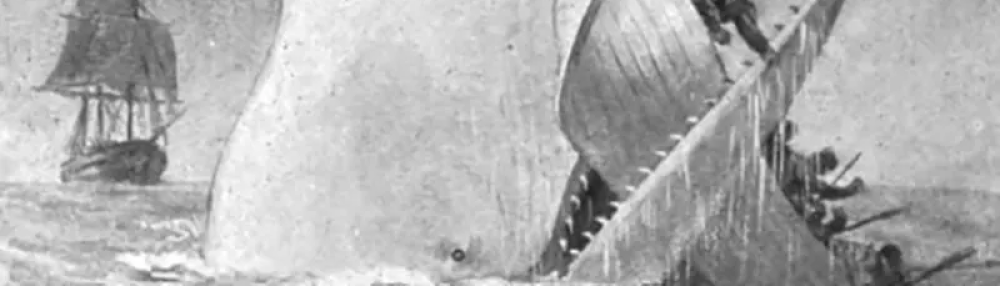
Ahab seems to still be surprised that he was removed from his position at the top of the food chain: “it was Moby Dick that dismasted me, Moby Dick that brought me to this dead stump I stand on now(177).” Even though he has long since physically recovered from his injury, and embarked on this new voyage with the sole mission of revenge, he is still somewhat stupefied from the idea that he was humbled in what he excelled at, hunting whales. Ahab’s mission to kill Moby dick, is a mission to dominate God through his attempt to triumph over nature. Not only does he proclaim to see out the prophecy of his own doom, but he continues to scorn god by stating: ““The prophecy was that I should be dismembered; and – Aye! I lost this leg. I now prophecy that I will dismember my dismemberer. Now then, be the prophet and the fulfiller one. That’s more than ye, ye great gods, ever were(183).” By describing losing his leg to the whale as ‘dismasting’ and ‘dismembering,’ we understand that this act by the whale, or by god, threatened his masculinity. His acts of madness, his exertion of force amongst the crew, and intimidation of Starbuck, are paltry attempts by him to restore his masculinity and power through his position at the top of the hierarchy. Starbucks questioning of this mission means nothing to him, when he has already been visibly humbled by nature.
The biblical comparisons between the doomed King Ahab, the lamentation of the natural, and repetitive emphasis of his dismemberment, serve to emphasise the spiritual fall from grace he has experienced, as well as his disenchantment with worldly conventions of rank, masculinity, and patriarchy. They become only tools for revenge. His crew have a right to feel fearful of him, as his dismantled preconceptions of the world and what he was owed, as a captain, as a strong and virile man, have now been dismantled by a whale. His revenge is not rooted in redeeming himself, or a position in the larger world structure that he no longer believes in, rather he has accepted he has one foot in the grave, and is intent on taking the whale, and his crew with him, as a final hurrah in the face of God. A world that no longer serves him, a man of formerly famed prestige, is not one that he cares to take pleasure in.