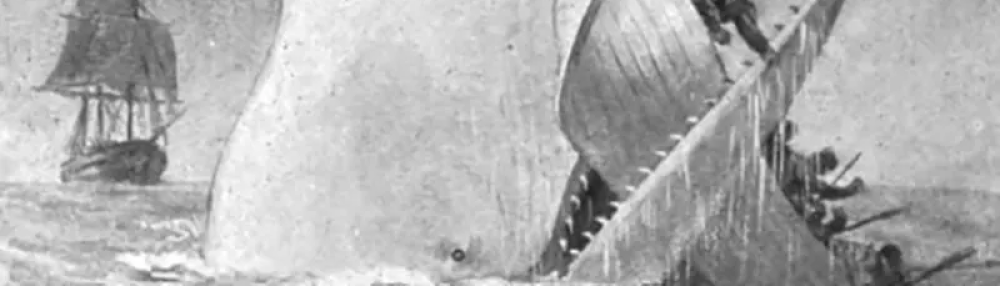
In his 2013 essay The Blue Humanities, John Gillis writes about the seemingly profound connection between modern Western culture and the sea. He writes, “The sea lurks in the imaginations of millions, if not billions, of people who will never test its waters. It is forever in our dreams and nightmares…” This line resonates with me on many levels. It broadly captures a paradox that speaks deeply: as our direct interaction with the sea becomes rarer, fewer people make their living from it; it gains a symbolic presence instead. For me, this mirrors how we often romanticize or maybe mythologize experiences that we have grown disconnected from.
I think that Gillis’s observations throughout his article perfectly capture the transition many of us have made: the more removed we become from it, the more the sea inhabits our dreams, our art, and our sense of wonder and curiosity. There’s also a psychological aspect to this: the more we lose direct contact with something, the more room there is for our imagination to fill in. The sea becomes less a physical place and more a canvas for freedom, or danger, depth, and mystery. Gillis points out that for much of Western history, writers and artists hardly looked at the water at all. Instead, it was just the gap between coasts. A space one had to cross in order to reach land. Artists painted the boats or animals within the waters, but not the waters themselves. Only when people no longer had to live on or by the ocean daily did it seem to become visible in new ways.
Another passage that struck me comes when Gillis writes: “Pristine nature, now in short supply in industrialized heartlands, found refuge in the oceans, while the mystery once associated with terra incognita relocated to the deeps. Simultaneously, the sublime, previously associated with mountains and forests, came to be associated with wild water.” This moment helped me to see how cultural ideas about beauty, wilderness, and awe are not fixed; they actually do shift as our environments change. Once people had cut down forests, climbed mountains, and mapped the land, the mystery they so desperately wanted was no longer available, so it had to be sought elsewhere: the sea.
I find this meaningful because it speaks to the way humans seem to always be searching for spaces that remind us of our smallness. I have the same feeling when standing next to the ocean—that feeling of insignificance but amazement. Gillis’s point helped me see that the sea is not just a physical reality but also a vessel for what we may have lost on land. The need for untouched beauty and mystery seems to stay with the ocean.
Wonderful post, Aurora. You nicely build an interpretation from the reading, showing us where you found inspiration and pause. And you give us thoughts to engage and consider, both from Gillis and yourself. Nicely done.