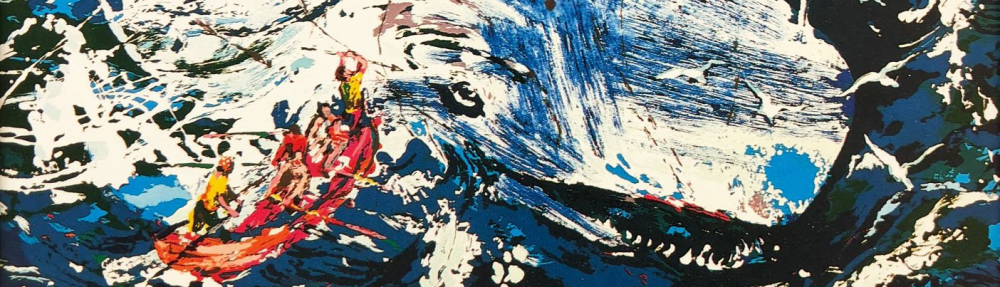
Just reading the title of this article, I was already curious on how the use of “poetics” would be specifically applied to the study of water. I figured, since the ocean is often associated with the unknown and undiscovered, that its metaphorical sense was solely the reason to apply poetics. However, this article redefined the use of poetry as “powerful tools…because poems originate in and are directed to individual humans while also imagining vaster scales” The multiple ways one can interpret a poem creates a natural fluidity that coincides with the ever-changing nature of water in all forms. This free-framing mindset helps to break away from the confinements of categorization. Of course, poems can be categorized but their interpretation and point can differ vastly depending on who is reading it, when they’re reading it, and how they’re reading it.
My favorite example came from the article’s analysis on Hamlet, regarding the scene where two characters are pondering about the clouds in the sky. “The hybridization that Polonius accomplishes as cloud-reader, in which he starts with an initial identification, camel, then bends it into two new forms, weasel and whale, essentially follows a hybridizing theory of interpreting forms of water.” One character interprets the sky differently from the other, much like how the sea can simultaneously mystify and terrify. This scene encapsulates the ideal that water defies categorization—yet it is an essential and ever present aspect of our human lives.
Gillis once described the coastline as “humankind’s first Eden,” so now I wonder—is the sea the place where we were to be cast out from Eden? Or is the Sea itself Eden, and we have cast ourselves out of it.