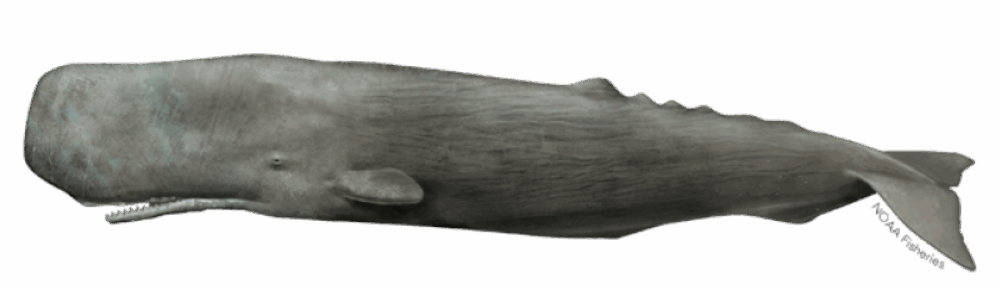
When I first read this book, I remember skimming through the “Cetology” chapter, disregarding it as one of Ishmael’s many ramblings because I was bored, annoyed, confused, and didn’t “get it”. Admittedly this chapter, and a large chunk of this book, still maintains those qualities but that’s exactly the reason why I wanted to dissect some of the quotes in chapter 32. Before providing us with this makeshift dictionary on whales, Ishmael says “I promise nothing complete; because any human thing supposed to be complete, must for that very reason infallibly be faulty” (147). Having discussed his willingness to change his mind about Queequeg and witnessed his desire to continue to learn about the world, this seemed like a very Ishmael thing to say. By preceding with this, he shows us that “any human thing” should always remain open to change in order to progress/grow; to claim completion is a disservice to the very nature of being alive, for to live is to change. Our ideals, perspectives, values, our LIVES are not set in stone, we should constantly evolve and learn from past experiences lest we be faulty by denying our incompletion. It’s a very fitting contrast to Ahab whose “infinity of firmest fortitude” and “fixed and fearless, forward dedication” keeps him on this path, uncaring for anything else as his mind is set on nothing but destroying Moby Dick (135).
The chapter ends with Ishmael’s “cetological System standing thus unfinished, even as the great Cathedral of Cologne was left, with the crane still standing upon the top of the uncompleted tower. For small erections may be finished by their first architects; grand ones, true ones, ever leave the copestone to posterity. God keep me from ever completing anything” (157). Again, the value of leaving things unfinished is shown by Ishmael here; it also shows how his meeting with Queequeg changed his whole attitude towards life, in chapter 2 he was saying “it’s too late to make any improvements now. The universe is finished” (12). Ishmael is showing us how vital it is to change our minds and accept the incomplete nature of life. We can’t have a complete dictionary of these whales, and there is no definitive description of how to live. They’re meant to be interpreted in many ways, added upon by each generation and their encounters; any reading with one singular message would simply be propaganda (this last part doesn’t really make sense in this context but I just wanted to add it because I’ve been thinking about this since our professor said it).
Hi Diego!
I really like how you tied Ishmael’s refusal to “promise anything complete” to his openness to change because to me it feels like one of the most human things about him. I also think your contrast between Ishmael’s flexibility and Ahab’s stubbornness captures the moral tension of Moby-Dick perfectly. Where it seems like Ahab is fixed on one goal, Ishmael constantly questions and revises his understanding of the world, even when he admits confusion or failure. That humility gives the book its depth; it’s not just about the whale, but about the impossibility of ever “finishing” our search for meaning.
I especially liked your point about incompleteness being a sign of growth rather than weakness! Ishmael’s unfinished “Cetology” feels symbolic of how the novel Moby-Dick itself resists closure: it’s chaotic, sprawling, and full of contradictions, just like the world it describes. Your reading helped me appreciate that what once felt like “rambling” or a little boring might actually be Melville’s way of showing how truth can’t ever be fully categorized or contained. Really good post!!
Hi Diego! I lovee how you involved the quote about leaving things incomplete with ones ability to change/reframe their world views. In a society that sees incomplete as a ‘failure’ or ‘giving up’, you pointed out how Moby Dick reframes incomplete in a positive context, that we as people should strike to be incomplete because the alternative means we are done understanding (and honestly living). I got a new interpretation of the cetology chapter here, it was a little boring for me when I first read the chapter but you did a nice job of pointing out how whales have no “definitive description on how to live.”
Wonderful Long post and comments on it! Indeed, you have the foundation for a midterm essay here. You have the kernel of a thesis right here: ‘Again, the value of leaving things unfinished is shown by Ishmael here; it also shows how his meeting with Queequeg changed his whole attitude towards life, in chapter 2 he was saying “it’s too late to make any improvements now. The universe is finished” (12). Ishmael is showing us how vital it is to change our minds and accept the incomplete nature of life. We can’t have a complete dictionary of these whales, and there is no definitive description of how to live. ” I would just suggest that you argue that the novel is showing us, via Ishmael– but you are right about the So WHat– the importance of incompleteness and of changing our minds. Remember that wonderful Emerson quote that I share about “consistency is the hobgoblin a small minds” 🙂