Week 8: Chapter 36

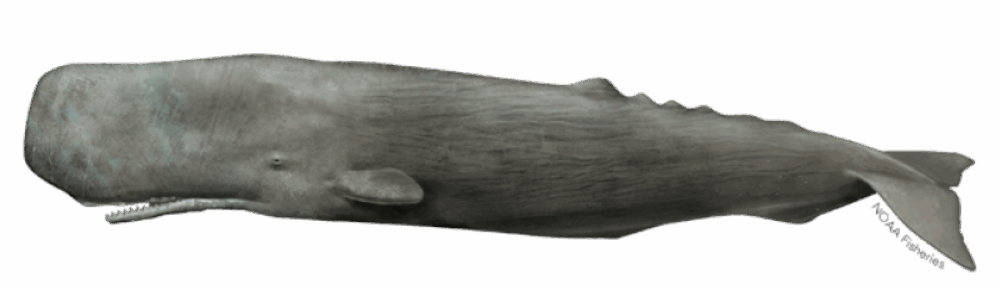
This week’s chapters of Moby-Dick were some of the most challenging, but exciting chapters for me. As we finally dive into life on the Pequod, I have found it exciting to learn more about sailing, whaling, and even discovering the ways I have formed opinions on certain aspects of life at sea without ever realizing.  The chapter that I found myself constantly being pulled back to was “The Quarter-Deck” where readers finally get a closer look at Ahab, including his intention and motivation for this voyage. This chapter made me think deeper on nature and the influence that humans have on something that is rather innocent. Ahab hypes up the men for their voyage of getting his revenge on the whale that took his leg, he states “And this is what ye have shipped for, men! To chase that white whale on both sides of land, and over all sides of earth, till he spouts black blood and rolls fin out” (177). Within Ahab’s long winded speech Melville turns the white whale into a symbol of vengeance, taking something of nature and demonstrating how humans often create their own meaning that turns violence onto something rather innocent. It feels that Melville is proving a point to readers by showing us how humans can turn nature into a reflection of their own fears and need for control by creating this thought process that justifies their actions. The white whale is simply in its home and is constantly being chased and hunted, later we find out that Ahab was going after the whale with a knife which is when his leg gets taken. However, through this speech Ahab makes it seem as though the whale had done this horrific thing, when in reality it has been hunted by countless humans and seemed it might be tired and pissed off over constantly being on the lookout. Later in that section, Starbuck has another quote that stuck out to me, stating “Vengeance on a dumb brute!… that simply thee from blindest instinct! Madness!” (178). Melville adding this demonstrates how quickly people are to follow one another without critically thinking for themselves. Starbuck points out that the white whale is simply a “dumb brute” that is acting out of pure instinct and not attempting to be violent. His reaction to Ahab calls out both the captain but also the reader on how insane it sounds to seek destruction against nature. With this chapter it felt that Melville was challenging readers to think deeper on the effect that we have on nature and to take a step back to reflect on how quick humans are to destroy something they can’t understand.

The Ramadan

Throughout our readings so far we have witnessed a relationship build between Ishmael and Queequeg. As they grow closer Ishmael accepts Queequeg for who he is and even starts thinking of Christianity through a new lens. However, in chapter 17 Queequeg is participating in Ramadan, he sits in the middle of the room holding Yojo on top of his head all day until sunrise the next morning. Ishmael tries to get him to stand, eat, and sleep but none of those things are important to Queequeg because he is practicing his religion. This is when we see Ishmael take a step back from his accepting behavior and begin to feel as though he must save Queequeg, “I have no objection to any person’s religion…But when a man’s religion becomes really frantic;… then I think it high time to take that individual aside and argue the point with him” (94). The inclusion of this chapter by Melville is extremely important as a way of demonstrating the truth behind the thought process of people during this time. Christianity was not seen only as a religion, but rather as almost a fact and universal truth. The showing of pure hypocrisy during this passage was definitely a smart choice by Melville. The passage starting off with Ishmael saying he does not judge but then he goes straight into judging was possibly a way for Melville to show him as an unreliable narrator at times? To Ishmael, his thought process makes complete sense, but to readers his ideas being completely hypocritical is obvious. 

Ishmael even decides he must have a conversation with Queequeg simply because he believed it was, “bad for health;useless for the soul” (94). This again demonstrates how much any religion that was not christianity was seen as completely far fetched and ridiculous. Ishmael feels like he needs to teach Queequeg and explain religion to him, when Queequeg has his own beliefs and has not tried to force them onto Ishmael. Melville is asking readers to have an open mind and realize that just because someone has different beliefs does not mean they are wrong or ridiculous for their way of living. 

Another quote from these pages that stuck out to me was, “he no doubt thought he knew a good deal more about the true religion than I did” (95). This part of the passage definitely supports everything that I have noted earlier in this blog. However, it also got me thinking about everything Melville could be using this passage to convey to readers. One thing that came to mind is that he might be showing that change isn’t linear. Ishmael’s ideas about religion are not just his own, the majority of the people during this time thought this way as well. Maybe this is a way for Melville to show that changing those ideas takes time and true effort? This is something I found extremely interesting and I will keep this idea in mind as we read more of the novel.

Ishmael and Queequeg

While reading chapters four through twelve of Moby-Dick the development of friendship between Ishmael and Queequeg was extremely notable. The growth of understanding and friendship between these two characters seems rather abrupt, however, it was refreshing to see two people from rather opposite backgrounds begin to bond and respect each other. Throughout chapter three of the novel, we see Ishmael do anything in his power to remove himself from Queequeg path before he ever meets him. However, once the two meet this feeling of understanding begins and really transforms in chapter ten. Ishmael’s open mind towards Queequeg was fascinating because of the ways it challenges what is considered acceptable in American society during these times. The men are drastically different, but those factors did not deter Ishmael, they made him curious, “I began to feel myself mysteriously drawn towards him. And those same things that would have repelled most others, they were the very magnets that thus drew me” (Melville 57). Within Melville’s society, it had become far too common to judge someone immediately based on whether they came from a different race, culture, or religion. However, this is his way of inviting us to be curious and learn about others before joining in on the close-minded ways of judging before we understand. Through their relationship, Melvillie is showing more than just two men becoming friends, he is exploring how people from different backgrounds can care for each other if they allow themselves to open their minds. 

Ishmael and Queequeg become friends despite their different upbringings, but Ishmael is also shown understanding and respecting Queequeg’s culture. One way that this is shown in the novel is after they spend time reading and smoking together, their friendship deepens, it states, “he pressed his forehead against mine, clasped me round the waist, and said that henceforth we were married; meaning, in his country’s phrase, that we were bosom friends; he would gladly die for me if need should be” (Melville 57). This passage holds its importance with Melvillie’s word choice. Ishmael acknowledges that the showing of intimacy from Queequeg, such as a kiss on the forehead along with the term “married” is simply his way of saying they have become very close friends within his culture. Melville expands on the idea that within American society these gestures would be seen as way too quick and should be signs to further distrust someone. However, Ishmael’s understanding and respect for Queequeg and their newfound friendship allows him to put aside the toxic idea that American/Christian thinking is the only valid way. While reading it felt like Melville is calling out society for their idea of savage vs civil and how quickly everyone is to judge others that don’t conform to their ideas, but completely ignore the violence and wrongdoings of those that are like minded. This reading was great and I am extremely interested to see where Ishmael and Queequeg’s relationship is taken throughout the novel.

Chapters 1-3

The journey of reading through the first three chapters of Moby-Dick was certainly chaotic but also amazing! The way that Melville writes was definitely something I had to get used to, he often goes into long explanations that left me confused until going back and rereading the passages. The aspects we have spoken about in class that past few weeks were instantly present within the first few chapters of the novel. Something that has gained my interest is our human fascination with the sea. Most people are terrified of it, however we are drawn to the ocean and water as a whole. As Ishmael says in chapter three, “Ignorance is the parent of fear” (Melville 24). Water makes up over 70% of Earth yet we still do not fully understand it, just like in many cases our lack of knowledge creates an overwhelming sense of fear within us. However, even with this fear many of us are still deeply drawn to the water in some way. A passage that stuck with me throughout the reading was speaking of the human connection to water, “Why is almost every robust healthy boy with a robust healthy soul in him, at some time or other crazy to go to sea? Why upon our first voyage as a passenger, did you yourself feel such vibration, when first told that you and your ship were now out of sight of land? … It is the image of the ungraspable phantom of life; and this is the key to it all” (Melville 5). The water draws humans in because of the vastness and the drastic unknown. As much as we might believe that we hide from the things that scare us, they are always what bring out life altering moments that influence and change our perspective. This brought me back to the ideas within the blue humanities in the way that if we change our perspective and see the ocean as motivation on how to view our own lives we can be let go of the boxes we create for ourselves. We are drawn to the water for the beauty of what it can represent within our own lives with constant changes and the unknown becoming exciting rather than terrifying. This passage solidified exactly what we have been talking about, this is not just an adventure story but rather a novel that will draw amazing ideas and realizations out from each of us. Within just the first three chapters I was surprised at how quickly I became hooked to the characters and the journey. I can’t wait to hear everyone’s thoughts, likes, and dislikes in class! 

Steve Mentz 

While reading “A Poetics of Planetary Water: The Blue Humanities After John Gillis” by Steve Mentz one thing that stuck with me was our human connection to water. For centuries humans have had a multitude of emotions revolving around the ocean and water as a whole. Feelings as opposite as fear and calmness have been a high point in the ways we speak about the water around us and our connection to it. One passage that I pulled from Mentz article that I felt drawn to was “For literary writers and scholars, the ocean seems especially attractive because of its metaphorical vastness. The great waters represent a principle of narrative fecundity that Salman Rushdie has described as the “sea of stories” (Mentz 140). The ocean draws out curiosity from human beings, the pure depth and feeling of the endlessness of the ocean has created a fascination within people. With these literary writers I have also noticed that although they may be speaking of the same topic, their tone and stories all feel rather unique to me. This could be because water is a representation of life and the different experiences we all have towards it can shape the ways we express ourselves revolving around the topic. The idea of the ocean representing narrative fecundity is something that I never thought much about, the possibilities are endless for creative minds to explore their emotions towards the water. Throughout the article Mentz speaks about not just the ocean but water as a whole having a deep relation with human life and even our cultures. With this in mind I started thinking about the possibilities that could be opened if we look at our lives the same way we do the ocean, as powerful and flowing. Another part of the article that relates to the ways that water can affect us was when Mentz quotes Moby-Dick, “One of the most widely quoted phrases from the novel holds that ‘meditation and water are wedded for ever.’ This phrase, however, does not exclusively describe the salt sea that is the novel’s primary setting” (Mentz 139). This quote along with Mentz point of it not being confined to only the sea is powerful. This explains that the flowing and depth of water is something that we should understand when also speaking of ourselves. Our lives are supposed to move and shift as time goes on much like water. These are all things that I will keep in mind while reading Moby-Dick because I know this novel will make me fall in love with the ideas revolving around blue humanities! 

What “Moby-Dick” Means to Me

While reading through the article “What Moby-Dick Means to Me” it created a more comfortable space to start diving into this reading. Much like Hoare this book has been one that I have pushed to the side for years. For Hoare it was his watching of the 1956 John Huston film and feeling as though the intense adventure story that he imagined was replaced with a more dense and wordy story that he was unable to connect to. For me Moby-Dick always seemed intimidating, after hearing many people over the years explain what a life changing read it was I felt that I would never have the same experience. However, I began to feel a comfortability in the uncomfortable when Hoare stated “I didn’t know then what I do now: that “Moby-Dick” can be whatever you want it to be. It took me thirty years to discover what the book was—or what it was not” (Hoare). This book is not made to be perfectly interpreted, but rather it will take each of its readers on their own journey that will create a depth to their own reading. This makes me think about all of the different personalities we have in this class. How amazing it is that through all of our individual experiences we will be reading this novel together and be able to share our own feelings of love, excitement, and even confusion throughout this novel. The perspective that Hoare gave throughout this article changed the way that I have been looking at it and I couldn’t be more excited to dive deep into it with everyone! 

Another section of this article that drew my attention was how Hoare explained the book to feel both like travel back in time and also drastically modern. The article states “Sometimes I read it and I feel like I’m going backward, fast. It reads like something that was written before books were invented, yet it is utterly modern” (Hoare). One reason I have always loved literature is because it allows us to see the perspective of events that happened in the world during different eras first hand through these writers. An example of this being exactly what we talked about in class revolving around whaling. I had no idea what whaling was and learning how large and intense the industry was caused a shift for my understanding of depth that this novel will lead us into. This book will allow me to travel back in time to witness these different aspects of history while also being able to connect those aspects to modern ideas. The ability for a book to travel through generations and still be relevant to all those that read it is what makes up a true masterpiece. 

Introduction

Hi everyone! My name is Alyssa North. I am a junior majoring in English and this is my first semester at San Diego State. I spent my first two years at Palomar college in San Marcos in order to help my family with my younger siblings, but with transferring I hope to step out of my comfort zone. Some of my hobbies are reading, writing, and photography. After finishing college, my hope is to travel the world and eventually pursue a career in publishing or teaching. I am extremely excited for this class because I have never read Moby Dick and honestly I never would if it was not for this class. The book seems intimidating to me, but I am excited to see if I like it and to hear all of the different opinions/interpretations that everyone has!