Queequeg: King of the Sea [Chapter 4-12]

Throughout the course of this week’s reading, I couldn’t help but be drawn to the similarities to the way they describe Queequeg to important abstract qualities of ocean fair, and to the whale itself. 

We’re first introduced to Queequeg in chapter three in a very comical way. His personality is very purposefully outlandish, and as our main character continues to develop a relationship with him, he’s able to learn more about Queequeg’s other character qualities. 

Queequeg is not like other characters. He does not look the same, he worships his own deities instead of Christianity, and he acts in a way that’s very outside of the mainstream culture norms—even in small, seemingly unimportant ways, as Ishmeal observes. 

“At that time in the morning, any Christain would have washed his face; but Queequeg, to my amazement, contented himself with restricting his ablution to his chest, arms and hands” (31). 

This characterization of Queequeg is very reminiscent of the Carnivalesque, which can be seen as a break away from traditional ideals and can be used to challenge the current system of power. Queequeg is set up to be seen as an outsider in this town, but making Queequeg a likeable character that Ishmeal is drawn to, indirectly symbolizes Ishmael’s urge to pull away from society by ways of going out to the sea. Queequeg is therefore used to represent the aspects of life at sea that are or can be desirable.  

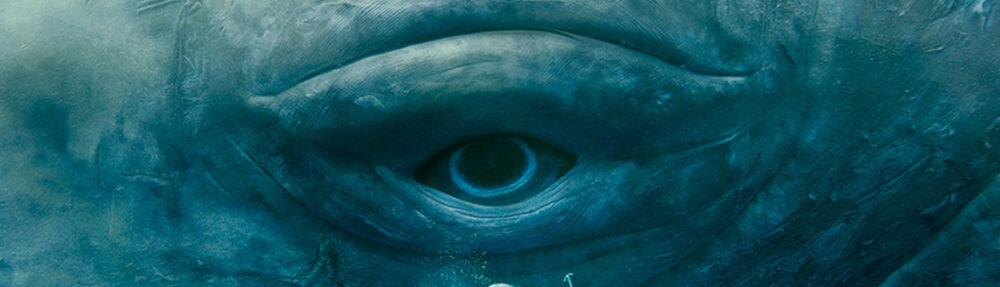
Queequeg is also used to represent the whale itself, and that couldn’t be any more evident in how he goes about being on the ocean. 

“When a ship was gliding by, like a flash, he darted out; gained her side; with one backward dash of his food capsized and sank his cameo; climbed up the chains; and throwing himself at full length upon the deck” (61).  

Without proper context, this excerpt could easily be describing a ship attack involving a whale. The story purposely portrays Queequeg in this way to both demonstrate the animalistic qualities of man and as a means of humanizing the whale. By relating its qualities to a likeable human character, it creates a more intimate connection between man and beast through demonstrating our stark similarities. 

Queequeg has been my favorite character so far, and I’m excited to dive deeper into these aspects of his characterization as we continue our readings.

Extracting Extracts

The multitude of differing opinions on the whales presented in these extracts, provides a fascinating view on the history of whale culture throughout time. In particular, I favored three extracts that I feel encapsulates the relationship between humans, industrial society, and whales. The first extract comes from the Book of Isaiah, which is based on the prophet Isaiah from 8th Century BC;

“In that day, the Lord with his sore, and great, and strong sword shall punish Leviathan the piercing serpent, even Leviathan that crooked serpent; and he shall slay the dragon that is in the sea” —Isaiah 

Considering how old this text is, I was astonished to see the recurring mention of the whale, known to them at the time, as a “Leviathan.” In terms of biblical texts, the word Leviathan is reserved to only the most powerful monstrous creatures of chaos. Framing our mindset towards the creature to be that of fear, particularly of its grandness and unpredictability—stemming from our lack of control over this beast.  

This extract paints a scene of two powerful forces, the Lord and the Leviathan as oppositions, furthering the idea that the Sea is the dominion of chaos and danger. Even the Lord wishes to vanquish this “dragon,” demonstrating not only the Lord position, but also the position of power the sea and whale hold—if only the Lord is capable of slaying the creature. 

The second extract that drew my interest, concerned the relationship of the sea to human industry;

“A tenth branch of the king’s ordinary revenue, said to be grounded on the consideration of his guarding and protecting the seas from pirates and robbers, is the right to royal fish, which are whale and sturgeon. And these, when either thrown ashore or caught near the coasts, are property of the king.” —Blackstone 

Our class discussions have led us to discuss the idea of coastlines representing boundaries of nations, especially considering there is no way to establish borders due to their fluidity. 

The idea of “royal fish” is an intriguing concept for two reasons; the first being that the Whale is considered a “royal fish. Breaking away from the stereotype of Whales being in opposition to God (as I discussed in the last extract) to having a formal relationship where they’re recognized by a sovereign as righteous. The second reason being that the concept of “royal fish” by law, means that this parliament is trying to claim ownership, establish their own border within the sea. It’s a bold endeavor that highlights the fallibility of attempting to conquer the seas, and also opens up the proposition of the sea representing itself as its own state. If the laws of the land extend out into the sea, then the sea can be considered its own sovereignty. 

The last extract I wanted to discuss, combines both of my previous points in a much more poetic narrative way; 

“No, Sir, ‘tis a Right Whale,” answered Tom; “I saw his spout; he threw up a pair of as pretty rainbows as a Christian would wish to look at. He’s a real oil-butt, that fellow!” —Cooper’s Pilot 

This scene depicts a beautiful moment of a person witnessing a rare phenomenon and equating it to the memory of God. However, in the very next sentiment, the person’s view shifts, seeing the value the whale can provide, rather than viewing the whale itself. 

This kinship to God, shows the divinity and power this creature holds over the human physic, much like God, this creature creates miracles. Unfortunately, in the same sense, humans view the whale as a source of use rather than worship—-being a summation of what it can provide for our industry, rather than a beautiful Godly creature. This juxtaposition is jarring and really goes to show the conflicting narrative history involving the Great Whale.  

A Poetics of Planetary Water:

Just reading the title of this article, I was already curious on how the use of “poetics” would be specifically applied to the study of water. I figured, since the ocean is often associated with the unknown and undiscovered, that its metaphorical sense was solely the reason to apply poetics. However, this article redefined the use of poetry as “powerful tools…because poems originate in and are directed to individual humans while also imagining vaster scales” The multiple ways one can interpret a poem creates a natural fluidity that coincides with the ever-changing nature of water in all forms.  This free-framing mindset helps to break away from the confinements of categorization. Of course, poems can be categorized but their interpretation and point can differ vastly depending on who is reading it, when they’re reading it, and how they’re reading it. 

My favorite example came from the article’s analysis on Hamlet, regarding the scene where two characters are pondering about the clouds in the sky. “The hybridization that Polonius accomplishes as cloud-reader, in which he starts with an initial identification, camel, then bends it into two new forms, weasel and whale, essentially follows a hybridizing theory of interpreting forms of water.” One character interprets the sky differently from the other, much like how the sea can simultaneously mystify and terrify. This scene encapsulates the ideal that water defies categorization—yet it is an essential and ever present aspect of our human lives. 

Gillis once described the coastline as “humankind’s first Eden,” so now I wonder—is the sea the place where we were to be cast out from Eden? Or is the Sea itself Eden, and we have cast ourselves out of it.

The Modern West: The Vast Sea

I have always viewed the ocean with such hesitancy, afraid of what the water might contain—but why exactly is that?  That humans as a collective, have such a compelling fear towards this part of our world?

Perhaps because the ocean acts much like a beast as it roars recklessly—too close for comfort. Unlike the stars which are only a glimpse into the heavens, untouching in nature, unless we reach out to it, the ocean is willing and wanting to drag you into the depths of its underworld. 

However, despite this fear, I have an unrelenting urge to understand its dark beauty as a reflection of my own. I’ve learned now that the fear that I’ve come to associate the ocean with is imaginative at most, a product of projected emotions towards something I can’t fully comprehend, so my own mind chooses to fill in the gaps. 

“The human mind delights in grand visions of supernatural beings. And the sea is their very best medium, the only environment in which such giants . . . can be produced and developed.” (Jules Verne). 

This monstrous scale of how big the ocean is, is quite terrifying. However, looking at the ocean from the lens of modern western culture, we can draw similarities to these collective feelings, that help us explain why we feel this way while simultaneously learning more about the ocean and ourselves.  

The Western Front was initially characterized as dangerous, unfit for civilized life, and full of the unknown both good and bad–much like how people view the ocean. It wasn’t until man took that step into the wild that he was able to see the enriching qualities of what the land had to offer in terms of what we can extract from it and what we can extract from within ourselves by understanding the nature around us. 

However, that’s not to say that we don’t have our own monsters inside us that the water reflects quite clearly back at us. Monsters that drive us to pursue and kill wonderful creatures to exchange for profit. Much like the west, the ocean is a wilderness of its own right—having been subjected to the same cruelties of the effects of industrialization.

 Shifting the view of thinking about the land by understanding it as a part of us, humanizes it, and propels us away from that fear of the unknown.

Introduction:

Hello! My name is Athena; I’m a senior majoring in Native American studies and minoring in recreation. I’m a San Diego local but I often travel back and forth to visit my family on our tribal reservation. 

I’m a writer, currently working on an experimental novel involving; the undead, grief, time travel, my own tribal cosmology, and curses—ones that can be afflicted or born with. I’ve always loved writing, and I believe the best way to improve my own work is to study and analyze the classics. 

In my free time I enjoy drawing characters, playing with my lovely cats, altering and making my own clothes and mosh pits. My favorite book series of all time is the Hunger Games trilogy! I am equally excited and pre-devastated for the new movie—the book was brutal. 

I’m eager to partake in this class, despite the fact that I am terribly introverted. I tend to let my appearance speak for me—so I don’t have to, but I’d love to meet new people and learn why this book is so peculiar.