Final essay, The art of reading and coming back to re-read

Reading the text vs reading the messages that hide behind the lines of the text, Melville takes us through a story. As he takes us through his story, he stops us in our tracks and makes us look at figures, paintings, and markings. These painting and figures he asks us to read teaches us how to read his book, Moby Dick. This is how Melville teaches us how to read the novel, but also teaches us how to read the world around us, to make a critique of the state of our world. We have to look further into these markings and paintings that Melville tells us to stop and read, just as we do with text. It’s about stopping, taking a first glance, reading the marking, leaving, and coming back to re-read the same markings.  Throughout the whole book, we encounter paintings, figures, and markings, such as the painting in the Spouter Inn, the right whale’s head, the sperm whale’s head, and Queequeg’s tattoos. There is a reason why we put up against non-textual elements in this book; they’re there for us to closely read to find answers about the world that Melville is describing during his time. This book is filled with nuance and long, wordy paragraphs, but then we come across something like the painting at the beginning of the book; he tells us to stop and look with Ishmael. It’s the message within the painting that gives us some answers to the nuance and some reflection of the world that Melville is putting up for critique. The art of the lesson that Melville is teaching us is a demonstration of closing reading, to adventure beyond the text and find out why he asks us to look at the right whale’s head and why the details give us (the audience) answers to the nuance that Melville is writing. 

In Chapter Three, “The Spouter-Inn”, Ishmael encounters this large painting when he first steps into Spouter-Inn. “On one side hung a very large oil-painting so thoroughly besmoked, and very defaced, it was only by diligent study and a series of systematic visits to it, and careful inquiry of the neighbors, that you could any way arrive at an understanding of its purpose.” (Melville 13). With this passage, Melville teaches us the importance of reading. As we are actively reading this book, we stop and read other markings throughout the book, such as the painting. Not only are the readers reading the literal text, but we are also reading landmarks that are being described throughout this book. We encounter this painting at the beginning of the book, a painting that is hung up for all to see. However, as we can see, the painting has been up for years, with neighbors passing by multiple times a day, and yet it remains overlooked and deemed unimportant. “It was only by diligent study and a series of systematic visits to it.” Only by showing care for the painting and making multiple visits to it, a new meaning comes. The painting suggests to readers that it is a comparison to the book; only through careful studying of the painting can it bring a new outlook to the reader about the book. Studying is reading; the diligent study is to read your surroundings, think about the reading of what you’re observing, and repeat this process, a series of visits to this study. Just like the painting, the book is up for show, for years, for all to come and see, over and over again. Melville doesn’t want you to pick up the book, read it all in one go, and then never touch it again; he is suggesting to us to make multiple visits to the book and take diligent study of the book. He suggests we talk to our neighbors about what they see in and from the book, go back to the book just as Ishmael does with the painting.
This passage is giving the reader a picture in their head; it’s presenting this painting to us as if we are Ishmael, we are Ishmael’s eyes. Now that we have this painting that is in our head, we are trying to figure out what the besmoke and deface looks like. The passage tells us to inquire with our neighbors, and then we can come to some understanding of what the painting might mean. To come to an understanding of the painting, one needs to read said painting; you can’t come to any type of understanding without reading. This passage suggests that we have to paint this canvas in our heads and make multiple visits to it, then maybe we can get an understanding of the painting. Melville is telling us how important it is to read and hold onto those first impressions, so then we come back to the book, the passages, and we, the readers, get to compare and contrast first impressions to what we see now. This is a crucial element of reading Moby Dick. 

This passage is essential because it starts the story. This passage shows the reader how and why it’s important to read and re-read. The things that can be displayed on a huge canvas are so often overlooked, like the painting in The Spouter-Inn, but if you take the time to sit and look, leave to your room, sleep, and make your rounds to it, then you can start to read the painting. It’s to read and then come back and re-read the passage, the painting, and the book.  “On one side hung a very large oil-painting so thoroughly besmoked, and very defaced.” We see Ishmael start to read this painting, getting an understanding of the canvas, the smudge, and the smoke that is on the painting. Then “it was only by diligent study and a series of systematic visits to it, and careful inquiry of the neighbors, that you could any way arrive at an understanding of its purpose.” Now we have Melville telling us to revisit the painting and take a careful study of it. The painting is the book; we must have that first initial reading of the book, revisit the book, and make careful observations of the revisit. 

In chapter 3, we meet our dear Queequeg, and the narrator describes the markings/tattoos.  “I might be cherishing unwarrantable prejudices against this unknown harpooner… It’s only his outside; a man can be honest in any sort of skin. But then, what to make of his unearthy complexion, that part of it, I mean, lying around about, and completely independent of the squares of tattooing.” (Meville 19-23) Melville asks us to look at and read Queequeg’s tattoos as if we were in bed watching the sun hit his skin, reading markings on his skin as a symbol of shame. Once again, the author is asking the audience to read a non-textual element of this book because it showcases the importance of how we should read the book and the world around us. Mant of people base their judgment and show prejudices based on appearance, especially tattoos on the skin. Markings that will never leave the body until death, what do these markings tell us about the person, and what do prejudices say about the person who is judging the man with tattoos? It’s a two-way street, it’s not one shot, man’s dead, the shot is fired, and it comes back to the person holding the prejeuces. “It’s only his outside; a man can be honest in any sort of skin” (Melville 23). This line in the passage speaks volumes. Usually, we think that only on the outside is the only way we judge an individual, but Melville describes it as “a man can be honest.” Melville is asking the audience to look at man differently. As we judge, what does that judgment look like?  Judgment is reading, as we read Queequeg’s tattoos, we read it differently than how the world usually reads someone with tattoos. Melville suggests a change for the world, but as he suggests this change, he still holds these conservative values with judgment of a man who looks different than him. Melville almost shows the reflection of an opinion, but the mirrored opinion, having this based judgment of someone, because of how we were told to think, but having your own moral battle with that opinion. 

Later in chapter 110, we see how Ishemal sees the markings on our dear Queequeg and his coffin, “And this tattooing, had been the work of a departed prophet and seer of his island, who, by those hieroglyphic marks, had written out on his body a complete theory of the heavens and the earth, and a mystical treatise on the art of attaining truth; so that Queequeg in his own proper person was a riddle to unfold; a wondrous work in one volume; but whose mysteries not even himself could read, though his own live heart beat against them; and these mysteries were therefore destined in the end to moulder away with the living parchment whereon they were inscribed, and so be unsolved to the last.” (Melville 524). In this passage, Melville is showing us how Ishmael has learn to read Queequeg and his markings, tattoos. How, over time, as he has gotten to look at his markings, he has gotten to read Queequeg over and over again, and this is his final statement about his development with Queequeg. “And this tattooing, had been the work of a departed prophet and seer of his island, who, by those hieroglyphic marks, had written out on his body a complete theory of the heavens and the earth, and a mystical treatise on the art of attaining truth” (Melville 524), Ishmael went from having unwanted prejedeies about a random Harponner to fully understanding what the markings on his body had meant to Queequeg and not just to Ishmael. Queequeg was a prophet to his people and showcased that people who look like him can belong in a world that is filled with Ishmaels. Melville shows us in this passage the importance of reading within reading; not only are we reading this passage from chapter 110, but we are re-reading Queequeg’s tattoos, and we are reading how Ishmael has been re-reading Queequeg’s tattoos all of this time throughout the book. The art of attaining truth, what a beautiful thing it is to read and reread to finally come to an understanding of this nuance that is being presented to us about markings on a body. “Queequeg in his own proper person was a riddle to unfold; a wondrous work in one volume; but whose mysteries not even himself could read, though his own living heart beat against them; and these mysteries were therefore destined in the end to moulder away with the living parchment whereon they were inscribed, and so be unsolved to the last.” (Melville 524). This entire passage effectively shows the audience the result of the act of reading and re-reading, from forming a judgment about a random man based on prejudice to ultimately reaching a final conclusion about him, which is truly beautiful. Through Ishmael, we gain insight into the answers that Melville poses throughout the book. With this passage, Melville is asking us to better understand Queequeg, but also why Ishmael felt the way he did towards Queequeg throughout the entire story. 

In the Introduction to the book by Andrew Delbanco, he writes, “Melville does not employ words in Moby-Dick; he savors them… Even its most dramatic characters rarely end in crescendo but tend to resolve themselves into a reflective quiet that chastens like the sound of strings after brass.” (Delbanco xii).  In other words, it is not to be bored by Melville’s long, wordy paragraphs about melancholy nuance but to savor them, stop and think about them, and come back to them, re-read those long, wordy, boring lines. To better understand the characters and the book, it is necessary to read and think and re-read. Melville tells us to be bored and take note, and come back to where you were bored, re-read, and collect your answer, which can be whatever you want it to be

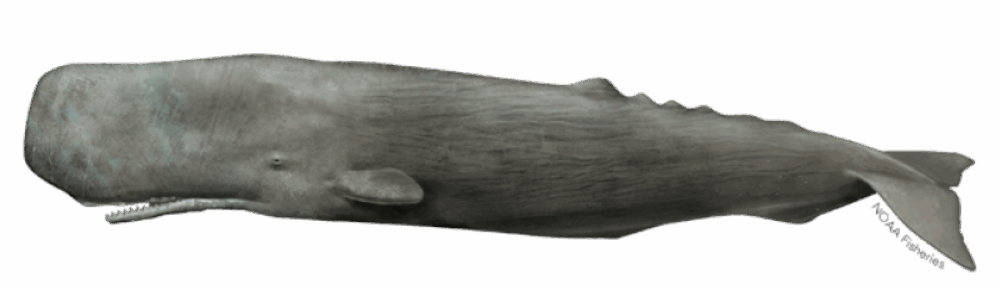
The act of reading is to read, come back and re-read, but it’s also reading what is being asked and reading the contrasted view. In chapter 75, Melville tells to observe the Right Whale’s head, but just before that, the audience is asked to stop observing the Sperm whale’s head before the Right whale’s head. As we read the Sperm whale’s head, we leave to read the contrasted view, and as we read, we still have the Sperm Whale in our mind. Reading the contrasted view of the whale is going to help us better understand when we come back to the Sperm Whale. The importance of reading the contrasted view provides us with a counterpoint to how we understand the story and the idea of life and death. “But as you come nearer to this great head, it begins to assume different aspects, according to your point of view.” (Melville 264). You must look at all points of the Right whale’s head to find answers that were missing in the Sperm Whale’s head. Meville suggests to us that the contrasted view will help us understand his critique of how the world, and how the world views life and death. Different aspects come about when you go 360, reading is 360, reading is a full circle. Melville teaches us how to read within reading. We are Ishmael, and we are walking around the whale’s head and taking in the different counterpoints to come to an answer about why the Sperm whale’s head is deemed to be more important than the Right whale’s. It’s not about the obvious, but what lies behind these non-textual subjects that Melville is telling us to stop and look at. 

In the article What ‘Moby-Dick’ Means to Me by Philip Hoare, Phillip Hoare speaks about how Moby Dick can be whatever you want it to be, but it took rereading to come to that understanding. “I didn’t know then what I do now: that “Moby-Dick” can be whatever you want it to be. It took me thirty years to discover what the book was—or what it was not.” This is the importance of reading and re-reading; he talks about his thoughts on what Moby Dick is from his first read, but when he had read, stopped to think about what Moby Dick is, and then re-read Moby Dick, it was then that he came to an understanding of what Moby Dick is, whatever you want. The act of reading is important to come to an answer to Melville’s nuance and melancholy. The stopping and reflecting is single-handedly the most important of the act of reading, without the first thought of the book, you have no 360 moment of coming to an understanding of Moby Dick… whatever you see hiding in the lines of Melville. 

Work Cited

Introduction, Delbanco, Andrew, Moby Dick.

Melville, Herman. Moby Dick.

Nast, Condé. “What “Moby-Dick” Means to Me.” The New Yorker, 3 Nov. 2011, www.newyorker.com/books/page-turner/what-moby-dick-means-to-me.

final thesis idea

Reading the text vs reading the messages that hide behind the lines of the text, Melville takes us through a story. As he takes us through his story, he stops us in our tracks and makes us look at figures, paintings, and markings. This is how Melville teaches us how to read within reading. These painting and figures he asks us to read teaches us how to read his book, Moby Dick. We have to look further into these markings and paintings that Melville tells us to stop and read, just as we do with text. It’s about stopping, taking a first glance, reading the marking, leaving, and coming back to re-read the same markings. Throughout the whole book, we encounter paintings, figures, and markings, such as the painting in the Spouter Inn, the right whale’s head, the sperm whale’s head, and Queequeg’s tattoos. This book is filled with nuance and long, wordy paragraphs, but then we come across something like the painting at the beginning of the book; he tells us to stop and look with Ishmael. It’s the message within the painting that gives us some answers to the nuance. The art of the lesson that Melville is teaching us is a demonstration of closing reading, to adventure beyond the text and find out why he asks us to look at the right whale’s head and why the details give us (the audience) answers to the nuance that Melville is writing.

With this thesis, I want to close read certain objects, paintings, and figures.

Starting with the painting at the beginning of the book, The Spouter Inn, then the Right Whale’s head, then Queegueg’s tattoos in relation to his coffin, and then I want to close read the markings, such as the marble tables in the chapel. I will discuss why it’s important for us to closely read these non-textual elements within the text and how they teach us to read Moby Dick.

week 13

What you still need to learn/do for your final project

I want to first say, how I have never really tapped into close reading like this. This class has definitely made me learn a new set of skills when it comes to writing. I need to work on my defining moments in close reading. I have a clear idea of what I want to say, but I get lost in translation when I’m trying to express why it matters. So I think Dr. Pressman’s comments on both of my essays, I will be taking that to heart to make sure I am delivering the best final I can give to her.

I want my ideas to be fully clear because I have so much to say when it comes to my final idea.

Essay #2

Throughout the book, Melville tells and suggests that the reader stop and read closely what he is painting for us, how to read and make diligent study of the messages that hide in the lines of Melville’s work. “The slanting sun playing upon this crimson pond in the sea, sent back its reflection into every face, so that they all glowed to each other like red men… At last, gush after gush of clotted red gore, as if it had been the purple lees of red wine, shot into the frighted air; and falling back again, ran dripping down his motionless flanks into the sea. His heart had burst!” (Melville 311). The word reflection is strong in this passage; to read and reflect on what you’re reading, in a sense, we are glowing red in the reflection on these men. We should be reflecting on how the dirty work of whaling is an overlooked aspect of American history,  especially to the people on land. Whaling is a bloody battlefield that can’t be overlooked by the men on the boat, but is by the people on the land. Melville is making a clear critique of the land-based reader for their ignorance by giving them a glorious description of the exploitative practices carried out on the boat to produce the civilized lifestyle on land. Melville teaches readers how these civilized goods are produced, such as electricity, a bone corset, and perfume. Ignorance is bliss to the land-based reader, out of sight, out of mind, but in this case, the details are never in mind when it comes to our land people. 

Reflection is what Melville suggests the reader do: open this book and read these glorious details about whaling and how it’s done. Ignorance is bliss; that’s something Americans are being criticized for, wanting the benefits of whaling, which is the oil, the bone, and the ambergris, which provides Americans with electricity and perfume. The part of which they’re choosing ignorance is not knowing where they got their electricity and perfume from; it comes from the whale, and they don’t know where or how. “The slanting sun playing upon this crimson pond in the sea, sent back its reflection into every face, so that they all glowed to each other like red men.” (Melville 311). Glowing to each other, they all glowed together; their act of killing reflects blood rather than the actual blood spread out. Melville is pushing us to read the blood on the pages and reflect, and put the land-based reader up for critique for their greed, their greed to send men out to sea to bring back oil for their pleasure.  Melville is pushing the reader to read this passage and critique the land-based reader. To bring back what I said, we are glowing red in the reflection of these men, watching them in their glorious act. Also, to mention “that they all glowed to each other like red men.” (Melville 311), they glowed to each other like red men; the blood isn’t what is making the men red, it’s the actions of the men that make them all glow red.

“At last, gush after gush of clotted red gore, as if it had been the purple lees of red wine” (311 Melville).  This line in the passage alone shows us how Melville is showing the two different sides of the people on the sea vs the land, the men who are on the sea killing whales have seen and get caught in the red gore and gushing blood clots, while the people on land drink red wine and wait for the whale oil to come to land so they can live like civilized people. The upper class drinks red wine while the people on the boat have to do the bloody work; that’s their red wine, blood, and clots. The land-based reader sits back and drinks their wine, while the men on the boat are murdering whales for a living, so the land people can live in such luxury. This passage is stating the two differences in ocean and land readers, one strikes blood that resembles red wine, while one is drinking the blood that has been struck. I want to dive into not only how it states the two but how it’s displayed as two. “gush after gush of clotted red gore,” and as if it had been the purple lees of red wine” (Melville 311). The use of the comma is what displays the marking of the difference between the land and ocean people. On one side, we have the glory and the blood, while on the other side, we have the red wine. What’s happening in the ocean vs what’s being brought back to the land? 

The glorious detail of the whale’s killing is important to read, and Melville is pushing the reader to understand its significance. Whaling isn’t natural, but what comes from the whale is their blood, their blubber, and ambergris, which is natural. When talking about the land-based reader, we are talking about most readers of “Moby Dick”. The idea of whaling may be simple, but when it comes to the details of watching this beauteous creature die in glory to provide the land with such materials to live a luxurious life is far overlooked in American history. It’s a brutal battlefield against man and whale, where the whale doesn’t really stand a chance. Montinless to most whales, it’s murder to whales for their goods. Melville wants the reader to understand man vs whale, what man does to the whale. “shot into the frighted air; and falling back again, ran dripping down his motionless flanks into the sea. His heart had burst!” (311 Melville). Watching the heart burst like it’s nothing but material goods, the whale’s heart belongs in the ocean. It starts in the ocean and ends in the ocean. Glore is motionless to the land reader; you don’t hear or see the blood, you sit and drink your red wine. 

ch 110, my Queequeq

I obsessed with Queequeq, so this chapter had me a little emotional, for real, I thought we lost our man. Now to my claim and what I see, Melville is pushing us really to view class and structure in America, or even overall, the boat is all over the world, the ocean touches all the continents and the 7 seas blend together, yet we still like to have those hard lines to define what is what, who is who.

“Now, there is the noteworthy difference between savage and civilized; that while a sick, civilized man may be six months convalescing, generally speaking, a sick savage is almost half-well again in a day.” (524 Melville). Melville is telling us to note this, look at this passage, and take the meaning of the comparison of social class and class structure. What is to be civil and what it means to be a savage, what is even a savage. A savage has more willpower and strength than a civilized man; a civilized man takes 6 months to bounce back, but a savage needs a day. A savage is used to the germs and dirt, as a civil man does not touch dirt. It’s important to note that what society calls a savage is strong, but the ones who call clean men are weak. The idea that the man and savage need to blend, become equal

ch. 92 Ambergris

It’s so interesting to me how much comes from the whale and how we use its parts up when it comes to whaling. This chapter was so good to me. The idea of this thing coming from a whale is used for perfume. Melville is showing us all the aspects of the whale and the whale’s beauty, but at the same time showing us how we get all these products that are used to sell on land. “I say that motion of a Sperm Whale’s flukes above water dispenses a perfume, as when a musk-scented lady rustles her dress in a warm parlor.” (449) Melville is showing us that what people think of whales, whales all smell bad and they’re scary, but then shows us that the things people think of whales are not far from humans, and what whale’s store inside of them are the reasons for the goods that humans use, such as perfume that is sometimes made with Ambergris. Not only are humans so judgmental of this world/life of the sea, but they don’t even know where and how their goods are made and where they come from. Melville is showing us where and how these goods that humans use all the time, but also what humans think of whales when they don’t know the whale, one doesn’t know a whale until going whaling.

Ch 75 The Right Whale’s Head…

I don’t wanna to seem obsessed this idea, but the act of reading truly amazes me. It’s the act of reading within reading. We are reading the literal text, and then Melville tells us to read more through imagery. “But as you come nearer to this great head, it begins to assume different aspects, according to your point of view.” (364) Melville. We have to imagine we are on the ship, walking around this whale’s head. We are told to read these imagines because it’s important to understand the bigger picture that Melville wants us to understand. He makes our job to go deeper with text and figure out all the different aspects. It will take diligent study of these images that Melville is painting for us.

Ch 47

“free will still free to ply her shuttle between given threads; and chance, through restrained in its play within the right lines of necessity, and sideways in its motions by free will, though thus prescribed to by both, chance by turns rules either.” (234)

It’s funny to me to bring up free will and remind us that it’s free to have it. When just before this, Ahab has taken over the mission and is now in control of these men for some gold… Melville is telling us that freewill is free; these men have free will and can use it as they please. That is still an option; they don’t have to go with Ahab and his wishes. Starbuck is the only one using freewill, which is the free thinking of his mind. play freewill in the right line of necessity, what is necessity to these men, we clearly see what Ahab necessity is but what about Ishmael. I could keep going on about Ishmael and how ghost like he is but has a lot to say.

Essay #1

In Chapter Three, “The Spouter-Inn”, Ishmael encounters this large painting when he first steps into Spouter-Inn. “On one side hung a very large oil-painting so thoroughly besmoked, and very defaced, it was only by diligent study and a series of systematic visits to it, and careful inquiry of the neighbors, that you could any way arrive at an understanding of its purpose.” (Melville 13)  He sits and observes it, leaves the painting, goes into his room, with the painting still on his mind, and comes back to the painting with a whole new perspective. As we readers see, Ishmael’s reading of the painting represents a mode of interpreting the canvas, a demonstration of how we read; Melville suggests that the audience do the same with the book. 

With this passage, Melville teaches us the importance of reading. As we are actively reading this book, we stop and read other markings throughout the book, such as the painting. Not only are the readers reading the literal text, but we are also reading landmarks that are being described throughout this book. We encounter this painting at the beginning of the book, a painting that is hung up for all to see. However, as we can see, the painting has been up for years, with neighbors passing by multiple times a day, and yet it remains overlooked and deemed unimportant. “It was only by diligent study and a series of systematic visits to it.” Only by showing care for the painting and making multiple visits to it, a new meaning come. The painting suggests to readers that it is a comparison to the book; only through careful studying of the painting can it bring a new outlook to the reader about the book. Studying is reading; the diligent study is to read your surroundings, think about the reading of what you’re observing, and repeat this process, a series of visits to this study. Just like the painting, the book is up for show, for years, for all to come and see, over and over again. Melville doesn’t want you to pick up the book, read it all in one go, and then never touch it again; he is suggesting to us to make multiple visits to the book and take diligent study of the book. He suggests we talk to our neighbors about what they see in and from the book, go back to the book just as Ishmael does with the painting.
This passage is giving the reader a picture in their head; it’s presenting this painting to us as if we are Ishmael, we are Ishmael’s eyes. Now that we have this painting that is in our head, we are trying to figure out what the besmoke and deface looks like. The passage tells us to inquire with our neighbors, and then we can come to some understanding of what the painting might mean. To come to an understanding of the painting, one needs to read said painting; you can’t come to any type of understanding without reading. This passage suggests that we have to paint this canvas in our head and make multiple visits to it, then maybe we can get an understanding of the painting. Melville is telling us how important it is to read and hold onto those first impressions, so then we come back to the book, the passages, and we, the readers, get to compare and contrast first impressions to what we see now. This is a crucial element of reading Moby Dick. 

This passage is essential because it starts the story. This passage shows the reader how and why it’s important to read and re-read. The things that can be displayed on a huge canvas are so often overlooked, like the painting in The Spouter-Inn, but if you take the time to sit and look, leave to your room, sleep, and make your rounds to it, then you can start to read the painting. It’s to read and then come back and re-read the passage, the painting, and the book.  “On one side hung a very large oil-painting so thoroughly besmoked, and very defaced.” We see Ishmael start to read this painting, getting an understanding of the canvas, the smudge, and the smoke that is on the painting. Then “it was only by diligent study and a series of systematic visits to it, and careful inquiry of the neighbors, that you could any way arrive at an understanding of its purpose.” Now we have Melville telling us to revisit the painting and take a careful study of it. The painting is the book; we must have that first initial reading of the book, revisit the book, and make careful observations of the revisit. 

Most people view Herman Melville’s “Moby Dick” as a monumental work that shines in the literary world, often regarded as the great American novel, yet overlooked and deemed boring. The thing about this idea of the book is amusing because, despite all the negative theories about the big book, it remains a book that everyone knows now, not just in the past, but also in the present day, over the years. This book is the painting that Ishmael sees in “The Spouter Inn”, something so big and mysterious, hard to look away, but you manage to overlook it anyway. But when you take the time to sit with the idea of it and come back to it, then you can get a deeper understanding of what you’re looking at. You get to love the smoke and smudge on the painting the same way Ishmael does. Melville urges his readers to view his great American novel the same as a painting; this book is hanging up with a light on it, and this book has been hung up for the public for centuries. Over time, Moby Dick has collected the dust, the smoke, the scrapes; the book is defaced just like the painting. As said, only by diligent study and systematic visits to the book can you find somewhat of some understanding of it. This book is rough and beat up, but Melville wants us to come back to the text; he tells us in this passage. 

Ch. 35 “The Quarter-Deck”

“I came to hunt whales, not my commander’s vengeance” (177)

Ahab is very hungry; he is hungry for revenge, which is hilarious because he thinks he will find “Moby Dick,” but he won’t. He might find a big white whale, but he isn’t going to find thee whale. It shows how this isn’t business for Ahab, it’s a personal trip. He isn’t here to make friends or family; this is his lifeline, finding Moby Dick to have his revenge. He is too hungry, he is a dictator, he is mean and so rude to everyone but himself but when it comes down to it, he needs the shipmates help, because of his legacy, he think he deserves this hierarchy. Everyone is sacred of him including Ishmael, even if doesn’t say it. instead of Ahad leading and being apart of a team, he is by himself, he has changed the mission and has bribed the crew to gain “trust”. Ahad is overly obsessed with finding and killing Moby dick, its pathetic. Ishmael is the only one who can see it, to me, sees how Ahad isn’t a nobel leader but a whale king. I guess not all things nobel are melancholy.

I wonder if Ahab is lonely and hates himself?