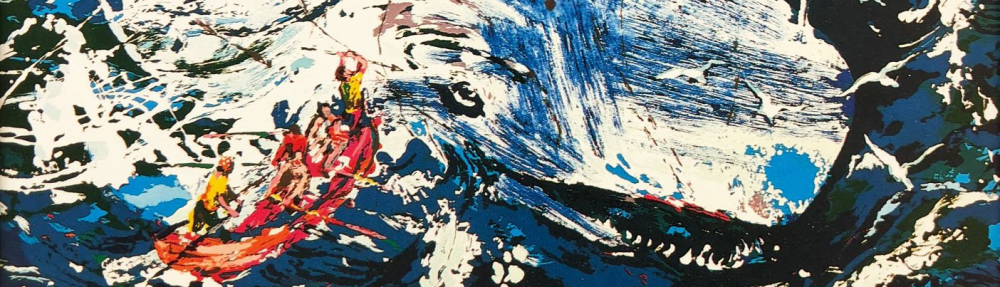
Better to be Bored than Mindlessly Entertained

Sophia Fugazzotto 

ECL 522 

Dr. Pressman 

December 12th, 2025 

Better to be Bored than Mindlessly Entertained

The famous novel Moby Dick by Herman Melville is often detailed by the hunt for the whale, but the true nature lies in the lack of action. The anti-climatic nature of Moby Dick creates  an experience in which the reader must be bored. The novel is a device for the experience of boredom and delayed gratification, intended to teach the reader the importance of being bored. These seemingly wasted moments of waiting are crucial for the development of new ideas, creativity, and new ways of thinking. 

Boredom fuels creativity and is key for the development of new ways of thinking. Jason Farman details in Delayed Response: The Art of Waiting from the Ancient to the Instant World: “Waiting, as represented by silences, gaps, and distance, allows us the capacity to imagine that which does not yet exist and, ultimately, innovate into those new worlds as our knowledge expands”. Let us consider chapter 42, The Whiteness of the Whale, in this context. It begins with small commentary on Ahab’s obsession, transitioning slowly into how the whiteness of the whale appalls Ishmael, and then simply proceeds into a seven page explication on the meaning of whiteness. This pure obsession and deep dive can only be explained by what is fostered in moments of boredom and emptiness. A simple color is considered in domain after domain, along with the implications that come with it. Despite this deep contemplation, the chapter seems to reach no real conclusion on what whiteness is, that it may just be nothing. “Or is it, that as in essence whiteness is not so much a color as the visible absence of color, and at the same time the concrete of all colors; is it for these reasons that there is such a dumb blankness, full of meaning, in a wide landscape of snows–a colorless, all-color of atheism from which we shrink?” (p.212) This chapter shows the importance of the state of boredom, how one small idea–the whiteness of the whale–can unfold into seven pages of critical thought of the color white. 

In chapter 132, Symphony, another example of the product of boredom is found. In this, creative, new ways of thinking are born through a view of the ocean. Melville writes: “hither, and thither, on high, glided the snow white wings of the small, unspeckled birds; these were the gentle thoughts of the feminine air; but to and fro in the deeps, far down in the bottomless blue, rushed mighty leviathans, sword fish, and sharks; and these were the strong, troubled, murderous thinkings of the masculine sea. But though thus contrasting within, the contrast was only in shades and shadows without; those two seemed one; it was only the sex, as it were, that distinguished them” (589). This chapter begins with a simple observation of the ocean, seemingly objective, but then dives into a subjective, gendered criticism of nature and society. Although on the surface it is a description of the interaction between air and water, this description becomes a critical analysis of gender and how society separates masculine and feminine. As Melville says “The contrast was only in shades and shadows without; those two seemed one” (p.589), he emphasizes his idea of gender only being established by concepts of physical form. Having analytic thought on societal constructs from a simple view of the ocean demonstrates further the importance of boredom and how it can bring about new ways of thinking. Not only does Melville create a gendered view of the nature before him, but he also immediately deconstructs the model he has created. This can be connected back to Farman’s way of thinking as he states: “Wait times are key…because they afford us the opportunity to imagine and speculate about worlds beyond our own immediate places and speculate about the possible.” The beginning of Symphony is an example of this expansion beyond our physical place in the world, where Melville speculates about the possibility of a world not contained by gender roles. 

Additionally, in this chapter, Ahab reaches a sudden realization of the manic chase he has led the boat on and the life he has pursued. Throughout this novel, Ahab seems to have few thoughts or reflections beyond his obsession with the white whale, but in these final chapters, he stares out at the sea and seemingly gains perspective on where he is and the path he is purging himself on. “Slowly crossing the deck from the scuttle, Ahab leaned over the side, and watched out his shadow in the water sank and sank to his gaze… the lovely aromas in that enchanted air did at last seem to dispel, for a moment, the cankerous thing in his soul… From beneath his slouched hat Ahab dropped a tear into the sea; nor did all the Pacific contain such wealth as that one wee drop” (p.590). In this moment of boredom, Ahab–for just a moment–is relieved of the pain inside of him. This is another example of how moments filled with nothing allow for new ways of thinking and positive reflection. 

In chapter 35, Ishmael takes watch at the mast head, and is lost in a reverie of thought. Watching at the mast head does not entail much, and is a recipe for boredom in the way that one just stands and watches the water for hours. There is no distraction, no entertainment, just a man alone with his thoughts and the ocean. Melville writes: “But lulled into such an opium-like listlessness of vacant, unconscious reverie is this absentminded youth by the blending cadence of waves with thoughts, that at last he loses his identity… every dimly-discovered, uprising fin of some undiscernible form, seems to him the embodiment of those elusive thoughts that only people the soul by continually flitting through it” (p.172). Although no new ways of thinking or creative insight come of this reverie, it is still an important part of boredom. This loss of identity, for the youth, is an important part of life because it allows for change. When someone is tied too strongly to an identity, it prevents them from having the ability to change themselves or to think in different ways. Therefore, this feeling of boredom on top of the masthead, as one sinks away into the calmness of the waves, pulls one away from their identity, and creates an open mind.   

Moby Dick has often been characterized by Ahab’s maniacal chase of the whale, and while this is a central point of the novel, there are only a handful of chapters in which the white whale appears and the crew chases. Specifically, the last three chapters of the book. These chapters are suddenly packed with action, contrasting the pace of the rest of the novel. Ahab’s desired whale is suddenly within reach, in his sights. And yet, the novel ends on another anti-climatic paragraph. The supposed goal, finding and killing Moby Dick, is never completed, and the Pequod and its crew fade into obscurity. Melville writes at the end of chapter 135: “Now small fowls flew screaming over the yet yawning gulf; a sullen white surf beat against its steep sides; then all collapsed, and the great shroud of the sea rolled on as it rolled five thousand years ago” (p. 624). There are two relevant pieces to this ending. First, the action that the reader has been teased with for 600 pages only is satisfied for three chapters, a brief taste of this whale hunting. This delayed gratification for no gratification highlights how the trial of boredom is the important aspect of the experience, instead of reaching a climax. In this ending of Moby Dick, the goal is never completed, the crew entirely dies save for Ishmael, and life immediately moves on. 

The second relevant part of this ending is the idea of waiting for something that may, or may not occur. Farman writes: “Day after day, as we wait for the things we desire, we become different people. In the act of waiting, we become who we are. Waiting points to our desires and hopes for the future; and while that future may never arrive and our hopes may never be fulfilled, the act of reflecting on waiting teaches us about ourselves… in the moment of waiting, meaning is located in our ability to recognize the ways that such hopes define us.” The anti-climatic ending of the novel is an example of how the act of waiting in boredom shapes us. This literary choice to keep the action at the end, and to end without a final hurrah, imposes upon the reader a forced reflection of what their time was spent doing and the value of boredom. The idea of plot and climax are dissolved in this conclusion, and the book instead becomes a device for experience of boredom and dormancy.

Throughout the novel, Melville switches between chapters of action and those without. Some of the chapters are deep scientific dives into aspects of the whaling industry, such as anatomy of the whales or specifications of tools. Having this alternating format that lulls the reader in and out of a reverie is important because of the contrasting model it creates. The article Stuplimity by Ngai proposes the idea of shock (sudden excitation) and boredom (desensitization) as diametrically opposed terms. This opposition is shown in Moby Dick as Melville writes chapters of violently killing whales, followed by a deep, slow analysis of the whale. Creating this dynamic is important to imposing boredom upon the reader. The chapters become binary in which ones have action and which are consumed by Melville’s commentary. Without the chapters of action, there would not be boring chapters, and vice versa. 

Reading Moby Dick becomes not just an experience of reading the novel for the plot, but a device to understand boredom and its purpose. The combination of forcing the reader to be bored and showing how characters in the novel achieve enlightenment in their boredom are important elements of the book. They emphasize the significance of waiting in our lives, and how productive that time can be, despite the feelings of restlessness it may evoke within. Without this time to be lost in our thoughts, it becomes impossible to generate new ideas and allow creative rivers to run their courses. 

Popova, Maria. “The Art of Waiting: Reclaiming the Pleasures of Durational Being in an Instant Culture of Ceaseless Doing.” The Marginalian, 11 May 2022, www.themarginalian.org/2018/12/17/jason-farman-delayed-response/. 

Ngai, Sianne. “Stuplimity: Shock and Boredom in Twentieth-Century Aesthetics.” Postmodern Culture, vol. 10 no. 2, 2000. Project MUSE, https://dx.doi.org/10.1353/pmc.2000.0013.

Extra Credit: Annotations

For class this semester, I bought a copy of the book so that I could write in it. I only started writing in books a few years ago, and have been enjoying the practice of it. It is nice to be able to look back on these annotations and see how my perspective has changed on the same words. It reminds me of keeping a journal and looking back on past entries to see how much I have changed. I annotate in a few different ways. I underline the passages/sentences I find most important, either to the ‘plot’ (not that there is really one in this book), or by what strikes a particular chord inside of me whether because of the topic or how the sentence was written. I also use square brackets for a few different reasons. Either to highlight longer paragraphs that would be unsatisfying to underline completely, to emphasize something within an already underlined part, or something I think is important but not important enough to be underlined. Many uses for the same thing. I also used post-it notes for chapters I found particularly relevant and wanted to discuss. In the margins, I often wrote down notes or thoughts as they came. Sometimes at the end of striking chapters, I would write more where there was space after the chapter ended. 

This process enhanced my reading and interpretations of Moby Dick by forcing me to slow down and reread. Had I not been writing and underlining in this book, I probably would have been doing a lot more skimming. It also helped for bringing ideas to class because I could see what I had underlined or comments I had written, which was helpful because I often forgot what parts stuck out most to me. I also think this enhanced my reading by making me think critically about what I was reading, because I didn’t want to just write nonsensical comments in the margins (although that too happened sometimes). 

Week 16: Final Takeaways

This semester really flew by, and even though Moby Dick was such a long book, it seems not so long ago that we opened those first pages, ignorant to what would occur between the cover and the back. I really enjoyed getting back into the practice of close reading this semester. There were so many parts of the book I would have skipped over or not found relevant, but the structure of the class and discussion based part of the class allowed for me to see and explore parts of the book that I wouldn’t have on my own. I doubt I would’ve had the patience or motivation to read Moby Dick on my own, so reading it in a class and alongside others was helpful. I also really enjoyed hearing other people’s interpretations, and seeing how different backgrounds influenced people’s interpretations. 

This was an important book for me to read because, like many others, I have heard this novel classified as a great American book, a story of adventure, of hunting animals. And before this class, I accepted that as what the book was about. However, reading this book, and considering the historical and social contexts surrounding it, changed this idea for me. I am not sure what this novel is exactly, but understanding how these ideas of classic, adventure, canon are formed was important to me. It brings up the question of how any idea of anything important is formed and how and why we attribute value to the things we do. I think this is in part due to Dr. Pressman’s teaching style, since I felt the last class I took with her also prompted many questions in myself about how the world is formed and how little understanding we have of the things we think we understand as a society or within scientific domains.

Week 15: Conscious and Unconscious Writing

What struck me from this week’s reading was from The Anatomy of Melville’s Fame. Riegel mentions on page 200 that the recent revival of Moby Dick has been in the context of modern psychology and philosophy. He goes on to discuss debates over whether Melville is a conscious or unconscious writer, which I think is an interesting topic. This is something I’ve considered a lot; how much of creative work is conscious effort toward an idea/motif/lesson etc, versus how much is a projection of the subconscious. These ideas of the conscious and subconscious are popular in psychology (partially why this part interests me so, since psychology is my major), and are often discussed in many other classes in regards to biology, philosophy etc. However, none of these ideas were strongly present when Melville wrote this book, and I always wonder how much of books are purposefully written in a historical context. It seems Melville did write with intention in some chapters (like Fast-Fish and Loose-Fish), yet others are just abstract ideas of the ocean. Yet, from these chapters too, we can glean insight into Melville, or the political state of the U.S. at the time. This also makes me wonder how Melville wanted this book to be read. Did he write this as a political commentary? Did he write it as a love letter? This type of context would influence the conscious versus unconscious debate; if written as political commentary then perhaps all about Hawthorne is irrelevant. But if written as a love letter (since it is dedicated to Hawthorne), then what is the context of all the political commentary? Even then, is all of this analysis necessary? I think most writers don’t write to have their own lives analyzed, it is the book they want read, not themselves. Yet who a person is makes a book all the more interesting. So should we read this novel as a conscious, intentional novel? Or as a subconscious, projective novel? Does it matter, if we are just projecting our own selves onto the writing?

Final Essay Proposal

For my final project, I will close read my sailing class. I have been taking it all semester alongside Moby Dick and I think it has been a good supplemental thing to do alongside reading this novel because it has given me some (limited) perspective as to what it’s like to be at sea, and the boredom that comes along with staring out at the water. 

Thesis: Moby Dick is filled with chapters of seemingly nothing, of boredom, of lack of action. Many consist of in depth descriptions, or abstract commentary on the ocean. Melville uses these chapters to convey the emotional state that sailors found thesmelves in on these boats, where days of boredom seem to float on by, perhaps explaining both Ishmael’s lack of self and Ahab’s madness. 

Thanksgiving Week

What do you need to do/learn for your final project?

For my final project, I am thinking about close reading the bay/boat when I go to my next sailing class, and writing something about that. Whenever I am at that class, I always think about Moby Dick because of how boring it is. We are using the wind to sail as they did back then, and I swear it is the most boring thing ever. We rig the boat, and then sail around Mission Bay for like an hour, and all I think is that everyone on that boat in Moby Dick must’ve been on the border of insanity and I can understand why Ahab lost it. Because staring at the water going by, the sunlight reflecting off of it, and literally nothing happening except just trying to catch wind and steer somewhere, is horribly boring. I think I want to observe this boredom in parallel to the chapters in Moby Dick that are, also, dreadfully boring, dragging on, slowly floating through page after page of nothingness.

I think sailing also gave me a lot of context for this novel. Even though it was just on the bay, it did allow me to imagine how it would be if the water just stretched on and on for miles, as well as how fluid of a state the water is in. I can always reach down and touch it, but it never stays in one place.

Essay 2: Forged in Blood

In Chapter 113, “The Forge”, Ahab uses the blood of the harpooners to forge his harpoon, claiming that he is baptising the weapon in the name of the devil. He creates this harpoon specifically for Moby Dick, intent on killing the whale with it. Through the bloody baptism of the harpoon by Ahab, a binary model of religion is created, bringing into question how religion is used to create ideas of good and evil. 

The blacksmith creates Ahab’s harpoon, and then tells Ahab to grab the water to temper the barbs, but Ahab refuses, insisting on using blood as the temper liquid. From everyone on the ship, Ahab chooses to use the blood of the three harpooners, whom he calls the pagans: “‘No, no–no water for that; I want it of the true death temper… Tashtego, Queequeg, Daggoo! What say ye, pagans! Will ye give me as much blood as will cover this barb?’… a cluster of dark nods replied, Yes” (p.532). In this passage, Ahab calls out the harpooners, who do not conform to the Christian religion and have their own beliefs, to become part of his religion of Moby Dick. Ahab continues on to say: “‘Ego non baptizo te in nomine patris, sed in nomine diaboli’” (p.532), which means ‘I do not baptize you in the name of the father, but in the name of the devil’. With this verse, Ahab makes the harpooners the sacred liquid of his religion, as they are the ones who take the first strikes at the whales. Since they are the initial point of contact, they are the most important in Ahab’s hunt for Moby Dick. By choosing the harpooners, who are considered to be on the lower part of the hierarchy of the ship, Ahab creates a group of saints in his religion from the lower rank pagans. 

Another way that this binary model is created is through the use of blood in a baptism. Baptism is usually a sacred ritual in the Christian faith used to signify entry of a person into the religion. In addition, water is used for baptism, not blood. Ahab clearly states his intention to baptize the harpoon intended for Moby Dick in blood, as he cries his verse in Latin, followed by: “Deliriously howled Ahab, as the malignant iron scorchingly devoured the baptismal blood” (p.532). In this scene, Ahab takes the blood of the harpooners to forge his weapon, and the language used creates an uneasy, evil feeling. Ahab and the weapon transform into different entities—as Ahab howls he becomes animal-like, monstrous, and the harpoon becomes anthropomorphized as it scorchingly devours the blood offered by Ahab. In this scene, Ahab is submitting to the weapon in a baptismal worship, surrounded by malevolent connotations, such as ‘malignant’ and ‘devoured’. This tone implies an evil nature around Ahab’s ritual, and creates a bootleg version of Christianity. 

In addition, the choice to use blood separates Ahab’s religion from the natural world, providing further implication of evil. We are born in water, we are made of water, and this boat is, quite literally, surrounded by water. However, instead of making use of this natural element, Ahab restricts his ritual to humans, sealing himself and his practice away from nature. 

By using the structure of Christianity to create his harpoon, Ahab fabricates an evil religion, but it is only one that seems this way because of the binary model it fits into opposed to Christianity. Had there not been replications of Christianity and malevolent connotations, this scene would not have held such defiance toward the Christian faith and ideals. 

The use of Latin in this scene further draws a direct parallel to Christianity. Latin holds historical importance in the Christian faith, and by using Latin, Ahab creates a mockery of the religion. Not only is he using a holy language, but he is also using it to worship the Devil, a symbol of evil in Christianity. Ahab chooses to use the Devil as his instrument of worship because he perceives what he is doing as evil and chooses to defile Christianity. This further shows the ability of religion to be used in a binary sense of good and evil, as certain words can evoke feelings of evil or wrongdoing, like ‘the Devil’. 

This scene draws attention to the structures that religion, especially Christianity, builds. In this passage, Ahab’s religion is contrasted to Christianity, and becomes the evil half because of the binary nature created in their similarities. With the use of pagan saints, blood baptism, and Latin, Ahab assumes multiple dimensions of Christianity and purposefully bends the faith to fit his own goals. This creates a dualistic nature with Christianity being good and Ahab’s religion being malevolent. This is important because Ahab’s religion only appears in this negative light because of the contrast with Christianity. Without this original structure, this scene would not seem religious, or perhaps not necessarily evil, but driven by other intentions. 

Halloween Extra Credit

For Halloween (sorry posting a bit late!), I dressed up as a whale that has been harpooned. I wore grey shorts and a grey shirt, with red accents (shoes, hair tie, red on the shirt) and I cut out a harpoon from cardboard. Although it may have been a bit of a ‘graphic’ costume, I think it represents a part of the book that has really stood out to me–how the whales are dying in these chapters. Their deaths are gory, violent, painful, helpless, which I find to be a sharp contrast to how human deaths are portrayed. This is also a representation of an industry (whaling) that is not well known or often talked about in the scope of history. There was a period of time in history where whales were hunted as they are in this book, and killed solely for their monetary value, and this costume is a reflection of the extents people were willing to go to for money, for the “American dream”.

Forged in Blood: Week 12

When reading chapter 113, “The Forge” I came across the part in Latin and was confused. After some investigation online, I found out that “Ego non baptizo te in nomine patris, sed in nomine diaobli” means “I do not baptize you in the name of the father, but in the name of the devil”. I found this part of the plot to be quite interesting. There has been quite a strong focus on religion, specifically Christianity, and this seems to be sending the boat, led by Ahab, in quite a dark place in a Christian context. Just before this part, Stubb even says “What’s that bunch of lucifers dodging about there for?”. He says this while the weapon is being forged, and it does make me think of the implications of fire and that which burns–associated with hell. Is the Pequod having its fall from Heaven? Was it even there in the first place? 

Another very important part of this passage is that Ahab uses Tashtego, Queequeg, and Daggoo to put out the weapon after its been forged. Usually, its cooled using water, but Ahab literally brands the three men instead, and then says the verse in Latin. Water is used in baptism when one is dunked beneath it, symbolizing spiritual cleansing and new life in Christ, and instead the blood of three men not in power is being used by a man in power. They are in a position where they can’t say no, and the hierarchy of this ship is being violently reinforced, as it was in previous chapters as well. To me, baptizing a weapon in the name of the Devil seems to be an ill omen filled with ill intent, especially when it comes at the price of harming another. It also shows how out of touch from reality Ahab is becoming in his power and obsession.

Week 11: Pip’s Soft Death

One part of the reading I found particularly interesting this week was Chapter 93, which covered Pip’s death. Instead of being violent or scary, I felt this chapter wrote Pip’s death off as something natural, a regular casualty of the whaling industry, and a celestial commentary on the feelings of death. The deaths’ of animals in this novel comes off as graphic and horrifying, filled with resistance and gore, yet Pip seems to just fade away into the horizon, as if he is nothing more than a leaf floating down the river.

Melville writes: “The sea had jeeringly kept his finite body up, but drowned the infinite of his soul… So man’s insanity is heaven’s sense; and wandering from all mortal reason, man comes at last to that celestial thought, which, to reason, is absurd and frantic; and weal or woe, feelings then uncompromised, indifferent as his God” (p.453). What a way to describe death. First off, the sea seems to be taunting, as it keeps Pip’s mortal body afloat, similar to those of the floating whales after their perishing. I also found the second half of this sentence interesting. Melville calls the soul infinite, yet it has been drowned. Drowning implies death, yet infinite implies forever, and these two contrasting descriptors could imply the place after death (presumably Heaven with the religious undertones we already see in this novel). These two contrasts mediums (solid body and infinite soul) are also important to note in a historical context; where examination of these two ideas were less scientific and more theoretical, not that we have much stronger of a grasp on these concepts nowadays. 

Melville continues on, talking about how man’s final thought would be absurd and frantic, and almost brushes over this idea. When the whales die, it is frantic. Yet this slight acknowledgement of the same concept in human’s death is barely seen, as Melville works to romanticize and sweeten Pip’s death with soft words and celestial language. He finishes it off with “indifferent as his God,” which implies God would not care of this death, or perhaps any human’s death.