Steve Mentz constantly discusses the means of changing our relationship with the water in our environment. For centuries, the ocean and large bodies of water have been viewed as something to conquer, to possess, and something that can be transformed into a border or a place of recreation. This type of mindset revolves around issues of colonization, laying claim to or being placed in a position above something that cannot be “owned”. Melville refers to this as the “masterless ocean”, as Mentz references in his writing, something that humans “depend upon [it] and love [it], but it cannot be our home” (p. 4). It seems pointless to lay claim to something that is ever-changing and thus cannot be tamed. The ocean is something almost alien, especially considering that we know so little about it. To lay claim to the very thing that we cannot defeat or confine shows our complete lack of understanding of what the ocean truly stands for. Mentz urges us through the study of blue humanities to learn more about the ocean because “we are going to be seeing more of it, closer up, in the future” (p. 8) Not only in the rising sea levels of the unexplored ocean, but in the heavier rainstorms that risk flooding our neighborhoods with the ever-growing draught of our planet, we risk succumbing to the extremes of the water that we consider having rights over. The very thing we own, without proper knowledge or understanding of, will ultimately kill us all.
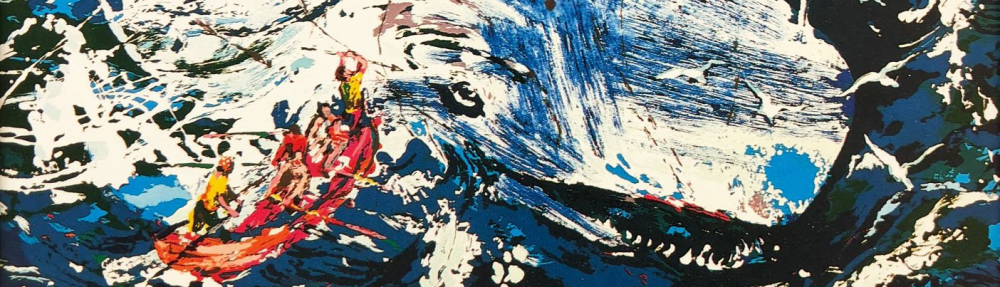
Moby-Dick
ECL 522: Fall 2025. Professor Pressman
Hello Rayne! I enjoyed reading your blog post! The poetics which Steve Mentz uses were really intriguing to me as well and I liked reading this article. The “masterless ocean” that you quoted from Mentz was a bit that I remembered as well because that line was interesting! Describing the ocean as something that no one can soley have but they can use it and “depend on it” as you quoted as well. The ideas which you are grasping at are ones which I feel Mentz is trying to get us to see within blue humanities! Nice job and can’t wait for class next week!
Great point about how climate change is making this type of BH paradigm matter even more: “Mentz urges us through the study of blue humanities to learn more about the ocean because “we are going to be seeing more of it, closer up, in the future” (p. 8).” I hope we can discuss this situation with Mentz when he visits our class. Good thinking and writing here.