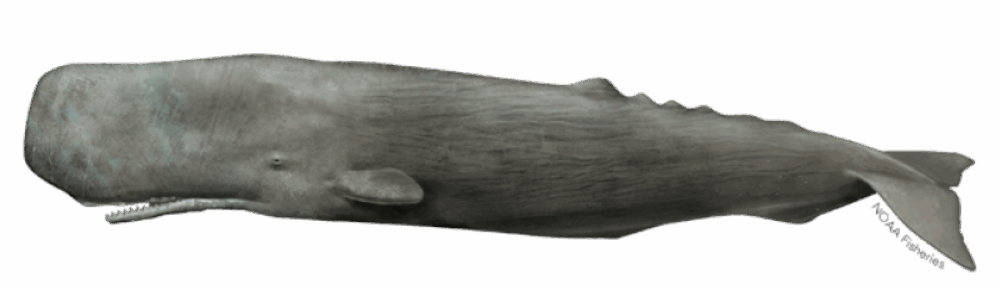
The Greatest American Novel

In his article “The Blue Humanities” John R Gillis informs us that the blue humanities are a “belated recognition of the close relationship between modern western culture and the sea.” The seascape is nothing more than a backdrop until the nineteenth century. Gillis notes that one of the first novels representing the sea in more than just a utilitarian concept is Herman Melville’s Moby Dick. According to Gillis the “metaphysical sophistication” of the novel is what sets it apart. But it is more than just Melville’s allusions of pelagic grandeur that buoys Moby Dick into the blue humanities. It is the centric of whaling. Whaling is humanity’s first glimpse, our first attempt, at conceptualizing oceanography. It sounds like a paradox. Whaling, this egregious act against one of nature’s most majestic oceanic creatures. But, considering Gillis’ assertion of early ocean explorers that “Oceans were explored as a means to reach distant lands, little attention was paid to the waters themselves… they used the sea merely as a highway to get to the next landfall.” One can say whalers were the first voyagers who sought what was within the ocean instead of what was across it. Whaling expeditions that extended years only relied on land as a means to resupply their ships. The ocean became the anchor for whalers, their constant. And knowing these whales, their migration patterns, their feeding grounds, their habits, was arguably humanity’s first dive into marine biology. Specifically, the Nantucket whaling industry, where the Pequod hails from. In 1712 the first documented kill of a sperm whale occurred at the hands of Nantucketer Christopher Hussey. Thus launching an industry of deep-ocean whaling specialized in Nantucket.* The same time Americans began to cast their war upon sperm whales, Europeans were shifting “terror and awe religious folk held for the supernatural to nature itself”. Reshaping the Enlightenment era into the emergence of Romanticism. Gillis mentions a 1712 anecdote by Joseph Addison: “Of all objects that I have ever seen, there is none which affects imagination so much as the sea or ocean.” Americans were conquering some of the most fearsome creatures in the world’s most fearsome environment. The centric of whaling not only gives Moby Dick a place in blue humanities, but it hoists it up as America’s greatest novel, honoring the culture and heroes of America’s first past time.

* https://www.pbs.org/wgbh/americanexperience/features/whaling-history-whaling-america/

One With Nature

John R. Gillis in The Blue Humanities says, “It was when nations turned away from the sea as a place of work that writers and painters turned their full attention to the sea itself.” Ironically, the catalyst in how we perceive the ocean transpired the very moment society deemed the ocean monotonous. The article examines how the sea had been viewed primarily through a utilitarian lens: “The focus was almost entirely on the ships and the skills of the men who manned them” In this distancing, artists, writers, and thinkers found space to reinterpret the ocean. When the sea was no longer “useful” in the traditional sense, it became meaningful in new ways. Gillis later includes another line that made a strong impression on me: “The awesome power of the sea, as witnessed from the safety of land, was a powerful and mental stimulant.” Confronting something grand and dangerous, but at a safe remove, incites a canvas for imagination. It triggers thoughts about the limits of human control and the vastness of the unknown. This mirrors romantic tradition where nature plays a big role in the narrative.

By the time I reached the end of Gillis’ essay, I began to reflect on my own connection to nature. The phrase “touch grass” comes to mind, this phrase is commonly used to remind someone that a natural world exists and clarity can be found by simply going outside to touch some grass. Nature has always been therapeutic, I tried to think of the last time I actually felt one with nature. Park visits, beach trips and even hikes have subtle reminders of urbanization. The article reminded me how much of a privilege it is to truly immerse yourself in nature and allow your thoughts to run freely. 

What “Moby-Dick” Means to Me – Week 3 Response

For this week’s reading, I will be responding to “What ‘Moby-Dick’ Means to Me” by Phillip Hoare. I chose this reading specifically because, as a lot of us have mentioned, we either take little or renowned interest in Moby Dick, or have struggled to read it in the past. Despite this, we have all ended up in this class together, determined to get through the novel and understand it from a new perspective. In Hoare’s article, he refers to Moby Dick as “not a novel…barely a book at all.” I found this interesting, given that there are several definitions of what a “book” could be. Oftentimes, a book does not need to meet literary guidelines; it could be made up of the most sappy, stomach-flipping, agitating nonsense and still be cleared off the shelves. I compared Hoare’s first opinion of Moby Dick to those in our class; he claims the novel “defeated” him the first time around, and I feel as though our read through of the novel might result in the same for many of us.

Even so, the uniqueness of the novel is what inspires us, like Hoare, to come back and read it once more. Whether we are in it for the facts (real or imagined by Melville) about whaling, the homoerotic relationships created throughout the novel, the dangers of sailing the open sea, cannibalism, or much, much more, Moby Dick is only what we make it out to be. I believe this is why so many people fall short of enjoying or understanding the novel their first time around. Might it be from a lack of comprehension of what Melville discusses, or the boring length of the book and the chapters that draw on endlessly, if the reader is not picking up on certain parts of the novel and the individual uniqueness of each part, and how they all tie in together, then they are ultimately losing the whole purpose of reading the novel. No wonder it took Phillip Hoare practically 30 years to finally enjoy Moby Dick!

What “Moby Dick means to me”?

Moby-Dick means different things to me different levels. On the surface, it’s a grand sea adventure filled with danger, obsession, and mystery, but more deeply, it feels like a mirror of human struggle- how we often chase things bigger than ourselves, even when it risks our downfall. Captain Ahab’s obsession with the whale shows how destructive it can be when danger and vengeance consume a person, while Ishmael’s reflective voice remains me of the value of humility, learning, and survival. For me, Moby-Dick represents the constant push and pull between ambition and acceptance, reminding me to respect both nature and my own limits.

Captain Pollard and the Story of the Essex… holy shit

This is actually a true story? All I want to say is what the fuck. While reading the article, “The True-Life Horror That Inspired ‘Moby-Dick,'” I was honestly appalled at the end. It’s almost impossible to think that an event like that could ever happened to someone, much less a group of people. It genuinely felt like I was reading the script to a movie. I’ve yet to read Moby-Dick, but after learning that the story of the Essex inspired Melville, I am definitely excited to dive right into the novel.

Pollard’s story is filled with sadness, trauma, guilt, irony, horror and dread. I wonder if he ever questioned why something like that happened to him. Why did his crew mates burn down an island? Why did a massive whale decided to hit his boat, not once, but twice, sinking it? Why did Chase believe the islands that might’ve saved them was filled with cannibals? Why did his cousin have to be the one shot and killed and eaten in order for the others to survive? Reading about the things that happened to Captain Pollard on this journey, the trauma he and his crew mates went through, all I can think of is holy shit.

If a man told me a story like this, much like how Pollard told Melville, I would definitely have to write a book about it too.


Week 2: Stealing 100 Turtles and Lighting an Island on Fire! (Boys Will Be Boys).

I enjoyed reading about the horror’s that inspired Moby Dick.

Firstly, I love to hear when authors (like Melville) visit places of inspiration for possible literary ideas. I believe this makes for some of the best work to be created as they’re quite well immersed in the eventual “nature” of the novel-to-be.

Secondly, I found it hilarious that Pollard and his crew upon the Essex stole around 100 turtles and then lit the island on fire upon leaving. That cracked me up. I think that is such a “boy” thing to do. In addition, how tragically ironic that their initial response was to not touch the alleged “cannibal” island but to then later resort to exactly this when their hunger descended them into madness. Talk about a self-fulfilling prophecy.

In all seriousness, this passage right here is really nightmarish:

“They had only the bones of the last crewmen to perish, which they smashed on the bottom of the boat so that they could eat the marrow.”

To then become obsessed with the remains of your crewmates to the point where you’re not relieved to being rescued is creepy as hell. I could only imagine the harrowing countenance of Pollard and Ramsdell in these moments.

About The American Scholar, Ralph Waldo Emerson

Emerson describes the ideal scholar as “Man Thinking,” books, and life rather than passively absorbing ideas. He argues that true intellectual though, not blind imitation. For Emerson, the scholar must be creative, original, and deeply connected to experience, serving as a vital force in shaping society. This vision emphasizes self -reliance and the power of the individual mind.

Intro – Aurora Copp

Hi everyone! My name is Aurora Copp, and I am super excited to be taking this class. I have never taken a class where we only focus on one book, so I am really enthusiastic about learning as much as I can and really diving deeply into it. I am an English Single Subject Major, and I start the teaching credential program here at SDSU in the spring. I am really excited as well to get to know each of you in class! Thank you.

The Mind’s Eye in The American Scholar

This week’s reading of The American Scholar by Ralph Waldo Emerson was particularly insightful. Emerson’s take of the first impression on the mind, nature, is reminiscent of the romantic era in literature. Emerson believes it is a necessity to open the mind’s-eye to nature: “What is nature to him? There is never a beginning, there is never an end, to the inexplicable this web of God, but always circular power returning into itself. Therein it resembles his own spirit, whose beginning, whose ending, he never can find,— so entire, so boundless” (Emerson). Emerson’s describes this interconnectedness as a circle, it’s significance being that nature and knowledge are inexhaustible. A core characteristic of romanticism is the fixation on nature as a healing power. Similarly, Emerson treats nature as a moral guide; natural beauty is accompanied by moments of reflection and truth.

Emerson’s continues in this excerpt with vivid imagery: “ “Far, too, as her splendors shine, system on system shooting like rays, upward, downward, without centre, without circumference,— in the mass and in the particle, nature hastens to render account of herself to the mind.” Like neurons firing in the brain, nature is constantly having a dialogue with itself. Pieces of information transcends time and space and we are but at it’s mercy. Later on he says, “So much of nature as he is ignorant of, so much of his own mind does he not yet possess.” In other words, the invitation of nature as a source of knowledge can bring forth self-discovery. From a more contemporary standpoint this can also encourage us to reach beyond our own borders. Cultures around the world are subjects of their landscapes, understanding it’s citizens can help us create a more unified version of society and ourselves.