Herman Melville’s “Etymology” and “Extracts” preceding chapter one provides an insane amount of insight and context before starting the story of Ishmael. Although the etymology can be easily cast aside as readers usually begin with the first chapter, I believe Melville intended for the etymology and extracts to be read and be taken seriously (to an extent) as it provides context on how to approach the monstrosity of the book itself. Melville outright lets the reader know that he isn’t reliable and to read between lines. TO CLOSE READ! It’s genuinely insane how much thought went into the extracts as a warning to readers to NOT take his word seriously as you would the bible. “Therefore you must not in every case at least, take the higgley-piggledy whale statements, however authentic, in these extracts, for veritable gospel cetology. Far from it.” (Extracts, paragraph 1) This warning gives a whole new meaning to reading the book and what it means to simply read any book. You must read between the lines and manipulate sentences to unlock their true meaning. This is a huge reason why I think this novel is important now as it was when it was published and many years later. There will always be a new lens to unlock, something for the reader to question, and new interpretations to be discovered. Taking this and applying it to how you read the novel takes pressure off its size and focuses on what you, as the reader, take from the story at hand.
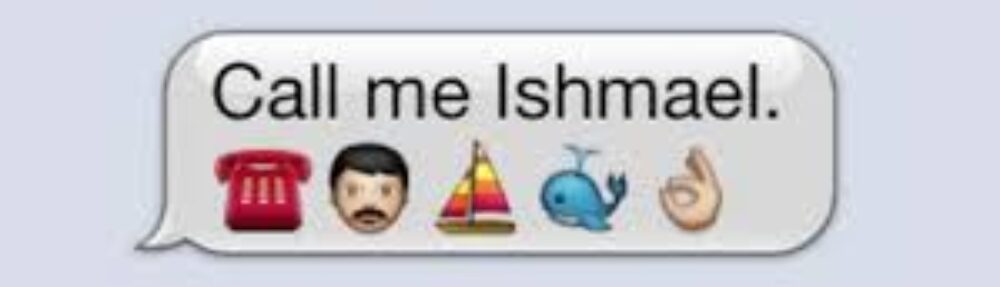
Now with the Extracts taken into consideration, the first sentence beginning chapter one can be picked apart, despite its simplicity. “Call me Ishmael” (Melville, 3) The narrator is starting the story with a friendly greeting but giving the reader a pseudonym. This can be simply the narrator being just friendly. But also revealing Ishmael’s narration as a flawed one and possibly unreliable. Melville put deep thought and detail in the information preceding the first chapter and I thank him for it.
Wonderful blog post. You pursue an insight towards interpretation:
‘Melville outright lets the reader know that he isn’t reliable and to read between lines. TO CLOSE READ! It’s genuinely insane how much thought went into the extracts as a warning to readers to NOT take his word seriously as you would the bible. “Therefore you must not in every case at least, take the higgley-piggledy whale statements, however authentic, in these extracts, for veritable gospel cetology. Far from it.” (Extracts, paragraph 1) This warning gives a whole new meaning to reading the book and what it means to simply read any book.” You are very right to explore this section as a meaningful warning. Now, let’s consider WHY the warning and what purpose it serves… perhaps in a midterm essay? Good work.
Hello Sam! I really like how you picked out the quote on the unreliability of the extracts, because like the extracts, Ishmael is an unreliable narrator. He leaves things out, exaggerates others. He is so personable that we, as readers, don’t get the full perspective on the novel. It makes me wonder, if we went into the world of Moby Dick and experienced the story for ourselves, how similar would it be to the actual book?