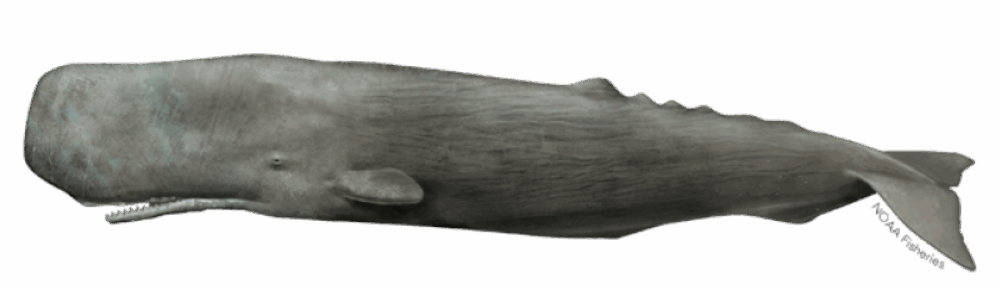
Essay #2

Chapter 123 of the novel Moby Dick, titled The Musket, is a chapter about the character Starbuck and his internal battle over the morality of direct versus indirect action and him succumbing to his own complicity. Towards the end of the chapter, Melville writes the passage, “The yet levelled musket shook like a drunkard’s arm; Starbuck seemed wrestling with an angel; but turning from the door, he placed the death-tube in its rack and left the place.” This passage to me is one that exemplifies and concludes the entire internal and external battle that Starbuck had been having, not just in this chapter, but throughout the entire novel.

“The yet levelled musket shook like a drunkard’s arm”. This as the introduction to this passage about decision is extremely impactful because it shows a more external feeling within this chapter about an internal battle. The weapon shaking in his hands becomes an externalization of this internal crisis Starbuck has been having. The diction in this passage is so poignant and purposeful. Melville calling the musket “levelled” represents the fact that Starbuck still has yet to abandon the choice of killing Ahab completely. However, that is juxtaposed within the same sentence with the use of the simile of a “drunkard’s arm”. This simile suggests the ideas and feelings of disorientation and the body acting on its own accord. It also evokes a feeling of shame from the readers, making it seem as if Starbuck already feels the guilt of the action in which he is contemplating, before even doing it one way or another. This internal battle and the choice he makes is sort of the moment in which his extreme complicity begins. When he begins to tremble, he is demonstrating the inability to be decisive and make a choice that isn’t necessarily self serving. This truly is what leads to the demise of the voyage. 

“Starbuck seemed wrestling with an angel”. This section is a reference to the biblical story of Jacob wrestling an angel. This story is one that represents someone letting go of both their own self-reliance and their weakness and becoming one with God. I think this is such an interesting and impactful reference because it evokes an image within the readers of a sort of divine test for Starbuck. It shows Starbuck fighting with his own moral identity and weakness, the internal battle of remaining obedient and under control or starting a mutiny and being responsible, and the decision of which one is necessarily good or bad. The ‘angel’ that Starbuck is fighting is both his own personal conscience that is wanting him to stop Ahab, knowing that if they continue it will lead to their demise, and the moral and legal law when it comes to murder. This quote and this struggle truly dramatizes the moral question of what exactly is good and what exactly is bad. Is him directly killing Ahab worse than him indirectly killing everyone else by remaining complicit as Ahab leads the crew to their demise? Him fighting the angel represents him being unsure of what to do and this inability to choose is what in the end makes him remain complicit. His need to have a clean moral conscience and need to have something be right or wrong is what truly holds him back. The religious imagery that Melville utilizes is so impactful because it really represents to the readers how the moral correctness that Starbuck possesses itself becomes a fatal decision. 

“He placed the death-tube in its rack, and left the place.” The diction in this section is also so extremely impactful. By calling the musket a “death-tube” instead of just its name, it shifts the tone for the readers from the gun being just a practical tool to being a representation of morality and mortality. Starbuck choosing to place the gun back is a gesture of surrender but physically and morally. He willfully relinquishes his agency and this act is a physical representation of him giving into his obedience to Ahab. By placing the gun back, Starbuck knows both his and the rest of the crew’s fate and is both complicit and resigned to see it through. This is the exact moment where Starbuck’s complicit behavior becomes something that is concrete and unwavering. By returning the weapon and not committing the act of murder, he lands the final blow of giving the power back to Ahab completely. His decision shows that he is choosing the comfort of hierarchy and indirect action rather than the courage of making a change. The simplicity of the end of the quote saying “and left the place” really just demonstrates how resigned to his own fate he has become. By simply calling the room a “place” it leaves room for this to represent not only Starbuck leaving the room, but also leaving his own responsibility, morality, and sense of justice behind with the musket. Something that Melville makes very apparent to the readers with his characterization of Starbuck and the rest of the crew is that not being able to stop evil when you can is a direct action of participating in the evil. By choosing to walk away and not take action, Starbuck remains a complicit participant and essentially is the one who seals the fate of the Pequod.

Essay 2

In chapter 100 of Moby Dick, there is an introduction of another captain who also lost a limb from the whale Moby Dick. In his case however, the limb that he lost was his arm not his leg like Ahab did. During the discussion of the infamous sperm whale, it becomes evident to the other captain and outsiders that Ahab’s anger towards the whale is very irrational and crazed. Melville uses the contradiction of the two captains who share a similar experience but yet have a different reaction towards the whale as a learning lesson. In which two people can go through the same experiences yet the mindset in which they have will be determined from how they feel they were affected but that experience. 

To begin, Melville introduces another captain, Captain Boomer, as a man who also lost a limb from the Moby Dick as well. However for this character, the lost limb is from the upper half of the body. Losing an arm is different from losing a leg, both tragic of course, but imagine being pushed down without a leg? It would be quite difficult to get up without help. Now imagine being pushed down without an arm. It would seem to be a lot easier to get back up because the strength from your other limbs will help in returning back to stability. That is exactly what Ahab lost, stability, not only physically but mentally. During the discussion of the capturing of the sperm whale he asks the captain boomer if he was able to catch him the second time he saw him, to which he responds, “Didn’t want to try to; ain’t one limb enough? What should I do without this other arm?”(481)  Captain Boomer cannot fathom why he would want to try again because he could risk losing another arm and to be without one arm is already bad enough. He emphasizes this to Ahab as is it something that he can relate to and is wondering why he should jeopardize himself like that again for he knows that in comparison to the bite of a whale, he simply cannot compete. 

Captain Boomer continues with, “And I’m thinking Moby Dick doesn’t bite so much as he swallows.” (481) Boomer believes that the bite form the whale is not within the same context of satisfactory as it might be for other animals and as it is for humans when eating their favorite food. If the whale had wanted to hurt a human with intention it would have gone in for a second bite, it could have easily devoured the human considering the difference in size. With the back up of his crewmate Bunger saying “…it is quite impossible for him to completely digest even a man’s arm? And he knows it too. So that what you take for the White Whale’s malice is only his awkwardness.”(481) Bunger further attests to the belief that the whale’s bites are not ill intended, for his “awkwardness” is just being a whale. It is part of being a whale and should have been taken into consideration when whaling. Apart from adapting to the ocean, whalers are to consider the living beings in their home. The ocean is the home of the whale and the men on the boat are invading their boundary by not only being there but in their attempt to capture them for human benefit. 

The difference between these men and Ahab’s beliefs is evident through their conversation and during the end of the conversation Ahab still insists that “But he will still be hunted, for all that. What is best alone, that accursed thing is not always what least allures.”(482) Ahab feels a huge amount of anger towards “thing” and is compelling him like a magnet to find him and punish the whale. For Ahab to say “still be hunted, for all that.” even after the other captain shared his experience with the whale it shows that the conversation did not have any affect on him. He did not get any clarity to stand back on his revenge, if anything it only amplified it for him. Ahab decided to add the loss of limb from another captain to the mental list of reasons why is seeking this whale. His anger is so strong that Bunger even points out, “this man’s blood—bring the thermometer!—it’s at the boiling point!—his pulse makes these planks beat!—sir!”(482) These men are terrified to even see the anger vibrating off Ahab just from talking about the creature. The captains do not see eye to eye in regard to this situation and while one of them shares compassion for the whale and is at peace with not pursuing the capture of Moby Dick, Ahab is not on the same page. Melville captures the feelings on paper in a way to make the readers understand just how much of a difference the circumstance can be for each individual regardless of a shared experience.

 There is an irony of this chapter where humans express pushing the boundaries of the beings that live in water and when they face the consequences such as the bite, a naturality of being a whale, some feel angered while others don’t. Even though the two characters went through similar experiences does not mean that they will react the same to the situation. Especially considering the circumstances for Ahab who lost a leg and cannot stand on his own without the help of someone else or with his ivory leg whereas Boomer can stand on his own even with the loss of his arm. The instability is evident not only in Ahab’s physical but also his mentality. Disability is a very difficult matter to deal with and it can evidently take a toll on one’s mental health, driving them to madness and anger. 

The Gilder: Let Faith Oust Fact; Let Fancy Oust Memory

Starbuck had been an adversary for Ahab throughout the novel, but as the voyage progressed, Starbuck could only rely on hopeful illusions to face the noxious reality. In Chapter 114, The Gilder, Melville’s use of forceful diction and stark contrasts reveals how humans cling to imagination to cope with horrifying truths.

Melville uses forceful diction to show Starbuck’s coping mechanisms. On page 535, Melville wrote in Starbuck’s perspective, “‘Loveliness unfathomable, as ever lover saw in his young bride’s eye!—Tell me not of thy teeth-tiered sharks, and thy kidnapping cannibal ways.’” “Loveliness unfathomable” tells of Starbuck wanting to believe in a positive outcome, and “Tell me not of–” tells of the truths Starbuck wants to reject; the facts that have been happening. He wants to forget and go home, a common coping mechanism for people with trauma.

Melville uses stark contrasts to show Starbuck’s mental state. He wrote Starbuck to explicitly say this because Starbuck was holding on to what little hope he had left. On page 535, Starbuck continued, “‘Let faith oust fact; let fancy oust memory; I look deep down and do believe.’” The contrasts, especially the last line, paints Starbuck’s psychological struggle and reliance on imagination. The word “oust” here means to remove, meaning Starbuck wants to replace fact with faith, and memory with “fancy”. Perhaps here, fancy means imagination, and in this case, Starbuck is saying he’d rather believe in faith and imagination than accept fact and memory. This ties into the religious context, where believing that a mental construct exists feels more satisfying than facing reality. 

Melville’s use of diction and contrasts highlights Starbuck’s mentality. The diction had shown Starbuck’s conviction with his iron-willed beliefs. The contrasts between faith/fancy and fact/memory show not only the internal conflict in Starbuck’s morals, but also how he wants to be a good man in a world of cruelty. Applicably, people in real life struggle more in living with fact and memory than believing themselves in faith and imagination.

Oneness: In Varieties and in Death

One of my favorite aspects of this novel is Melville’s attention to detail in his consistent descriptions of everything. We’ve spent a chapter on a singular rope, why Ishmael’s favorite whale is the sperm whale, and how to measure a whale skeleton if you happen upon one. A particular favorite fixation and talent that Melville expresses is the difference in each diverse character throughout the narrative. Based on dialogue, behaviors, and preferences, each character is clearly distinct from the others, able to firmly stand on their own in terms of personality and individual differences. It is for this reason that chapter 134’s description of the “oneness” of the crew is so wholly striking, setting this illustration of the Pequod and her inhabitants apart from any other moment in the entire narrative.

Melville describes how the crew aboard the ship was “one man, not thirty,” displaying a united sense of collective drive, in which “all varieties [of personality and ability] were welded into oneness” that “were all directed to that fatal goal which Ahab their one lord and keel did point to” (Melville 606). It is interestingly placed in the novel; this oneness appears when it is most necessary (in the ultimate deathly pursuit of Moby Dick). The moments previously, the chapters that covered the blacksmith or carpenter, or when Starbuck so wholly disagreed with Ahab that he held his musket in his palm and contemplated, melted away into this singular oneness that trumped all else. It is in this unity that the ship joins as one, later in the narrative as one, as one shipwreck, and as one death.

The End

In Chapter 135 “The Chase – Third Day,” we get a lot of excitement. The part of this chapter I would like to focus on is actually the very last sentence of the chapter: “Now small fowls flew screaming over the yet yawning gulf; a sullen white surf beat against its steep sides; then all collapsed, and the great shroud of the sea rolled on as it rolled five thousand years ago” (Melville 624). I find it difficult to think of a more poetic last sentence to end this whaling expedition; a reminder that the ocean was here long before us, and it will be here long after. Ahab and the rest of the Pequod tried to conquer what is unconquerable, and their need for revenge against Moby Dick is what caused their demise. I think we all saw that one coming. The last sentence of this chapter gives me an almost calming vibe, as if the ocean is unbothered by what has just happened. It has seen many men like Ahab, and has delivered a similar fate to those men who try to defy it. Ahab, the man who considered the ocean his home more so than the land, meets his poetic fate in that very place.

Everything that the novel has shown us, taught us, critique us, and confused us comes to conclusion with this chapter. I feel relieved honestly, but it’s bittersweet because I have never once gone into such an in depth analysis of any material as I have with Moby-Dick this semester. From the days where I couldn’t stop reading it, to the days where I got 5 minutes in and decided that was enough. This novel is truly one of the most daunting and incredible pieces of art I have ever seen, and I’m so glad I don’t have to read it ever again (just kidding, but not really).

There is a Wisdom that is Woe; But there is a Woe that is Madness

On the diverse nation-state of the whale ship Pequod, Pip is one of the few representatives of African-Americans. When jettisoned from a whaleboat, Pip’s perceived loss of sanity is actually the procuring of higher consciousness.  “God’s foot on the treadle of the loom” reveals to him his predisposed, hopeless role in society. Pip beholds his lack of freedom, even as a supposedly free African American. He comprehends the interminable suffering of man, of African-American man. In this omniscient state, Pip is altered into a rejection of his joyous self. He let’s go of his life-endearing character and gives in to African American’s expected function in the nation, as hollow performer. By forcing Pip into enlightenment, Melville impels his readers to examine the true sentiments behind the Fugitive Slave Act: society’s disregard of the suffering of their fellow man.

Pip is introduced directly after Ahab announces his true intentions for the Pequod, in the Midnight, Forecastle. While the other sailors sing and cast their convictions of this doomed mission, they demand Pip to play his tambourine: “Pip! Little Pip! Hurrah with your tambourine!… Here you are Pip… up you mount! Go it, Pip! Bang it, bell-boy! Rig it, dig it, stig it, quig it, bell-boy!” (188-189) While the other sailors assert their viewpoints and become representatives of their homelands, Pip is forced to be entertainer. Even in the absence of his tambourine, they tell him to become the instrument: “beat they belly then and wag thy ears… Rattle thy teeth then and make a pagoda of thyself.” (188-189)”. Not just his talent, but his body merely exists to serve others. The sailors, ignoring his resistance to play, “Pip! Hurrah with your tambourine! don’t know where it is…” (188) instill his role in society as only existing for the amusement of others. Contrary to his emplacement, Pip holds a sense of dignity. Melville establishes Pip’s sense of self-respect by giving him the last words in this chapter. Pip’s soliloquy ends in prayer: “Oh, thou big white God aloft there somewhere in yon darkness, have mercy on this small black boy down here” (193) Although Pip has been placed at the bottom dregs of this make-shift nation, he still holds onto faith, a hope that God may have mercy on him. Pip’s prayer expresses a sense of optimism. Due to this optimism, Pip continues to believe he has control over his own fate. Beneath Pip’s plea, Melville arranges five asterisks ***** to close the chapter. These five asterisks not only conclude the chapter, but they also conclude Pip’s sanity. The asterisks symbolize that this petition for salvation is Pip’s final.

 Pip returns to the novel in his transformative chapter. Leaping from a boat, stranded at sea Pip is “carried down alive to wondrous depths, where… the miser-merman, Wisdom, revealed his hoarded heaps… Pip saw the multitudinous, God-omnipresent, coral insects, that out of the firmament of water heaved the colossal orbs. He saw God’s foot upon the treadle of the loom; and spoke it” (453-454) In his abandonment, Pip undergoes a wisdom-induced metamorphosis. This alteration saw Pip, who “loved life, and all its peaceable securities” reject his former self. “Pip? Whom ye call Pip?” (567) His vision of the “joyous, heartless, ever-juvenile eternities, the… God-omnipresent” (453) divulges to him his harsh reality: regardless of freedom, Pip, and African Americans, are seen as entertainer, a body that exists for the use of others. “the unwarped, primal world” (453) reveals to him the interminable suffering of the Black American. His body remains intact, but the sea “drowned the infinite of his soul.” Pip’s soul has been lost, he is now just a shell of the African American experience.

The shell that is called Pip, bearing life’s unalterable course for African Americans, falls into the role that is initially bestowed upon him. His former self is gone: “Pip? Whom ye call Pip? Pip jumped from the whaleboat. Pip’s missing… Who art thou, boy? Bell-boy, sir; ship’s-crier; ding, dong, ding!” (567) Pip rejects his joyous, brilliant, questioning self and assumes the role of performer just as his shipmates expect. He becomes the bell-boy they demanded during their midnight in the forecastle. In his mad monologues, he constantly sings: “Rig a dig, dig, dig!” “ding, dong, ding!” These chants are reminiscent of what was bellowed at him in the forecastle: “Rig it, dig it, stig it, quig it bell-boy!” (189) Pip saw his role in society and stopped fighting it, “he saw God’s foot on the treadle of the loom; and spoke it” (453) Mimicking the demands placed on him as entertainer, cements Pip’s place in society that was unveiled to him during his abandonment; he gives in to his expected function in the nation, bell-boy.

Pip’s revelation of his repressed place in society is new to him, but he finds that the rest of the world has always seen him this way, as constrained performer. His first act of wisdom/sanity is reading the doubloon. While others in the crew read the doubloon and divulge elements of their character, Pip merely says: “I look, you look, he looks; we look, ye look, they look… And I, you and he; and we ye and they, are all bats; and I’m a crow” (475). Ishmael shrugs this off, thinking that Pip is reciting his grammar. In reality, Pip is showing his understanding of how humanity views his role in life. All of humanity recognizes the cruelty of slavery and racism. Like Pip says, “they are all bats”, complacently hanging upside down, upholding the system with their silence, and letting the crow go about with his entertainment; cawing, pleading for unanswered help. Pip’s interpretation when reading the doubloon is that humanity has disregarded his people’s suffering.  

Pip indeed goes missing. He has forsaken his former self because “he died a coward; died all a’shiver… Hark ye; if ye find Pip, tell all the Antilles he’s a runaway; a coward, a coward, a coward!” (523) Pip rejects his former self’s cowardice, he discards his fear because he no longer lives with expectations of joy for life. Pip, the fearful, jumps from the boat because he loves life so much. Enlightened Pip repeatedly states, “Shame upon all cowards—shame upon them!” (523) He has no favorable feelings towards life anymore, and he does not fear losing it, so he resents cowardice. Intriguingly, Pip, who seems to search for himself, actually knows where his soul must be, “Seek out one Pip… I think he’s in those far Antilles.” (522) His soul ends up in the Antilles with his ancestors who have been left for dead in the middle passage. This further suggests Pip’s newfound mindfulness of the suffering of his people and his role in society. He chastises his lost soul as a “runaway, a coward”, which explicitly cites language in reference to slavery. It provokes sentiments of the Fugitive Slave Act. Runaway, cowardice Pip, “Jerk him off; we haul in no cowards here” (567) Omniscient Pip is denying salvation towards his soul. The narrative of ‘do not save him’ symbolizes the northern man’s predicament: man must deny escaped slaves salvation into their free states. Abandoning Pip’s soul is abandoning all African Americans to toil in the south.

Ahab becomes the only friend of Pip’s. Madness hinders madness. This unlikely friendship is even more surprising when it is formed by Ahab. In witnessing Pip’s awakening, Ahab stretches out a hand to Pip: “What’s this?” Pip exclaims, “Here’s velvet shark skin’ intently gazing at Ahab’s hand, and feeling it, ‘Ah now, had poor Pip but felt so kind a thing as this, perhaps he had ne’er been lost!” (567) Pip reignites a spark of hope for humanity as he experiences Ahab’s benevolence towards him. When he exclaims that “perhaps he ne’er been lost” if he experienced this compassion sooner, it reaffirms what he experienced deserted in the sea. If Pip had ever felt a sense of gentleness towards him, if he had only been treated as an equal, he would have never been exposed to the God-omnipresent harsh reality of the African American struggle. Ahab’s benevolence demonstrates humanity’s lack of decency, for Ahab has shaken off societal norms. Pip continues: “Oh, sir, let old Perth now come and rivet these two hands together; the black one with the white, for I will not let this go.” Using Ahab to demonstrate social cohesion indicates to the reader that it takes the complete disregard of societal conventions to produce true benevolence to their fellow man. Melville’s imploration for racial harmony reprimands society for inaction.

For Pip, the bestowment of omniscient knowledge drives him mad. This is due to his role in society as an African American during the dissension of slavery. Pip beholds the interminable suffering of his race. Discovering his lack of agency causes him to relinquish his bright self and surrender to societal preconceptions. Pip’s representation of African Americans exemplifies the crippling effects of society’s constrained roles. By forcing a free man to exist solely as entertainer, his humanity is stripped from him. Melville delivers Pip’s jovial soul to his ancestors in the Antilles but leaves his shell of insanity behind to critique the nation of the Pequod.

Recent discovery of a “Carnivorous Death Ball” I believe to be the “colossal orbs” that Pip witnessed while abandoned at sea.
https://www.popularmechanics.com/science/animals/a69234817/carnivorous-death-ball/

Stubb’s boat Mention in ch 133!

As I read chapter 133, I didn’t really think there was going to be much about Stubb, but more about Ahab and Moby Dick since we get to see them finally meet after Ahab’s crazy obsession with killing this whale. However, there is a continuation in Ahab and Stubb’s tension with each other ever since Stubb was threatened to be killed by Ahab’s musket. The fourth paragraph in page 600 is where Stubb is seen to have ownership of a boat as the Pequod sinks into the bottom of the ocean. Ahab takes shelter in Stubb’s boat, vulnerable and weak.

“Dragged into Stubb’s boat with blood-shot, blinded eyes, the white brine caking in his wrinkles; the long tension of Ahab’s bodily strength did crack, and helplessly he yielded to his body’s doom: for a time, lying all crushed in the bottom of Stubb’s boat, like one trodden under foot of herds of elephants. Far inland, nameless wails came from him, as desolate sounds from out of ravines.”(Melville 600)

I find this quote interesting to the inner working of Ahab’s behavior at this critical moment because it illustrates the helplessness as the Pequod is now gone, and then depends one of his men for help and support. By addressing one of the makeshift boats of the Pequod as “Stubb’s boat” not only personalizes or reclaims the crew member’s agency as his own during this adventure; but, more importantly, it talks about how the upper class take advantage and finally acknowledge the other people once they need benefit for themselves. Ahab’s “bloodshot eyes” rather suggests that he is not thinking of doubling down his motives anytime soon, despite when we get to see his humanity here: accepting he isn’t immortal but believing his spiritual battle with the whale is not yet over. It further demonstrates that his motives and goals are being supported by the working class, even though Stubb would have rather ended the mission here and now. Overall, I feel like there is something deeper when the passage now reveals Stubb’s boat as his own, and Ahab being depicted as helpless and vulnerable in the boat.

Essay 2: Motherhood, Youth, and Loss

It was through the tireless efforts of whaling and the pursuit, harvesting, and selling of whale bodies, namely spermaceti, that the newly born United States grew to be an economic and worldly powerhouse. Upon the worn wooden decks of American whaling ships, held sailors who, dedicated to the opportunities that a successful chase ensued, waited with bated breath and watched with eager, sea-splintered eyes for victims. The excitement of the hunt dominates the majority of the focus throughout Herman Melville’s Moby Dick, whether it is through a detailed depiction of the harpooning process or the loud, moment-to-moment account of the happenings of each person; the chase is narrated in rushed, keen tones. However, while the pursuit of a whale ends in profit, in the jars, pots, and head-topped boilers, it also ends in death and loss – the negative consequences that are often left unaddressed and unconsidered. 

When it is considered, the losses that occur in the pursuit of whales and profit, it is hardly done with an emphasis on the whale or the victim. This part of whaling, the cost of life that is required for human profit and capitalistic pursuit, is hardly acknowledged, except for one moment. In chapter 87, titled “The Grand Armada,” the Pequod encounters an extraordinary “armada” of whales and, in the tireless pursuit of the hunt, gets trapped in the very center of the group, emerging in a still, gentle calm. Beyond the depiction of this massive grouping, or school, of whales as a naval battalion organized and ready to fight, Ishmael looks down, interrupting our maritime warescene and taking a breath. It’s in Ishmael’s recognition of “the women and children of [the] routed host” of this whale formation that Melville deliberately pauses, taking the reader’s focus away from the battle drum of the great Leviathans and instead, peering into the watery realities of female and young whales (Melville 423). At this moment, Melville encourages readers to reflect on the cost of whaling and its impact on those affected, touching on and critiquing the broader moral implications of humanity’s capitalistic pursuits through reflections on motherhood, youth, and the consequences of loss. 

It is in the chase of whales and the drumbeat of the pursuit that Melville forces the focus away from the single considerations of the possibilities for monetary gain from killing and harvesting a whale to not only reflect on the water around them, but make eye contact with the very beings that exist in it. Almost as if, in this moment, Melville is encouraging the reader to remember that it is a life that you are pursuing, and to recall its origins and how it came to be. Remember that it too has a mother and children, that it lives a life bigger than being the pursee of opportunistic capitalist gain. This reflective moment is not a stance against whaling or capitalism as a whole, but rather a radical encouragement of empathy and awareness in consumption.

Chapter 133: The Chase–First Day

I was taken by the very first two sentences in the chapter because of the description of Ahab’s physical reaction to literally smelling out the whale. “That night, in the mid-watch, when the old man-as his wont at times–stepped forth from the scuttle in which he leaned, and went to his pivot-hole he suddenly thrust out his face fiercely, snuffing up the sea air as a sagacious ship’s dog will, in drawing nigh to some barbarous isle. He declared that a whale must be near.” (Melville 594) The chapter begins while Ahab is in a moment of being lost in thought. The text reminds us that this is part of his usual nighttime habit. He is broken of thoughts because his senses are so deeply attuned to the hunting down of the whale and he is described in a doglike matter. Ahab goes from a moment of being in the midst of complex human thought and is suddenly taken over by a more animal like nature. This is further emphasized by the next line “snuffing up the air as a sagacious ship’s dog will, drawing nigh to some barbarous isle.” Melville says barbarous isle instead of simply saying land. The dog is called towards the place of wilderness as though by a primitive instinct. So to is Ahab led by that same primitive instinct to enact his revenge on the whale that is often described as an island. It is this need for revenge that has turned Ahab from a reasonable thinking human to into a more animal like figure. The book has been demanding that we learn to read and in reading these very physical sentences we can appreciate the lesson being imparted on us; Revenge can draw humans to a more baser nature that requires a certain loss of humanity.

The Grand Finale – More Alike then Not

This weekend while reading the following quote, on page 622, stood out to me. “Retribution, swift vengence, eternal malice were in his whole aspect, and spite of all that mortal man could do, the solid white buttress of his forehead smote the ship’s starboard bow, till men and timbers reeled.” The reason it stood out to me was because, despite this being about the whale, it sure does sound a lot like Ahab!

I believe that Melville is arguing that Moby Dick and Ahab are two sides of the same coin, or rather doubloon. The whale is protecting itself, therby enacting revenge on Ahab. Ahab seeks revenge for the loss of his leg. In a way, Ahab is more of a monster then the whale, because he was the one to go and seek death.

In particular “Retribution, swift vengeance, eternal malice were in his whole aspect” could be applied to both of them. And, if you took just this portion of the quote out of context, it could easily be mistaken as a description of Ahab during the same battle.

By portraying both characters as driven by vengeance, Melville invites the reader to consider how human anger and pride mirror the raw power of nature, suggesting that sometimes the true threat to our humanity is not external but resides within us. The quote encapsulates this idea perfectly, showing how the line between man and beast, pursuer and pursued, becomes dangerously blurred.