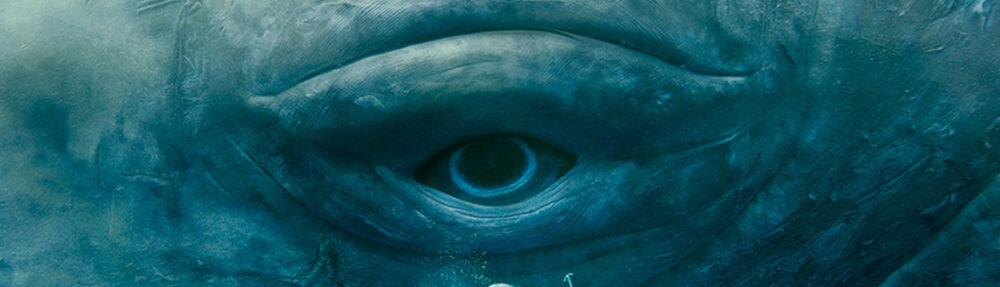
I got hooked while reading this chapter because this is one of the most realistic chapters that I have ever seen so far. You might be wondering: “Why is it realistic?” I would say that it is because humans were born with a desire for something that they longed for a period of time, or rather, I would say, we were born with greed in our minds, at least for once in our lifetime. In this case, for Stubb, it’s the riches that he has always been after. There is a passage where they display Stubb’s true desire, where he said: “Stick to the boat, Pip, or by the Lord, I won’t pick you up if you jump; mind that. We can’t afford to lose whales by the likes of you; a whale would sell for thirty times what you would, Pip, in Alabama. Bear that in mind, and don’t jump anymore. Hereby perhaps Stubb indirectly hinted that though man loves his fellow, yet man is a money-making animal, which propensity too often interferes with his benevolence.” (Melville 452). Why does this matter, you might ask. It matters because at the end of the day, there is something that we are always after, there is something that we keep in our minds at night to remind ourselves why we are pursuing our goals, for what purpose we are pursuing this. When it comes to Stubb, he loves his fellow man, Pip, for sure, but if he were to be given a chance to save Pip or the whale, what would he choose? I think you already know the answer. The whale makes a profit because it is considered to be the creature of the sea; it makes a profit because of the oil that humans want to exploit for their own benefits. Stubb is inherently blinded by riches that Melville considers a ‘money-making animal’ because he has already set his mind on the money, and nothing could change that. Stubb is like an animal with no thoughts when it comes to money; it is the only thing that is keeping him going, and it is the only thing that he desires. Also, when Stubb said, “By the likes of you”, there is a sense of arrogance coming from his side. It is the utter annoyance that Stubb is expressing here, and I wondered if we’ll get to see more of his side later on.
“Oh! the metempsychosis!”
We’ve been talking a lot about noticing the moments when Moby Dick puts us to sleep and then pulls us out of that boredom and trying to discover why is it that the book is formed this way. I think the end of Chapter 98 gives us one possible answer to this:
“Yet this is life. For hardly have we mortals by long toilings extracted from this world’s vast bulk its small but valuable sperm; and then, with weary patience, cleansed ourselves from its defilements, and learned to live here in clean tabernacles of the soul; hardly is this done, when–There she blows!–the ghost is spouted up, and away we sail to fight some other world, and go through young life’s old routine again” (469).
The constant jump from pillaging one captured and slain whale to immediately hunting another is representative of the flow of life as a whole. We hardly have time to fully invest ourselves into extracting the small but valuable sperm from this world’s vast bulk when another call prevents us from even fully cleansing ourselves of the task at hand. It’s nearly impossible now for us to just sit and digest something without the endless media and entertainment fighting for our attention. So to see Melville talk about this constant distraction in 1850s America, it’s clear that its not just the modern day technology that keeps us from ever giving our full attention to something, but it’s often the case that the people ordering us expect us to swiftly wrap up our business with one whale to plunder the next profitable goal. Constantly put through this metempsychosis (transmigration of the soul after death, reincarnation basically), going through young life’s old routine again and again, to extract the resources and discard the source.
ch. 96 of Moby Dick
At the end of Chapter 96 of Moby-Dick, Ishmael has one of his most memorable lines: “There is a wisdom that is woe; but there is a woe that is madness… And there is a Catskill eagle in some souls…” It’s classic Ishmael, one minute he’s staring into the flames of the try-works, basically hypnotized, and the next he’s launching into a deep reflection about human nature and the strange value of suffering.
What he’s really getting at is that not all pain is the same. Some kinds of sadness actually teach you something, and some kinds push you right up to the edge of insanity. But Ishmael suggests that those extreme states aren’t always bad. For certain people, people whose minds naturally operate on a different level, those dark places can still be part of an elevated landscape. That’s where the image of the Catskill eagle comes in: a creature that can dive into the darkest ravines and then soar back into the sun.
The key point is that even when the eagle is in the gorge, it’s still in the mountains. Its “lowest swoop” is still higher than what most other birds ever reach. Ishmael is basically saying that for some exceptional souls, their lows are still more meaningful, and more intense, than the highs of ordinary life.
And of course, this is Ishmael’s indirect way of talking about Ahab. Ahab may be completely consumed by his obsession. He may be “forever in the gorge,” stuck in madness and vengeance. But Ishmael hints that even that madness comes from a kind of greatness. Ahab’s downfall, in its own twisted way, feels more significant than the regular, peaceful, uneventful lives of the average person.
There’s also a subtle warning here. Ishmael is telling himself, and the audience, not to get lost in fantasy or despair. Staring too long into the fire, or into your own thoughts, can pull you somewhere dangerous. But at the same time, he’s acknowledging that confronting darkness can sharpen you, if you’re built for it.
It’s a reminder that insight often comes from uncomfortable places, and that some souls simply fly higher, even when they’re at their lowest.
The Price of Illumination – Chapter 97
The line from this week’s reading that really caught my eye was from Chapter 97: “But the whaleman, as he seeks the food of light, so he lives in light” (Melville 466), which I believe captures Melville’s ability to fuse the physical and the metaphysical once again, turning a practical observation about whaling into a profound commentary on human existence. On a literal level, the statement refers to the whaleman’s constant pursuit of oil, the “food of light,” since whale oil was used to fuel lamps across the world. So, the whaleman’s work is a pursuit of and for illumination. He literally hunts the source of light that allows civilization to see, work, and exist after dark. But Melville complicates this material truth by framing it in spiritual and moral terms. The phrase “lives in light” suggests that the whaleman not only produces light but is also surrounded by it at all times, bathed in its glow both literally and figuratively. Yet this very illumination of theirs is born out of darkness: the death of innocent whales, the blood and toil of the men who harvest their bodies, and the moral and ethical ambiguity of a profession that profits from chaos and destruction.
I think that the irony here is central and clear to see: the whaleman “lives in light,” but only through an act of violence. The same substance that brings clarity and brightness to the rest of the world originates in death. Melville uses this paradox to suggest that enlightenment, both scientific and spiritual, often comes at a cost. Stepping back, in a broader sense, I think that the “whaleman” becomes a metaphor for humankind’s ceaseless desire for knowledge and progress. Just as the whaleman harvests the “food of light,” humans pursue wisdom, truth, and power, but unfortunately, these pursuits are frequently built upon exploitation, conquest, and moral compromise. To “live in light,” then, may also mean to live in the illusion of purity, ignoring the shadow that makes such light bright and possible.
This idea connects to Melville’s recurring interest in the boundaries between illumination and blindness, understanding and ignorance. The whaleman’s world is one where enlightenment is always haunted by darkness because every lamp that burns brightly depends on the extinguishing of life. Through this single sentence, I believe that Melville encapsulates the novel’s philosophical core: that light and darkness are inseparable, that human knowledge is born from destruction, and that to “live in light” is to live within and also understand the moral contradictions that define civilization itself.
But what do I know?
In Chapter 100 ‘Leg and Arm’, a juxtaposition is made between Ahab’s whale versus another ship’s version, “So what you take for the White Whale’s malice is only his awkwardness.” Ahab’s knowledge of the whale is isolated, purposefully, so that no other explanation can penetrate his mind about the creature. In posing the whale as a being without a grand plan, Melville rewrites this entire story in just a sentence, the whale becoming a victim of circumstance rather than a violent perpetrator. Melville also uses Ahab’s intentional ignorance to emphasize the multifaceted nature of knowledge, exemplifying his failure to understand the whale as a complicated creature instead of a monster.
When the whale’s ‘malice’ is exchanged for ‘awkwardness’, this prompts images of innocence and inexperience. The whale is not by nature violent, but when attacked it is forced to defend itself by means outside of its nature, its violence is unnatural and awkward. In rewriting the whale as a docile being, biting Ahab’s leg to save its own life, the whale is able to exist as multiple things, violent and awkward. Ahab does not want to actually know the whale, he has already written his narrative and has his perfect ending for it. Knowledge requires the will to be proven wrong, something Ahab refuses to do, resulting in his struggle against a villain that doesn’t exist. This struggle puts not only himself, but also those around him in danger for a vain pursuit. In just a sentence, Melville offers much on the way we see the world, and the choice we have in this perspective, its consequences affecting more than our own selves.
Oversight of the Oppressed
In 1850 the northern states were opposed to slavery, but The Fugitive Slave Act effectively drug the north into slavery’s messy affair. They could no longer turn a blind eye. Melville clearly comments on the unjust process that the act enforces in chapter 89 of Moby Dick: Fast-Fish and Loose-Fish. This chapter seems to aim at southerners, ridiculing their conception of property. He calls for the transfer of the uncontentious laws of the sea to become a law of the land. But Melville pushes his inquisition towards the entirety of the country in Chapter 92. For even if northerners abhorred the idea of slavery they still tended to hold racial prejudice. Melville criticizes ingrained racism when he addresses the smell of whales: “They hint that all whales always smell bad. Now how did this odious stigma originate?” (448) In his explanation of the origination of a stigma Melville confronts all of his readers to rethink their indoctrinated beliefs. By turning the lens of criticism from southern readers to the whole of the United States, Melville forces his readers, as much as the Fugitive Slave Act does, to acknowledge that they are part of the problem. He affirms that accepting stigma as fact when stemming from a societal lens most likely comes from one isolated incident, or from a bygone civilization. And the reader’s participation in racial stigma is participation in slavery. Melville attempts to reason with all of America by introducing the notion that all men, like whales, “that living or dead, if but decently treated, whales as a species are by no means creatures of ill odor” (449).
What is significant about this contention is the chapter that follows it, The Castaway, continues to chronicle the north’s participation in the slave industry. Stubb “hints” to the reader when he warns Pip of his potential life at sea: “man loves his fellow, yet man is a money-making animal, which propensity too often interferes with his benevolence.” (452). Melville replicates the United States. Deserting their fellow man to live by the exploits of slavery is Stubb’s boat leaving Pip to die, or worse, go mad at sea while chasing the bankroll of the whale. America’s capitalistic society fuels the intentional oversight of the oppressed.
Chapter 93- What is More Valuable: The Child or The Whale?
As I was reading through chapter 93, I found more of Stubb’s character and drive for his hunt for these whales as he was dealing with the adolescent young Pip. This might have been what a sailor might do in the persuit of hunting a whale but it really shows how Stubb values money over a human life. What is more valuable to a sailor, one of their shipmates lives or the profit they can recieve for their hunting of these ocean beasts?
” “Stick to the boat, Pip, or by the Lord, I won’t pick you up if you jump; mind that. We can’t afford to lose whales by the likes of you; a whale would sell for 30 times what you would, Pip, in Alabama. Bear that in mind, and don’t jump anymore.” hereby, perhaps Stubb indirectly hinted, that though man loves his fellow, yet man is a money-making animal, which propensity too often interferes with his benevolence.”
These whales are the motives for these sailors as they are in hot persuit of them across the oceans. They want to catch as many as they can so their profit can be large. This means they can’t afford to go back for anything, even a human who was aboard their ship. Pip had fallen overboard after getting tangled in the line which the whale was pulling which was cut so he could be let free so he wouldn’t drown. That act showed that Stubb does have some ounce of care in his heart but him saying that “I won’t pick you up if you jump” then comparing the price of him to the whale was a very interesting comparison. Stubb saying what he does shows his true colors as he is money driven to hunt the whales. He is alluding to selling Pip into slavery as he mentioned Alabama which was a slave state at the time of Melville writing this book. “We can’t afford to lose whales by the likes of you,” shows that Stubb values the money a whale could get him even if his shipmates that he loves lives or dies.
Stubb’s philosphy is to always continue the hunt no matter what which shows how hyperfixated he is on this persuit of hunting down and killing these whales for the profit he can gain. Pip wouldn’t have survived if Stubb did not stop his persuit of the whale and pull him back aboard the boat saving his life.
Ch. 94 – A Squeeze of the Hand
While a lot of the chapters from this reading went right over my head, I could not help but be drawn to the ending of Chapter 94. Ishmael is discussing the works of the blubber-room and the man who works beneath the deck. From this chapter reads the passage, “With this gaff, the gaffman hooks on to a sheet of blubber, and strives to hold it from slipping, as the ship pitches and lurches about. Meanwhile, the spade-man stands on the sheet itself, perpendicularly chopping it into the portable horse-pieces. This spade is as sharp as hone can make it; the spademan’s feet are shoeless; the thing he stands on will sometimes irresistibly slide away from him, like a sledge. If he cuts off one of his own toes, or one of his assistant’s, would you be very much astonished? Toes are scarce among veteran blubber-room men” (458). While it is quite gruesome to think about the loss of someone’s toes to a sharp object, toes are used to stabilize us on our feet. I would like to argue that, while the blubber-room and its men are apart of the Pequod, and the Pequod being referenced as its own nation state, that the act of sawing and cutting at blubberous commerce and even at the risk of one’s self, that the blubber-room and its men represents the self destruction of the people within the nation state. As America is at one of its worst points in history, clawing after the idea of white superiority at the expense of others, they are actively cutting through themselves and destabilizing the very foundation that they believe they have erected for themselves and the nation. With the tossing and turning of the nation, creating such an already unstable foundation, the mere acting of cutting down another object in turn leads them to cutting themselves down.
The Warmth of Work
In “A Squeeze of the Hand,” Melville takes one of the most routine jobs on the Pequod and reveals its deeper meaning. As Ishmael and the crew work together to turn the cooled sperm oil back into liquid, he is surprised by the comfort he feels in the task. The repeated motions, the soft feel of the oil, and the shared pace of the work seem to blur the line between body and spirit. What starts as simple labor becomes almost sacred, a time when loneliness gives way to a sense of community. Ishmael describes this change when he writes, “Squeeze! Squeeze! Squeeze! all the morning long; I squeezed that sperm till I myself almost melted into it” (456). In that moment, the work becomes a symbol of unity. The word “melted” does not mean he is tired, but that he lets go of himself and becomes part of something bigger and more human.
This passage stands out because it happens during one of the novel’s most unpleasant scenes. Melville shows men working with whale fat, but turns it into something graceful. When Ishmael realizes he is squeezing his fellow workers’ hands by mistake, it shows how shared touch can break down barriers. Even on a ship focused on violence and profit, there is a gentle kindness. The repetitive work feels almost like a prayer. It is a brief moment of peace before the Pequod returns to chaos, as if the ship remembers, for a moment, what it means to be human.
This chapter is memorable not because it praises whaling or the sea, but because it celebrates connection. In a simple task, Ishmael finds something that goes beyond its purpose. It reminds us that even in harsh situations, beauty can appear through care, routine, and touch. For Melville, the warmth found in this work is the truest kind of insight.
For extra credit
I attended the meeting on Wednesday 29, 2025 from 12:00 am to 1:00 pm and from 1::00 pm to 2:00 pm and from 7;00 pm to 8:00 pm. What we learned from the first meeting was that we all gathered together professors and students talking together about the M A so that to encourage us to continue studying so that to build our successful future, and after that there were some good connections between the professors and the students visiting them in their offices while giving us some candy because of the Halloween occasion, and we shared our thoughts and perspectives among each others, it was really helpful to build strong relationships among us. At the evening we met with poet that cam from Florida and we listened to some literary poems, they were amazing, and some students bought some his own poems book so that to encourage the poet himself. And here is a picture that I took with the poet.

