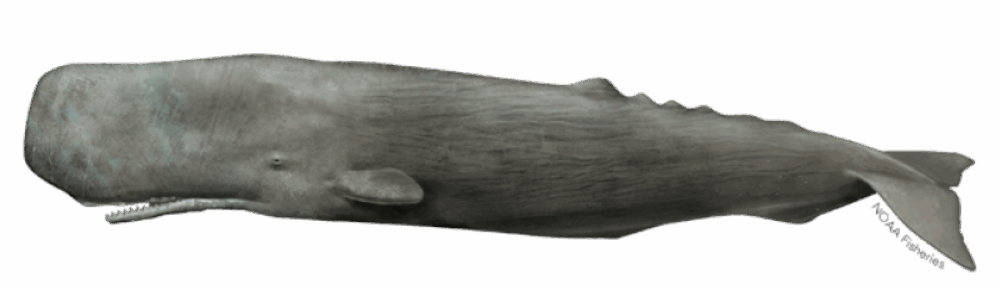
In the beginning of Chapter 110, “Queequeg in his Coffin,” Melville writes of the crew of the Pequod doing a deep clean of the cargo hold. Looking for an oil leak, they take everything out from the bottom, where it looks like you could find traces of Captain Noah and placards “vainly warning the infatuated old world from the flood,” and spread the objects out on the deck. In page 519, Melville offers the reader a specific image of this, “Top-heavy was the ship as a dinnerless student with all Aristotle in his head. Well was it that the Typhoons did not visit them.” By using figurative language to personify the ship, Melville stresses the role of the Pequod as a nation state and a representation of young America, which he critiques for its naiveness and unreliable foundation.
The term “top-heavy” is of importance here, because it refers to something that is excessively heavy at the top and in great danger of falling over. Although it is being used to describe the ship, it is not in a literal sense, as it makes no sense that a ship would topple over from many objects on its deck. However, Melville is referring to how the ship can be “top-heavy” when we are reflecting on its structure and ideals, which he argues are precariously built. Further, the term evokes the image of shallowness, as it is referring to the surface of the ship (it’s heavy at the top, but light at the bottom). In other words, it looks promising but it lacks substance. If we are to continue to think about the Pequod as a nation state and representation of America, as Melville has prompted us to do in the past, we can take these two ideas that spring from the term in question (how something heavy at the top topples over and a system that is superficial) and apply them to the young country Melville is living in; a country that has grown powerful at a rapid pace, a bustling, wealthy, energetic state that has many unaddressed cracks at its core. These fractures at the bottom though, Melville warns, will cause them to fall apart sooner rather than later.
In the next phrase, Melville prompts us to look at the ship “as a dinnerless student with all Aristotle in his head.” This image points to the ship (and therefore the country of America) as a naive entity. A hungry student is often immature and disheveled but also hungry for knowledge and idealistic. Idealism, that unrealistic romanticism, is a central factor evidenced by Melville calling attention to the head (“all Aristotle in his head”). This young student (or young country) is well-meaning, but their worldview only goes so far and stays stuck in philosophy and abstractions, which brings us back to the lack of substance at the base. Furthermore, by specifically referencing Aristotle, one of the most important philosophers for Western culture, Melville is indicating that this critique is meant toward for this sector of the world; but the analogy being used is of a student (who is often a young person), which means he is specifically critiquing the United States, the newest country of the West, and the one he is living in. After the American Revolution, the country united under strong ideals such as freedom, democracy, and unalienable rights, but the remnants of oppression in colonial America were never addressed. Slavery was one of these heinous violations, and it was becoming a more pressing issue with every passing day as unrest grew in the country. In other words, there were these big, noble sentiments that were proclaimed as the base of our nation, but when one looked closely at them, it was clear they were not consistently applied for every person in the land. We declared life, liberty, and the pursuit of happiness, but in a tangible sense, these things were at best questionably exercised and kept at a very shallow level. The country was young and shaky, and for Melville it showed in its structure but also its inconsistent and undependable ideals. Preceding this idea with a reference to Noah’s Ark and the story of the flood, it is Melville making a warning about shaky foundations and the importance of heeding this warning in a timely manner, before we are destroyed.
This passage ends with a final warning disguised in a metaphor. Melville writes “Well was it that the Typhoons did not visit them then.” For the Pequod, or any ship for that matter, being hit by a Typhoon, a powerful force of nature, would have been catastrophic. He is saying that they were lucky they were not suffering from this dangerous event, but the word “then” implies that Typhoons will eventually visit them. In other words, catastrophe is imminent. As mentioned before, the issue of slavery in America was coming to a head at the time that Melville was writing his novel. The states are divided between slave and free states, but the recent Fugitive Slave Act was forcing every person in the country to be directly compliant with this structure (free states were complicit even before that as they benefitted from slave labor, but it was easier to ignore because it was less direct). The Typhoons that Melville is referring to are starting to brew on the horizon. Civil unrest is growing and division is more visible every day. This issue of blatant injustice would eventually burst into an all out war. The choice of using Typhoons as an analogy works because it implies that injustice will naturally erupt into chaos, a powerful force that we cannot fight. Melville is warning that the Typhoons are coming to our country, and with our naiveness and shaky foundation, we are ill prepared to receive them.
The tone of this passage is foreboding and admonishing, but it is also relatively gentle. Melville believes in his country and holds it close to his heart, which is why he compares it to a starving student rather than an entity of evil. It seems like he has hope in the good intentions of the American people, and their ability to change if they heed his warnings. This passage is highly relevant to the current climate of our nation. As Melville believes, it is important to recognize both our good intentions and failings as a country in order to directly address injustice and remedy it, lest it destroy us from within.