Emerson & King

Waking up at 6:30am to read Emerson’s ,” The American Scholar”, (TWICE) and I still don’t understand it, sadly. What I got from it was a little bit on how to be the perfect “American scholar” is the past (books), which probably means having the right understanding and be yourself because you won’t get to experience life in order to have.

Emerson kind of mentioned on how you can find knowledge by learning the real truth with books and how they are basically the key to understand life fully, “Books are the best type of the influence of the past, and perhaps we shall get at the truth,–learn the amount of this influence more conveniently,–by considering their value alone.” (Emerson) I agree with this concept becasue I actually do agree on how books open up more creative minds and ideas with a full experience on what the book mentions or the type of genre it is. “Books are written on it by thinkers, not by Man Thinking; by men of talent, that is, who start wrong, who set out from accepted dogmas, not from their own sight of principles,” this quote got to me, no words.

“There is then creative reading as well as creative writing. When the mind is braced by labor and invention, the page of whatever book we read becomes luminous with manifold allusion. ” (Emerson), this quote caught my interest because I majored in Creative Writing (even got a certificate) and enjoy creative writing because it I think creativity can expand the mind to it protentional of creativity when it comes to writing.

For some odd reason, I found King’s article interesting, but sad at the same time. The fact that those men had to endure for months in the sea and their only way to survive was cannibalism, its heartbreaking and the fact that they had to choose who to eat was just horrible to read about that. It reminded me about the Uruguayan rugby team whose airplane crashed into the Andes mountains and endured so much a traumatic event and also to recourse to cannibalism as well. To know that Herman Melville was inspired by this true event makes it more interesting, nerve-wrecking and fully grasp the need on wanting to read it now and know what the deal is with Moby Dick. It still was a bit hard to understand so hopefully can someone help me understand it a bit more in class.

Emerson and King

Of both readings, Emerson’s was most challenging. However, I think I was still able to pick up what Emerson was laying down. Emerson points out that the American scholar’s first influence is nature. Nature draws curiosity and inspires scholars to be hungry for knowledge and search for the truth. Emerson also points out that books are thee most important thing to influence others. He writes “Each age, it is found, must write its own books; or rather, each generation for the next succeeding. The books of an older period will not fit this.” (Paragraph 14). Each generation has their own books that reflect their beliefs and values, so when the readers read the books of their time, they can continue to get inspired and eventually write their own. Something that stood out to me that Emerson wrote was “The world is nothing, the man is all…” Man is who brings curiosity into the world and also takes knowledge from it. By challenging nature and books, scholars gain their knowledge and experience. The soul in ‘man’ is what inspires us to look for the truth and answers.

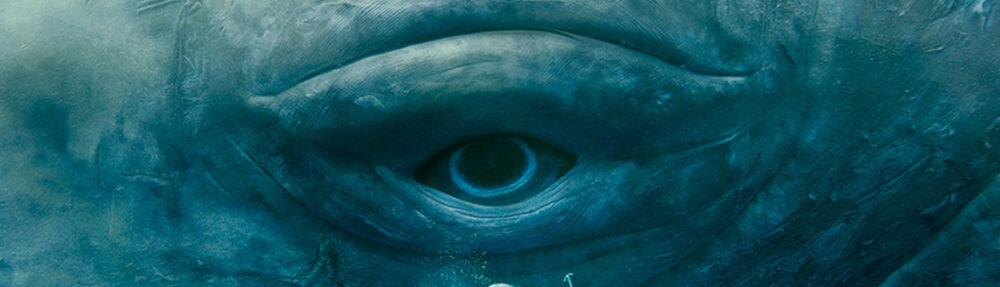
After reading King’s article, it made me wonder if Melville included any cannibalism in Moby Dick. Now, I am even more interested in reading the book to see how the real life incident shaped this story. I found King’s article both terrifying and interesting. Terrifying— because I am not very fond of the ocean. The ocean is very large plus it has a huge number of animals, both discovered and undiscovered. And interesting— because I enjoyed the history aspect of the article. In his article, King mentions that during the real life incident of the Essex being attacked, the first mate spotted a 85 feet whale. This is absolutely horrifying and not something I would like to imagine. The captain of the ship, Captain George Pollard and his men were attacked by a sperm whale and had spent 92 days without food or water, and these men eventually resulted to cannibalism. During the Captain’s journey though, they had come across an island but decided to keep moving because they said it was filled with cannibals. I found this to be pretty ironic and slightly amusing because they became exactly what they didn’t want to encounter.

Emerson’s “The American Scholar”

I’m extremely familiar with Emerson’s work due to his proximity to Louisa May Alcott in her childhood. I did my honors thesis on Alcott’s Transcendentalist background and upbringing, so a majority of Emerson’s either subtle or sometimes direct references to nature and Transcendentalism took me back to the labor of love that was my 25-page paper. It was interesting to read this specific essay and reflect on how his perspective is almost openly mirrored in Alcott’s Little Women, Flower Fables, and her personal letters as both an American author and American scholar.

Emerson points to nature as the first teacher of the American scholar, urging the audience, which extends beyond just Martin Van Buren, to return to the land to be re-inspired and literally touch grass. One of my favorite things about Emerson, and thus Alcott, is how reminiscent the writing is—I can see Emerson looking out his window at Bostonian elms or bluestem grass, recognizing the individuality of nature, and discovering that a return to these central elements is the key to correcting “the degenerate state” (Emerson). I know we discussed the historical context during one of our other sessions, but Emerson’s letter is such a time capsule to the fears that the Industrial Revolution brought. There are so many instances where Emerson warns against a copy-and-paste American scholar, who thinks what others think as if on a mass-produced conveyor belt of national intellect.

Emerson and King

I initially skimmed through Emerson’s text, then had about three headaches and took a couple Tylenol just to understand at least two points: American scholars should be thirsty for knowledge and form their own identity instead of copying others. I am probably on my 4th read before passing out again, and that’s still all I can figure out.

About the two points I did find, I… agree? I don’t really know what else to say because they seem straightforward enough. You’re not a scholar when you don’t want to learn, and America is known for using other cultures and blending them, which I guess is a tradition of its own. I don’t know, I came here because I was gaslit into thinking I’d meet Spider-Man when I was about to turn 8.

At the very least I can comprehend King’s article and, I’m probably messed up for this, but I find it amusing that they became cannibals after trying to avoid islands of them. I guess it made sense when King included “Cannibalism in the most dire of circumstances, it was reasoned, was a custom of the sea,” but it’s still a terrifying thought. There goes any hope of ridding my thalassophobia.

My thoughts on “The American Scholar”

Ralph Waldo Emerson’s “The American Scholar” is easily established as an inspiring piece. One that incites progress concerning American education and societal advancement during a tumultuous time in American history, the 1830’s. Considering turbulence, many are quick to cite the struggle over slavery and the oncoming civil war. But something else was happening in the United States at the time. In 1830 The Indian Removal act was signed into law by Congress under President Andrew Jackson. Thousands of Native Americans were forcibly removed from their southeastern homelands and made to march the fatal “Trail of Tears” to Oklahoma. Because of this, I find a tremendous amount of irony in “The American Scholar” regarding Emerson’s beckoning for man to connect with nature. “Ever the wind blows; ever the grass grows… the scholar is he of all men whom this spectacle most engages” (paragraph 10). Emerson poetically asserts that the scholar who recognizes the unimaginable amount of learning to be had in nature is on the path to possess intellect. To engage with the awes of nature is to engage with one’s place in the world and therefore one’s understanding of it. Is not the principle belief held by Native American culture based on recognizing the importance of the intricacies of nature? This cultural significance, the reverence of nature, is what led our WASP settlers to judge these people as barbaric. Native Americans possess this engagement with the spectacle of nature. To make these claims while they are deemed savages and marched to the brink of death is harrowing. Now, I am not here to punish Emerson for the crimes of the United States government, nor place blame on him for this irony. It is most likely that he hardly, if at all, knew what was happening on the Trail of Tears, or any extent of Native American culture. I only aim to uncover a tragic irony. And a paradoxical instance that is assumed by our government. Beholding a white man for arousing intellectual connection with the natural world, while nature revering “savages” are being advanced to their impending doom.