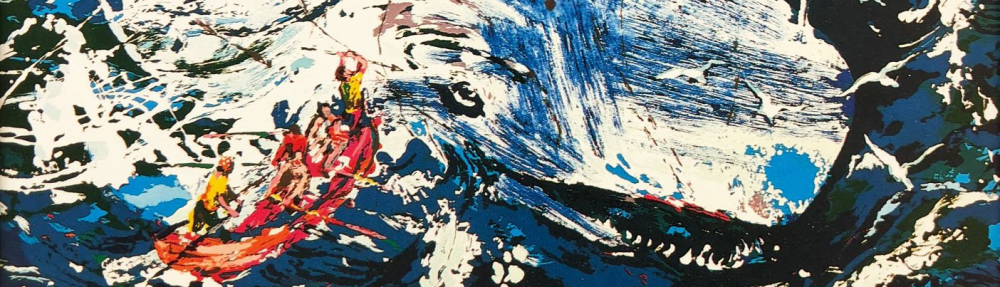
Ahab received his ultimate punishment in the finale of Moby Dick. It wasn’t death, he knew death was imminent: “lower not when I do; when branded Ahab gives chase to Moby Dick. That hazard shall not be thine!” (590) When Ahab tells Starbuck not to lower with him it is because he wants Starbuck to return home to his family unlike him. He knew he wouldn’t. Ahab’s ultimate punishment was watching his ship go down without him. “death glorious ship! Must ye then perish, and without me? Am I cut off from the last fond pride of meanest shipwrecked captains? Oh, lonely death on lonely life!” (622) It is glory for every captain to go down with their ship. It is honor. In his monomaniacal craze Ahab lost his youth, his family, his sanity but he never thought he would lose the privilege of going down with his ship. He never thought he would lose honor. He loses the chance of entering death in his American wood hearse. This enrages him, somehow heightening his hate for the whale. Which in turn, causes his predicted death by hemp.
What is interesting is though Ahab loses his chance to go down with the Pequod, a heavenly hawk, hammered to the mast-head by Tashtego, goes down with the Pequod. The hawk finalizes Ahab’s battle with nature and his destruction of spirituality. Birds have long been symbols of transcendence in this novel: “Bethink thee of the albatross: whence come those clouds of spiritual wonderment and pale dread, in which that white phantom sails in all imaginations?” (206) Nailing a hawk, a “bird of heaven, with archangelic shrieks” (624), to the mainmast as it sinks, symbolizes a loss of God. This nation, the Pequod, and maybe one day America, goes down due to uncontrolled, monomaniacal leadership. When this happens, they take God and spirituality down to the depths with them.