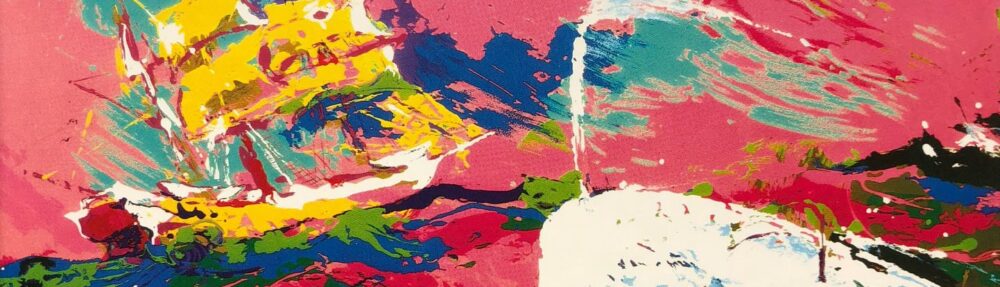
The Whiteness of the Whale

I find myself coming back over and over to chapter 42 “The Whiteness of the Whale” trying to decipher what it could mean. The last paragraph is pointing me in the direction of this whiteness being a kind of blank canvas for us to project our own thoughts and meanings upon. Melville asks “or is it, that as in essence whiteness is not so much a color as the visible absence of color, and at the same time the concrete of all colors; is it for these reasons that there is such a dumb blankness, full of meaning, in a wide landscape of snows– a colorless, all-color of atheism from which we shrink?” (212). What’s striking to me here is the contrast which Melville seems to love: this absence of, yet concrete of all colors, the “colorless, all-color”. It seems that this whiteness is another of the unanswerable questions, ungraspable phantoms of life that we are left to define for ourselves. This “dumb blankness, full of meaning” is nothing yet everything at the same time.

I’m sure there’s a better or more technical term for this, but I’m imagining this whiteness as a zero, its in this neutral state, without any “subtile deceits” of color, but it has the potential to go anywhere? It’s why white can be seen as pure, innocent, noble, even divine, but at the same time there’s this uneasiness because of its association to ghostly apparitions and overall the emptiness that it suggests. The whiteness of the whale suggests more about us than the whale itself, which we see in Ahab’s decision that this whale is everything that is evil as he projects all of his hatred and anger upon it, while others such as Ishmael continue to question the conflicting feelings that this whiteness puts upon us, perhaps a way of showing the indefinite nature of life itself.

Week 8: Vengeance

What stuck with me from this week’s reading was a quote from Starbuck in The Quarter Deck. During Ahab’s obsessive rampage about Moby Dick, Starbuck says: “‘Vengeance on a dumb brute!… that simply smote these from blindest instinct! Madness! To be enraged with a dumb thing, Captain Ahab, seems blasphemous’” (p. 178). This idea has been mentioned before in the book and in our class, but it is touched upon again. The innocence of nature, and to what extent these beings are innocent. 

I always find this debate to be particularly interesting because it calls into question what level of consciousness animals possess when juxtaposed to us, humans. What level of moral compass do we expect from these beings, and can we judge them the same way we judge humans? This quote by Starbucks says we can’t, that animals like whales are simply acting upon instinct and not from a place of bad intention or harm. While I can’t speak on whales, I would like to bring up the idea of dolphins. Seemingly harmless and playful, anyone who has done some research on them knows their intentions and interactions with others in the ocean are often harmful and malicious, ranging from getting high off other animals and purposeful assault. 

Another way I want to analyze this quote is from the idea of vengeance, regardless of the “dumb thing” being the source of harm. This calls into question the idea of revenge, and whether that is even something one should take, whether the one who harmed did it on purpose or not. Is that not stooping to that low level, especially one of physical harm? Ahab is the captain of this boat, and should one want to be led by one who engages in petty vengeance? Who might hold a grudge on the ship for a small transgression? 

The Innocent Nature of the Whale 

One of the most interesting aspects of this book is the ever changing relationship between man and the whale. In my last post, I discussed Queequeg as being symbolic of the whale because of how he’s described with animalistic qualities. However, this statement goes both ways, meaning that the whale has humanistic qualities. It’s hard to hate something for simply being, especially if there is an innate relatability, connection, or understanding towards the creature. So far in the narrative, the whale has been depicted as a fearsome foe, a monstrous beast, but in the later chapters, this notion is challenged. Instead of viewing the whale as a malicious beast, the main character calls to question the innocent nature of the animal. This point is emphasis when he is talking to the ship’s captain, who retells the story of how he lost his leg, and in response he says;

“What you say is no doubt true enough sir; but how could I know there was any peculiar ferocity in that particular whale, though indeed I might have inferred as much from the simple fact of the accident” (80).  

 This vocalized plea of the whale’s innocence shifts the whale’s actions from being the perpetrator of evil to a victim of self-defense against capitalistic ventures. The whale did not attack without provocation, it was being hunted by whalers and responded accordingly to its survival. It’s in all our nature to have self-preservation. By having Ishmeal point this out to the captain shows that he doesn’t share these same opinions about the whale. He is recognizing that this is a living being, much like himself. Ishmeal’s ability to empathize with the whale humanizes the creature. Expanding our precious preconceived notions about the whale. Whereas in the previous chapters he’s a leviathan, in this particular moment, the whale is just an innocent animal trying to survive.