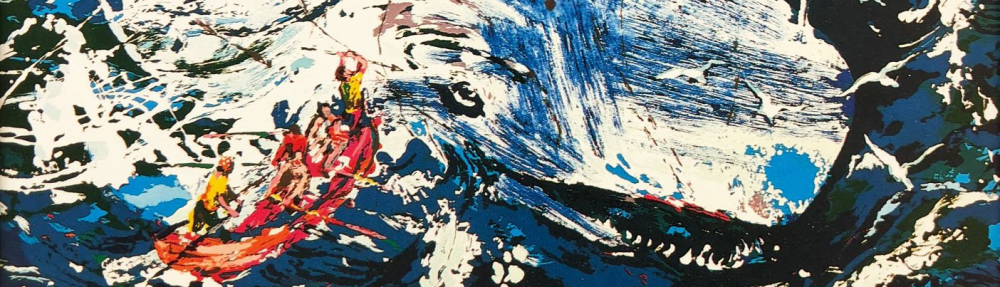
In the chapter leading up to the chase, it’s evident that Ahab is slowly becoming more and more maddening as time passes and they have yet to complete their mission. However, at the very sight of the whale, the object of his desire, he seems almost more insane than before.
“And did none of ye see it before?” cried Ahab, hailing the perched men all around him. “I saw him almost that same instant, sir, that Captain Ahab did, and I cried out,” said Tashtego. “Not the same instant; not the same—no, the doubloon is mine, Fate reserved the doubloon for me. I only; none of ye could have raised the White Whale first. There she blows! there she blows!—there she blows! There again!-—there again!” he cried, in long-drawn, lingering, methodic tones, attuned to the gradual prolong-ings of the whale’s visible jets.
In this sentiment, Ahab displays his erratic behavior in the manner that he speaks, continuously repeating himself in tandem with the whale. Almost as if he’s formed a parasite-like relationship to the whale itself, even claiming that “Fate” had a hand in their coming together again. This one-sided connection he feels to the beast shows the depth of his obsession. Leaving the world of the physical all together, when attributing this mission to “Fate.”
In addition to this madness, there is also Ahab’s power and intentions to consider. At the beginning of the ship’s departure of their original mission to Ahab’s–the appeal in such a turn in monetary terms. Ahab offers them money and glory in return for their service, using this driving competition to fuel their mission.
However, once they finally come upon the beast, Ahab claims the find as his own, with the intention of keeping the doubloon for himself, claiming “fate” as the result of this action. In this scene it’s clear that Ahab never really did have the intention to pay someone to kill the Whale, instead it was utilized as a ruse in order to get them to follow his order. Using the promise of money as power, but in this scene that is unraveled by this confession. Through the illusion of power, Ahab was able to trick them into doing his own bidding and effectively leading them to their deaths.