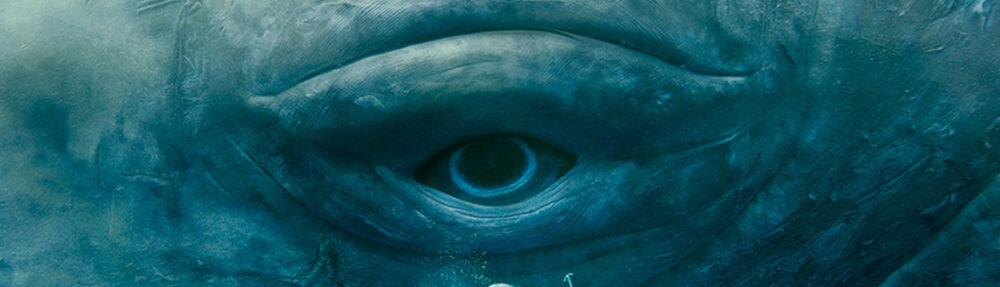
Simply put, I think the extracts chapter really put into perspective of what the audience can expect out of the book. Take a shot every time you read the word “Leviathan,” and I’m sure you’ll be feeling it by the end. Job, Psalms, Isaiah, Rabeleis, Lord Bacon’s Version of the Psalms, Paradise Lost, Ibid, list goes on. I personally know the Leviathan as a mythical creature in different kinds of media, but knowing its history from the Hebrew Bible, it goes to show just how much a Whale represented back then. It’s this huge, imposing, mythical creature to these people in the whaling industry, and I can already picture the kind of damage that is going to happen in this book. I specifically want to connect this description and this mention of Leviathan to a point Ishmael makes in chapter 1.
He mentions this large chunk about money and payment, saying, “Again, I always go to sea as a sailor, because they make a point of paying me for my trouble, whereas they never pay passengers a single penny that I ever heard of…The act of paying is perhaps the most uncomfortable infliction that the two orchard thieves entailed upon us. But being paid,–what will compare with it?” (6) We understand from the background of whaling that the industry utilizes (I hope) most parts of the animal, more specifically for things like blubber and oil. Ishmael makes it clear that going to sea as a sailor has more of a benefit than a passenger thanks to the work involved in such. Going after this “Leviathan” like creature surely poses a monetary benefit, but I think that this passage spells disaster. With how thick of a book Moby Dick is, I am so certain that Melville is loading this up to be a set of trial and tribulation that doesn’t end up keeping Ishmael’s monetary attention. I get a selfish kind of read from his statement about being paid, and while I can agree that getting paid is a great feeling, this Leviathan creature has to be humbling, or else I’m going to be very disappointed.
Tag Archives: leviathan
Extracting Extracts
The multitude of differing opinions on the whales presented in these extracts, provides a fascinating view on the history of whale culture throughout time. In particular, I favored three extracts that I feel encapsulates the relationship between humans, industrial society, and whales. The first extract comes from the Book of Isaiah, which is based on the prophet Isaiah from 8th Century BC;
“In that day, the Lord with his sore, and great, and strong sword shall punish Leviathan the piercing serpent, even Leviathan that crooked serpent; and he shall slay the dragon that is in the sea” —Isaiah
Considering how old this text is, I was astonished to see the recurring mention of the whale, known to them at the time, as a “Leviathan.” In terms of biblical texts, the word Leviathan is reserved to only the most powerful monstrous creatures of chaos. Framing our mindset towards the creature to be that of fear, particularly of its grandness and unpredictability—stemming from our lack of control over this beast.
This extract paints a scene of two powerful forces, the Lord and the Leviathan as oppositions, furthering the idea that the Sea is the dominion of chaos and danger. Even the Lord wishes to vanquish this “dragon,” demonstrating not only the Lord position, but also the position of power the sea and whale hold—if only the Lord is capable of slaying the creature.
The second extract that drew my interest, concerned the relationship of the sea to human industry;
“A tenth branch of the king’s ordinary revenue, said to be grounded on the consideration of his guarding and protecting the seas from pirates and robbers, is the right to royal fish, which are whale and sturgeon. And these, when either thrown ashore or caught near the coasts, are property of the king.” —Blackstone
Our class discussions have led us to discuss the idea of coastlines representing boundaries of nations, especially considering there is no way to establish borders due to their fluidity.
The idea of “royal fish” is an intriguing concept for two reasons; the first being that the Whale is considered a “royal fish. Breaking away from the stereotype of Whales being in opposition to God (as I discussed in the last extract) to having a formal relationship where they’re recognized by a sovereign as righteous. The second reason being that the concept of “royal fish” by law, means that this parliament is trying to claim ownership, establish their own border within the sea. It’s a bold endeavor that highlights the fallibility of attempting to conquer the seas, and also opens up the proposition of the sea representing itself as its own state. If the laws of the land extend out into the sea, then the sea can be considered its own sovereignty.
The last extract I wanted to discuss, combines both of my previous points in a much more poetic narrative way;
“No, Sir, ‘tis a Right Whale,” answered Tom; “I saw his spout; he threw up a pair of as pretty rainbows as a Christian would wish to look at. He’s a real oil-butt, that fellow!” —Cooper’s Pilot
This scene depicts a beautiful moment of a person witnessing a rare phenomenon and equating it to the memory of God. However, in the very next sentiment, the person’s view shifts, seeing the value the whale can provide, rather than viewing the whale itself.
This kinship to God, shows the divinity and power this creature holds over the human physic, much like God, this creature creates miracles. Unfortunately, in the same sense, humans view the whale as a source of use rather than worship—-being a summation of what it can provide for our industry, rather than a beautiful Godly creature. This juxtaposition is jarring and really goes to show the conflicting narrative history involving the Great Whale.