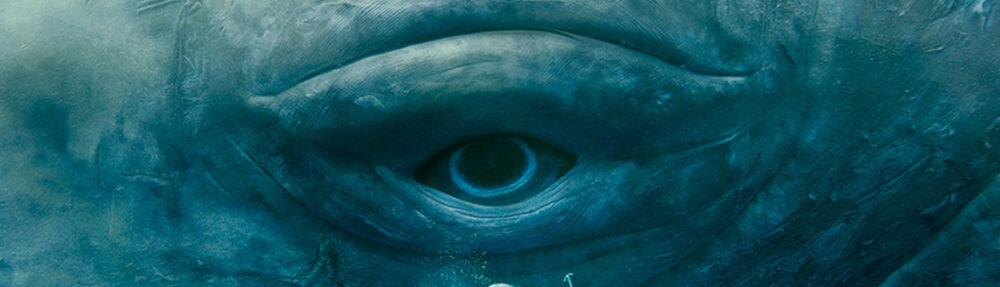
Pip in the Deep

The cloudless sky that is affixed above the South China Sea holds no remembrance. Memory, like CO2 and heat, is absorbed into the ocean. Pip, being at sea long enough, is now a memory. Just another greenhouse gas occluding into omniscient seawater. He notices his body straining to stay afloat as he is carried down alive to wondrous depths. Corals sway to the faint current. Reef sharks gently swirl around him, unbothered by his tender presence. The Deep breeds energy, jolting Pip with pulses of knowledge. He is aware of every world; past, present and future. Every transpiring reality surrounded him, like glowing colossal orbs. He witnesses his ancestors, cradled in the same depths, relinquishing themselves to the same transcendent orbs. Mothers weeping; ocean salinity rising. Like them, he surrenders himself into the arms of the miser-merman. These arms, that hold the finite of history, collect Pip among their hoarded heaps and cast him to the depths.

The deep swallows light and disrupts spacial awareness. It is a space for knowing everything and knowing nothing in one swift, spark of a moment. The sound of clicking is heard in the distance, or in the foreground, or somewhere in between. There is no way to tell. Pip is lost in his surroundings yet procured in his being. No longer subjected to earthly toil, to societal intolerance, Pip feels weightless under this unfamiliar immense pressure. The pressure acts as a binary opposition to oppression. It cradles his soul. That is all he can really feel, his soul. He can’t feel his legs kicking or his arms waving, or his head bobbing. He can’t feel his body being dragged onto the deck of an ancient ship. He can’t feel the resuscitation. The clicking multiplies into thunderous echoes. The water around him is displaced. A shock of white, a flash of horror, Pip’s mind slips out of consciousness.

He is awoken by the surge of a massive fluke swimming away, stirring the water around like a school of sardines. Awake in a wake and sieged by what seems to be a starless night sky, an inky cloud where light cannot invade, no matter how much oil is collected. This is the realm where whales govern, where glares do not exist. The blackness permeates Pip. It is the most blackness he has ever contemplated. It feels like home. In a world where shapes barely exist, and the sound that would usually hang upon a breeze dissipates into the cool, dense molasses, communication is seismic. Communication is haptic. Communication is electric and is now a piece of Pip’s freshly attained knowledge. His heightened senses attempt to situate him in this new world. Beings glide around him, he can feel the pressure undulating like a current as they stream past him. He is being examined, beheld, welcomed. Pip felt things he has never felt before. Physical anguish, frothy vengeance, an Ocean full of ache gyrating around him. But also, collective existence, an unshakeable kindredness, a seep of community. One of them stops in front of him, so close their noses are inches apart. Pip can make out the scaled tail that sweeps back and forth holding this… this, thing, this being upright.

“The white whale has sent you here. He is the guardian of innocence, a knight of the Ocean and the great judge of morality.” Aj’s tidal voice drifted back and forth. “He has brought you to the deep, to the wajinru. It means you are one of us, a descendant of the enslaved. Welcome two-legs. I am called Aj.” Aj bowed his voltaic head and touched it to Pip’s cnidarian soul. “O thy fish God in yon darkness, I am Pip. Have mercy. The white whale you say? The white squall. Have mercy on Pip. I was but thrown from a whale ship, shirr, shirr, forced on the hunt.” Pip rambled, his electric mind rampant. “A whale ship” said Aj puzzled. “Were you not held captive?”

“Held captive? No, we Blacks in the North are free, well shirr, if I didn’t go on that whale ship I coulda got chained up myself.” explained Pip. “The North… Blacks? What is Blacks?” Aj wonders. “Ya know Blacks, negroes, I guess you can’t see so clearly down here but, me, I’m Black. The White men they shackle us, whip us, make us work.” Pip describes in sorrow. He never did have to say it out loud. “You mean all those bodies, cast from ships, all those innocent people dead, because, because they’re black?” Aj said, the rage boiling inside of him. “Pip, what else can you tell us of these people? Where do they live, these two-legs?” “I… they, live in America. Some in the North like me, a lot in the South. That’s where you don’t wanna be. That’s where they lash you, where they hang you.” Pip’s grief welling. “America? Pip I have something to ask of you.” “Shirr, shirr.” “I Aj, hold all the grief for my people, for the wajinru, the memories, the hauntings of our past are within me and only within me. I promised my Amaba not to share these stories. Right now, we live only in the present, in togetherness. But I fear for my people. They become restless, they yearn for who they are, for where they come from. I must break my promise, if only for a few days, to fill the cavities of their souls.” Aj says spouting with emotion. “Pip, I believe this is why you are here, why the white whale brought you to us. You hold knowledge from the other world. Will you help me? Will you help me bring relief to my people?”

“O what’s this? One asks for young Pip? Thy white God has brought me here. O that glorious whale. I have never felt more alive than here in this cold, dark abyss. Shirr, shirr I will help you.” Pip replied.

The next few days, or nights, or whenever it was in this place where light does not bother to penetrate, the wajinru congregated. They collected kelp, and mud, and the skin of the dead: sharks, rays, seals. Anything to envelop them, to protect them in what they knew would be a vulnerable state. The water hummed along with their electric palpitations. The vibrating pressure comforted Pip. He was anxious, but he felt free for the first time, alive with the idea of being needed, his mind being desired. The wajinru begin shoaling by the thousands, surrounded by their miry cocoon “Are you ready?” asked Aj. Pip nodded. They floated into the center of this gyrating ball of mud and dead matter. It resembled an oceanic womb, regenerating its inhabitants to foster new life. And inside, the water pulsed like the ocean’s heartbeat. Aj and Pip hovered in the center. Aj snapped his tail to the left and all the wajinru followed suit. He communicated to them through the water. Pounding his tail, electrically transmitting every story he learned from his Amaba. Happy and sad and everything in between, all of them. While he did this Pip went around from wajinru to wajinru. They were still, debilitated with the surge of information. Pip pressed his cheek to theirs, one by one. They wept. In anger, in confusion, in fleeting joy, with vengeance they wept. It lasted days. And this was the first Remembrance.

“The Past—or, more accurately pastness—is a position. Thus, in no way can we identify the past as past.” (Troulliot)

 The past shapes the present, therefore, the past surrounds us, like an ocean. Through fiction, the past is retrieved and reconstructed. In his 1851 novel Moby Dick, Herman Melville illustrates the lack of freedom of free Black men leading up to the Civil War. Throwing Pip overboard, and his subsequent enlightenment, is an acknowledgement of the atrocities of the Middle Passage and slavery because it is a recognition of the voices and History concealed in the Ocean’s depths. One hundred and sixty-eight years later, narrative discourse, like Rivers Solomon’s 2019 novella The Deep, continues to reiterate and remember the trauma inflicted on millions of captive people that were thrown overboard. Solomon retrieves the history of people who were deliberately silenced beneath the surface of the ocean. Both of these novels employ the setting of the Ocean to frame significant historical events. In this way, the Ocean operates as an archive of the American nation. An archive that has been concealed, like a witness who has collected hush money. Just as the silence of the ocean is depended upon to exploit it, so is the silence of the trauma of slavery. Emancipation might have been enacted, but the structures of slavery still exist, and silence enables them. Reading Melville’s character of Pip into Solomon’s novella The Deep demonstrates the prevailing marginalization of Black communities from 1851 to 2019. Pip and the wajinru act as voices for the Ocean and for Black communities both on land and those lost at sea.

Pip is a symbol of American blackness in Moby Dick. Christopher Freeburg, in his essay Pip and the Sounds of Blackness in Moby Dick, argues that Pip “allows us to realize that black culture is lodged in the very heart of the novel” (52) Melville is very purposeful and ahead of his time in his usage of Pip. It is Pip’s mere presence that welcomes readers into the diversity of America. This “presence constitutes the greatest value of the novel; he is a symbol of social equality and a catalyst for altruistic insight.” (Freeburg 52) Pip is a symbol of social equality because he demonstrates its inequities. The discrimination that independent Black individuals faced leading up to the Civil War constitutes a lack of freedom. In the “Forecastle—Midnight” Melville displays the marginalization of free Black communities: While ALL yell “The squall! The squall! Jump, my jollies! (They scatter.) PIP (shrinking under the windlass.)…” (193) soliloquizes. Pip giving a separate speech after “all” speak suggests that he is not a part of the crew. The Pequod, representative of the American nation, marginalizes Pip as America marginalizes Black communities. Through Pip, Melville demonstrates how freedom for Black individuals does not necessarily mean autonomy.

The “great shroud of the sea” (624) is a chronicle of all those who have been lost to its watery bowels. Through its obscurity, the Ocean is a silenced archive. It has been used as a naturally occurring cloak concealing capitalist exploitations. In “Pip’s Oceanic Voice: Speech and Sea in Moby Dick” Jimmy Packham “recognizes the power of language as a colonial tool, something which can impose itself onto a silence (…likely assumed) that cannot speak back” (Packham 7) Imposing language onto the voiceless enables History to be altered by colonial narrative. Melville also recognizes this muteness of the Ocean: “the waves rolled by… seemed a silvery silence” (Melville 253), “white, silent stillness of death in this shark” (Melville 206), “jetting his silent spout into the air.” (Melville 595). The archival Ocean and its creatures are speechless. The silence of an archive enables History to invalidate traumas. Silenced trauma and exploitation of the past enables the continuation of trauma and exploitation. Melville recognizes that “it’s the sea’s depths that obscure any voice the sea or its creatures might have.” (Packham 7) Because the Ocean and its inhabitants are unable to advocate for themselves, Melville assigns this task to Pip. “We can understand Pip’s discourse as Melville’s… effort to find a space in language for oceanic depth” (Packham 4) Pip, who was already a medium for the marginalized, forces the reader to acknowledge that the Ocean, similar to Black communities, is underappreciated, over fished(worked) and a vessel for unspoken trauma. Pip “saw God’s foot upon the treadle of the loom, and spoke it.” (454) Pip “spoke it”, that is he spoke for the Ocean and against Oceanic and Black exploitation.

 Melville’s concept of whaling drives his narrative. He frames his novel on the surface of the ocean. Therefore, the whalers only comprehend the surface. Pip, who has been “carried down alive to wondrous depths” (453) learns to speak for the deep. Packham raises the idea that Pip “comes to embody the ‘strange shapes’ of the depths, his voice exhibiting an instability that recalls the fluidity of the element into which he has plunged.” (Packham 1) When Pip, who represents American blackness,  speaks for the ocean’s abyss, he transpires the annals of a young nation. Pip’s designated voices collide when Pip’s soul is thought to be “in those far Antilles” (Melville 522) The Antilles, the Caribbean, where his ancestors were thrown from slave ships not so long ago. Pip is a voice for blackness, a medium for the Ocean, and ultimately an agent for his ancestors concealed in the sea. By giving Pip this multitudinous voice, Melville advocates for those lost within a buried archive. Melville uses Pip and the Ocean to frame the nation’s historical events.

The acknowledgement of the concealed archive is the cross section for Moby Dick and The Deep. One hundred- and seventy-five-years pass, and the United States continues to exploit its citizens while it feigns perfection. It is a time where Literature rather than History must command the discourse of the trauma of slavery in order to hinder the continuation of it. The Civil War may have legally ended slavery, but as Christina Sharpe points out in The Wake, “Racism [is] the engine that drives the ship of state’s national projects… cuts through all of our lives… in the wake of its purposeful flow.” (Sharpe 3) Slavery, through marginalization, through racism, through incarceration continues to press its haunting mark onto Black society. Silence enables exploitation. Silence of neighbors, silence of mainstream media, archival silence, exploits hidden in coral reefs, are all factors perpetuating exploitation. “The means and mode of Black subjection may have changed, but the fact and structure of that subjection have remained.” (Sharpe 12) Drexciya, clipping., and Rivers Solomon, the curators of the wajinru, exemplify the need to break the silence of this continuation of slavery. Literature like The Deep, which reinterprets the traumas of the Middle Passage into the creation of a new race of merpeople,attempts to begin a process of healing. This healing arises not only by re-gifting life to these erased humans, but by telling their story; uncovering the History that was meant to be obscured by the voiceless Ocean.

In The Deep it is the Ocean depths that act as the setting for the novel rather than the surface in Moby Dick. Expanding to the abyss of the Ocean as a main setting attempts to give definition to the deep, unknown, ocean environment.  Similar to Melville, who implements a uniquely American narrative with whaling, Solomon turns to the wajinru to constitute a distinct facet of American history: chattel slavery. Connecting these two stories materializes the Ocean as an American archive. Mooring Pip into the narrative of the wajinru points to the extensive duration the issues of racial marginalization and exploitation have subsisted. Pip, who was written nearly two-hundred years ago, was an attempt to enlighten readers of 1851. However, he continues to be relevant, Pip can easily become a character in a 2019 novel. He does not demonstrate what has passed, instead he now depicts the continuity of Black American subjection. Pip and the wajinru are modern vehicles for the advocacy and amplification of the Ocean and Black communities.

Fastening Moby Dick to The Deep aimed to establish two main assertions of the books: Ocean as archive and the oppression of Black communities. Utilizing Solomon’s narrative enabled a clearer highlighting of these allegories in Moby Dick, a book with endless analyses. Both of these novels employ the setting of the Ocean to frame American historical events. They recognize the important documents held within Oceanic depths and sought to retrieve them. For it is through literature that the past is reconstructed. Literature breaks the silence that exploitation so dearly depends upon. It then became natural to transport Melville’s sea speaking character of American blackness, Pip, to the profundal realm of the wajinru. The nearly 200-year-old Pip, who was fabricated before emancipation, emphasizes the continuity of a nation that upholds slavery as his character retains relevance. Through Pip, the wajinru, and the Ocean we learn that the concealment of sunken traumas promote exploitation. The Lorax might speak for the trees, but Pip and the wajinru speak for the Sea.

Works Cited

Freeburg, Christopher. “Pip and the Sounds of Blackness in Moby Dick.” The New Melville    

           Studies, Cambridge University Press, 2019, pp. 42-52.

Melville, Herman. Moby Dick. Penguin Books, 2003.

Packham, Jimmy. “Pip’s Oceanic Voice: Speech and Sea in Moby Dick.” The Modern Language

          Review, vol. 112, no. 3, 2017, pp. 567-584.

Sharpe, Christina. In the Wake: On Blackness and Being. Duke University Press, 2016,

https://doi-org.libproxy.sdsu.edu/10.2307/j.ctv1134g6v.3

Solomon, Rivers. The Deep. Saga Press, 2019.

Final Project Proposal

I am nervous about it, but I am going to write Pip into The Deep by Rivers Solomon. I believe that Melville purposefully delivered Pip to his ancestors. I can’t stop thinking about the intersection of Pip’s soul lost to the Antilles and the mermaids from the Middle Passage.

Thesis:

In Chapter 110 of Moby Dick, while Queequeg is laying in his coffin preparing for death, Pip asks a favor of him. “Seek out one Pip, who’s now been missing long: I think he’s in those far Antilles.” (522) By conveying Pip to the Antilles, Melville delivers him to his ancestors. This delivery directs focus to the savage, immoral foundations of America. This subtle critique not only assesses Christianity and capitalism, but delivering Pip to the Middle Passage critiques the values of ‘civility’ compared to so called savagery. Melville indicates that there is no such thing as civility, only justified savagery.

There is a Wisdom that is Woe; But there is a Woe that is Madness

On the diverse nation-state of the whale ship Pequod, Pip is one of the few representatives of African-Americans. When jettisoned from a whaleboat, Pip’s perceived loss of sanity is actually the procuring of higher consciousness.  “God’s foot on the treadle of the loom” reveals to him his predisposed, hopeless role in society. Pip beholds his lack of freedom, even as a supposedly free African American. He comprehends the interminable suffering of man, of African-American man. In this omniscient state, Pip is altered into a rejection of his joyous self. He let’s go of his life-endearing character and gives in to African American’s expected function in the nation, as hollow performer. By forcing Pip into enlightenment, Melville impels his readers to examine the true sentiments behind the Fugitive Slave Act: society’s disregard of the suffering of their fellow man.

Pip is introduced directly after Ahab announces his true intentions for the Pequod, in the Midnight, Forecastle. While the other sailors sing and cast their convictions of this doomed mission, they demand Pip to play his tambourine: “Pip! Little Pip! Hurrah with your tambourine!… Here you are Pip… up you mount! Go it, Pip! Bang it, bell-boy! Rig it, dig it, stig it, quig it, bell-boy!” (188-189) While the other sailors assert their viewpoints and become representatives of their homelands, Pip is forced to be entertainer. Even in the absence of his tambourine, they tell him to become the instrument: “beat they belly then and wag thy ears… Rattle thy teeth then and make a pagoda of thyself.” (188-189)”. Not just his talent, but his body merely exists to serve others. The sailors, ignoring his resistance to play, “Pip! Hurrah with your tambourine! don’t know where it is…” (188) instill his role in society as only existing for the amusement of others. Contrary to his emplacement, Pip holds a sense of dignity. Melville establishes Pip’s sense of self-respect by giving him the last words in this chapter. Pip’s soliloquy ends in prayer: “Oh, thou big white God aloft there somewhere in yon darkness, have mercy on this small black boy down here” (193) Although Pip has been placed at the bottom dregs of this make-shift nation, he still holds onto faith, a hope that God may have mercy on him. Pip’s prayer expresses a sense of optimism. Due to this optimism, Pip continues to believe he has control over his own fate. Beneath Pip’s plea, Melville arranges five asterisks ***** to close the chapter. These five asterisks not only conclude the chapter, but they also conclude Pip’s sanity. The asterisks symbolize that this petition for salvation is Pip’s final.

 Pip returns to the novel in his transformative chapter. Leaping from a boat, stranded at sea Pip is “carried down alive to wondrous depths, where… the miser-merman, Wisdom, revealed his hoarded heaps… Pip saw the multitudinous, God-omnipresent, coral insects, that out of the firmament of water heaved the colossal orbs. He saw God’s foot upon the treadle of the loom; and spoke it” (453-454) In his abandonment, Pip undergoes a wisdom-induced metamorphosis. This alteration saw Pip, who “loved life, and all its peaceable securities” reject his former self. “Pip? Whom ye call Pip?” (567) His vision of the “joyous, heartless, ever-juvenile eternities, the… God-omnipresent” (453) divulges to him his harsh reality: regardless of freedom, Pip, and African Americans, are seen as entertainer, a body that exists for the use of others. “the unwarped, primal world” (453) reveals to him the interminable suffering of the Black American. His body remains intact, but the sea “drowned the infinite of his soul.” Pip’s soul has been lost, he is now just a shell of the African American experience.

The shell that is called Pip, bearing life’s unalterable course for African Americans, falls into the role that is initially bestowed upon him. His former self is gone: “Pip? Whom ye call Pip? Pip jumped from the whaleboat. Pip’s missing… Who art thou, boy? Bell-boy, sir; ship’s-crier; ding, dong, ding!” (567) Pip rejects his joyous, brilliant, questioning self and assumes the role of performer just as his shipmates expect. He becomes the bell-boy they demanded during their midnight in the forecastle. In his mad monologues, he constantly sings: “Rig a dig, dig, dig!” “ding, dong, ding!” These chants are reminiscent of what was bellowed at him in the forecastle: “Rig it, dig it, stig it, quig it bell-boy!” (189) Pip saw his role in society and stopped fighting it, “he saw God’s foot on the treadle of the loom; and spoke it” (453) Mimicking the demands placed on him as entertainer, cements Pip’s place in society that was unveiled to him during his abandonment; he gives in to his expected function in the nation, bell-boy.

Pip’s revelation of his repressed place in society is new to him, but he finds that the rest of the world has always seen him this way, as constrained performer. His first act of wisdom/sanity is reading the doubloon. While others in the crew read the doubloon and divulge elements of their character, Pip merely says: “I look, you look, he looks; we look, ye look, they look… And I, you and he; and we ye and they, are all bats; and I’m a crow” (475). Ishmael shrugs this off, thinking that Pip is reciting his grammar. In reality, Pip is showing his understanding of how humanity views his role in life. All of humanity recognizes the cruelty of slavery and racism. Like Pip says, “they are all bats”, complacently hanging upside down, upholding the system with their silence, and letting the crow go about with his entertainment; cawing, pleading for unanswered help. Pip’s interpretation when reading the doubloon is that humanity has disregarded his people’s suffering.  

Pip indeed goes missing. He has forsaken his former self because “he died a coward; died all a’shiver… Hark ye; if ye find Pip, tell all the Antilles he’s a runaway; a coward, a coward, a coward!” (523) Pip rejects his former self’s cowardice, he discards his fear because he no longer lives with expectations of joy for life. Pip, the fearful, jumps from the boat because he loves life so much. Enlightened Pip repeatedly states, “Shame upon all cowards—shame upon them!” (523) He has no favorable feelings towards life anymore, and he does not fear losing it, so he resents cowardice. Intriguingly, Pip, who seems to search for himself, actually knows where his soul must be, “Seek out one Pip… I think he’s in those far Antilles.” (522) His soul ends up in the Antilles with his ancestors who have been left for dead in the middle passage. This further suggests Pip’s newfound mindfulness of the suffering of his people and his role in society. He chastises his lost soul as a “runaway, a coward”, which explicitly cites language in reference to slavery. It provokes sentiments of the Fugitive Slave Act. Runaway, cowardice Pip, “Jerk him off; we haul in no cowards here” (567) Omniscient Pip is denying salvation towards his soul. The narrative of ‘do not save him’ symbolizes the northern man’s predicament: man must deny escaped slaves salvation into their free states. Abandoning Pip’s soul is abandoning all African Americans to toil in the south.

Ahab becomes the only friend of Pip’s. Madness hinders madness. This unlikely friendship is even more surprising when it is formed by Ahab. In witnessing Pip’s awakening, Ahab stretches out a hand to Pip: “What’s this?” Pip exclaims, “Here’s velvet shark skin’ intently gazing at Ahab’s hand, and feeling it, ‘Ah now, had poor Pip but felt so kind a thing as this, perhaps he had ne’er been lost!” (567) Pip reignites a spark of hope for humanity as he experiences Ahab’s benevolence towards him. When he exclaims that “perhaps he ne’er been lost” if he experienced this compassion sooner, it reaffirms what he experienced deserted in the sea. If Pip had ever felt a sense of gentleness towards him, if he had only been treated as an equal, he would have never been exposed to the God-omnipresent harsh reality of the African American struggle. Ahab’s benevolence demonstrates humanity’s lack of decency, for Ahab has shaken off societal norms. Pip continues: “Oh, sir, let old Perth now come and rivet these two hands together; the black one with the white, for I will not let this go.” Using Ahab to demonstrate social cohesion indicates to the reader that it takes the complete disregard of societal conventions to produce true benevolence to their fellow man. Melville’s imploration for racial harmony reprimands society for inaction.

For Pip, the bestowment of omniscient knowledge drives him mad. This is due to his role in society as an African American during the dissension of slavery. Pip beholds the interminable suffering of his race. Discovering his lack of agency causes him to relinquish his bright self and surrender to societal preconceptions. Pip’s representation of African Americans exemplifies the crippling effects of society’s constrained roles. By forcing a free man to exist solely as entertainer, his humanity is stripped from him. Melville delivers Pip’s jovial soul to his ancestors in the Antilles but leaves his shell of insanity behind to critique the nation of the Pequod.

Recent discovery of a “Carnivorous Death Ball” I believe to be the “colossal orbs” that Pip witnessed while abandoned at sea.
https://www.popularmechanics.com/science/animals/a69234817/carnivorous-death-ball/

Essay #2: Life or Profit?

Herman Melville’s novel Moby Dick focuses on a very profitable industry during the time of the 1830s, the whaling industry. Melville writes characters that are driven by profit and greed, which can be seen through these capitalistic sailors. He shows that capitalism is a driving force, as one values profit more than the well-being of their fellow sailors. Stubb, in chapter 93, shows his true colors as Pip almost dies while they are in pursuit of a whale. “Stick to the boat, Pip, or by the Lord, I won’t pick you up if you jump; mind that. We can’t afford to lose whales by the likes of you; a whale would sell for 30 times what you would, Pip, in Alabama. Bear in mind, and don’t jump anymore.” Hereby, perhaps Stubb indirectly hinted, that the man loves his fellow, yet man is a moneymaking animal, which propensity too often interferes with his benevolence” (452). Human life is very crucial to the industry, and one needs these men so that they can make their living, but is profit more valuable than each other’s lives? Melville has stated his view on this, as he believes that human connection is valued less than the gain that the sailors will receive within this industry. As these sailors are out for profit from hunting these whales, one sees that they valued what they could receive over the value of human life, as they were surrounded by a world of capitalism. 

Whaling was a very profitable industry in the 1830s, which nearly led to the extinction of whales, as they were a large source of material and money that one could get from them. This whole novel is surrounded by this subject, and one can see how the profit that these whales could bring them will lead to greed and maybe not value other aspects of their career. The whaling industry is a very dangerous career as they risk death from many factors, like storms, diseases, tragic accidents, and even the whale attacking them, as they seek them out to kill them. Reading through chapter 93, one can see an instance of an accident like that which proves that these sailors cared more about the pursuit of a whale than the life of one of their comrades. Pip, a young African boy who was also aboard the Pequod with Stubb, had jumped overboard board amisdt hunting down a whale. He had gotten caught in the line, then Tashtego asked Stubb if he could cut him free, as he saw him struggling, and Pip was saved, but they lost the whale. This section truly shows that these men, particularly Stubb, value money more than the life of one of their comrades. 

“Stick to the boat, Pip, or by the Lord, I won’t pick you up if you jump; mind that” was the first command Stubb had said to Pip after pulling him back aboard the smaller boat used to spear and pursue the whale. Here, Stubb gives Pip a harsh command and a warning of what he will do next time if he jumps overboard. The whale clearly is the main goal in mind for him, not saving anyone who might go overboard. Stubb’s warning to Pip can be seen as a literal warning and as an existential meaning behind it, as he tells him not to do it again, or else he will be left at sea and no one will come back for him, as they have the whale, which is seen as more important. Stubb’s comment here shows the beginning of what drives them towards capitalism and favoring money over human life. 

Stubb’s morality and values are being questioned here by Melville, suggesting that he prioritizes profit over saving a life. “We can’t afford to lose whales by the likes of you” says Stubb, which also shows that Stubb was not willing even to save his life as the whale was seen as more important than he, then says, “a whale would sell for 30 times what you would, Pip, in Alabama. Bear that in mind, and don’t jump anymore.” Stubb had said this, which can be seen as proving that money is what he sought after in his pursuit of the whale and that, as Pip was a young African boy, he could be sold for less than what a whale would get him. This proves that money is what motivates them and exposes their true nature, in this instance, Stubb. He uses the imagery of how much he would get for a whale over what he would get for selling him into slavery, which he says would be “30 times what you would, Pip, in Alabama,” which shows that Pip’s life was not of much value to him compared to what the whale would get him. The whaling industry proves that people who pursued these whales were in it for what they could gain. As they did this, the value of human life versus profit became apparent as they realized the potential gains from this industry. 

Man’s value for what they could earn from hunting these whales is more evident when Ishmael says this about what Stubb had said to Pip. “Hereby, perhaps Stubb, indirectly hinted, that the man loves his fellow, yet man is a moneymaking animal, which propensity too often interferes with his benevolence.” Stubb does show some empathy towards Pip as he did save him, but he warns him that he isn’t the priority, as “man is a moneymaking animal” in pursuit of the whale for gain. Melville had even compared humans to animals, as they are even hunting down one that they will then use for profit. “Propensity too often interferes with his benevolence,” Melville writes, showing that they care about each other aboard the Pequod, but then, when money comes into play, it is different. All of the sailors aboard the Pequod had their hearts out for money, and they would do anything for it, which proves that man values profit over their fellow sailors’ lives. 

Stubb’s commentary after Pip had fallen overboard shows what Melville believes to be true amongst the sailors. They were consumed/addicted to this industry and what they could receive from it, rather than valuing someone else’s life. Capitalism controlled them while aboard the Pequod, which shows their true nature and values. Money came first in their line of sight, then their comrades’ lives as they traversed the deadly oceans in search of these whales. 

Week 11: Pip’s Soft Death

One part of the reading I found particularly interesting this week was Chapter 93, which covered Pip’s death. Instead of being violent or scary, I felt this chapter wrote Pip’s death off as something natural, a regular casualty of the whaling industry, and a celestial commentary on the feelings of death. The deaths’ of animals in this novel comes off as graphic and horrifying, filled with resistance and gore, yet Pip seems to just fade away into the horizon, as if he is nothing more than a leaf floating down the river.

Melville writes: “The sea had jeeringly kept his finite body up, but drowned the infinite of his soul… So man’s insanity is heaven’s sense; and wandering from all mortal reason, man comes at last to that celestial thought, which, to reason, is absurd and frantic; and weal or woe, feelings then uncompromised, indifferent as his God” (p.453). What a way to describe death. First off, the sea seems to be taunting, as it keeps Pip’s mortal body afloat, similar to those of the floating whales after their perishing. I also found the second half of this sentence interesting. Melville calls the soul infinite, yet it has been drowned. Drowning implies death, yet infinite implies forever, and these two contrasting descriptors could imply the place after death (presumably Heaven with the religious undertones we already see in this novel). These two contrasts mediums (solid body and infinite soul) are also important to note in a historical context; where examination of these two ideas were less scientific and more theoretical, not that we have much stronger of a grasp on these concepts nowadays. 

Melville continues on, talking about how man’s final thought would be absurd and frantic, and almost brushes over this idea. When the whales die, it is frantic. Yet this slight acknowledgement of the same concept in human’s death is barely seen, as Melville works to romanticize and sweeten Pip’s death with soft words and celestial language. He finishes it off with “indifferent as his God,” which implies God would not care of this death, or perhaps any human’s death. 

What a trip (literally) – Chapter 93

This chapter is where I’m starting to get a bit more juice into focusing on the novel again. But also, poor Pip man. He’s really struggling to pull his weight in this chapter, but it also becomes clear that the racial dynamics on the ship are painfully obvious. As a young Black man who has trouble pulling his weight around, it is very easy to be accosted, as is described in the chapter after the first time he jumps off of the boat. We eventually get a scenario in which he jumps off again, and Stubb strands him (not purposefully) thinking the other whale boats would get Pip. That doesn’t end up being the case, and we get this bit of introspection as Ishmael describes Pip’s experience on the open sea.

“The sea had jeeringly kept his finite body up, but drowned the infinite of his soul. Not drowned entirely, though. Rather carried down alive to wondrous depths, where strange shapes of unwarped primal world glided to and fro and before his passive eyes; and the miser-merman, Wisdom, revealed his hoarded heaps…Pip saw the multitudinous, God-omnipresent, coral insects, that out of the firmament of waters heaved the colossal orbs.” (453)

This line specifically speaks about how jarring the ocean itself is. It’s this powerhouse of feeling that stirs both the ship and the souls aboard it, but ultimately Pip experiences it first hand in the midst of being stranded. “Multitudinous,” “God-omnipresent,” “Wondrous,” “Strange,” the sea itself is a vast thing that is describe by many words, both good and bad respectively, but Pip has a bit of a revelation here to the world below, one relatively unexplored by humans thanks to the confines of the 1800s. Melville makes a point to compared the ocean itself to something God-like because of this unknowingness. At least at the time, we can’t fully speak it like God’s name, and we can’t fully fathom what lurks below either. Pip’s soul actively drowning shows the draining quality of sea-life aboard the Pequod (and other ships given this perspective), yet the drowning also reveals that both the soul and the ocean itself is infinite. Infinitely unexplored, infinitely untapped, carried to “wondrous depths” that ultimately serve to show that human nature is limited in the eyes of God.

Oversight of the Oppressed

In 1850 the northern states were opposed to slavery, but The Fugitive Slave Act effectively drug the north into slavery’s messy affair. They could no longer turn a blind eye. Melville clearly comments on the unjust process that the act enforces in chapter 89 of Moby Dick: Fast-Fish and Loose-Fish. This chapter seems to aim at southerners, ridiculing their conception of property. He calls for the transfer of the uncontentious laws of the sea to become a law of the land. But Melville pushes his inquisition towards the entirety of the country in Chapter 92. For even if northerners abhorred the idea of slavery they still tended to hold racial prejudice. Melville criticizes ingrained racism when he addresses the smell of whales: “They hint that all whales always smell bad. Now how did this odious stigma originate?” (448) In his explanation of the origination of a stigma Melville confronts all of his readers to rethink their indoctrinated beliefs. By turning the lens of criticism from southern readers to the whole of the United States, Melville forces his readers, as much as the Fugitive Slave Act does, to acknowledge that they are part of the problem. He affirms that accepting stigma as fact when stemming from a societal lens most likely comes from one isolated incident, or from a bygone civilization. And the reader’s participation in racial stigma is participation in slavery. Melville attempts to reason with all of America by introducing the notion that all men, like whales, “that living or dead, if but decently treated, whales as a species are by no means creatures of ill odor” (449).

What is significant about this contention is the chapter that follows it, The Castaway, continues to chronicle the north’s participation in the slave industry. Stubb “hints” to the reader when he warns Pip of his potential life at sea: “man loves his fellow, yet man is a money-making animal, which propensity too often interferes with his benevolence.” (452). Melville replicates the United States. Deserting their fellow man to live by the exploits of slavery is Stubb’s boat leaving Pip to die, or worse, go mad at sea while chasing the bankroll of the whale. America’s capitalistic society fuels the intentional oversight of the oppressed.

Chapter 93- What is More Valuable: The Child or The Whale?

As I was reading through chapter 93, I found more of Stubb’s character and drive for his hunt for these whales as he was dealing with the adolescent young Pip. This might have been what a sailor might do in the persuit of hunting a whale but it really shows how Stubb values money over a human life. What is more valuable to a sailor, one of their shipmates lives or the profit they can recieve for their hunting of these ocean beasts?

” “Stick to the boat, Pip, or by the Lord, I won’t pick you up if you jump; mind that. We can’t afford to lose whales by the likes of you; a whale would sell for 30 times what you would, Pip, in Alabama. Bear that in mind, and don’t jump anymore.” hereby, perhaps Stubb indirectly hinted, that though man loves his fellow, yet man is a money-making animal, which propensity too often interferes with his benevolence.”

These whales are the motives for these sailors as they are in hot persuit of them across the oceans. They want to catch as many as they can so their profit can be large. This means they can’t afford to go back for anything, even a human who was aboard their ship. Pip had fallen overboard after getting tangled in the line which the whale was pulling which was cut so he could be let free so he wouldn’t drown. That act showed that Stubb does have some ounce of care in his heart but him saying that “I won’t pick you up if you jump” then comparing the price of him to the whale was a very interesting comparison. Stubb saying what he does shows his true colors as he is money driven to hunt the whales. He is alluding to selling Pip into slavery as he mentioned Alabama which was a slave state at the time of Melville writing this book. “We can’t afford to lose whales by the likes of you,” shows that Stubb values the money a whale could get him even if his shipmates that he loves lives or dies.

Stubb’s philosphy is to always continue the hunt no matter what which shows how hyperfixated he is on this persuit of hunting down and killing these whales for the profit he can gain. Pip wouldn’t have survived if Stubb did not stop his persuit of the whale and pull him back aboard the boat saving his life.