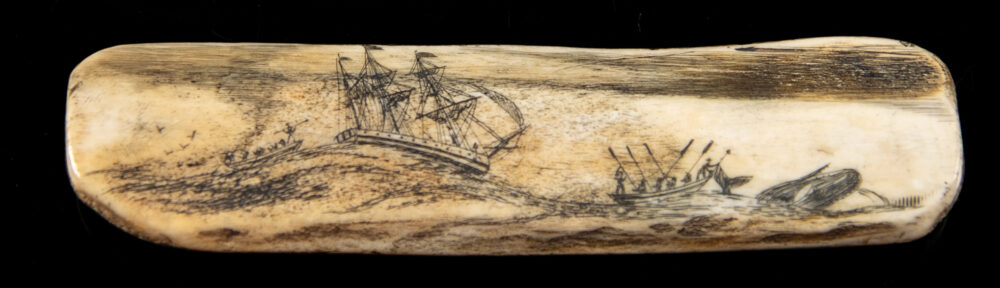
Reading Gills’ article was mostly me reacting “oh right,” “that’s true,” “that’s fair,” “interesting, I share the same sentiments.” I was more in awe about the evolution of sea exploration than the studies themselves, how it went from “how to survive at sea” to “let’s explore more of the unknown.” It’s as if navigating the seas were just as treacherous as learning how to drive. But what fascinated me more is that writers and painters turned the ocean “into a place of spiritual and physical recreation… In an era when everything seemed to be in a state of becoming, (the ocean) represented the flow of life in ways that the land could not.” To me this means that the ocean became a literary device. For example, the ocean in Moana guides and lifts her spirits in her journey to Maui and Te Fiti. Metaphorically, in the Life of Pi, it both helps and threatens Pi with waves and storms. Then there’s a tiger, but even he is afraid of the water’s mysteries. Moana and Life of Pi are both works depicting the ocean playing different roles. It’s become a crucial literary device with cultural and symbolic significance.
Tag Archives: week 3
This article is an eye-opening for Moby-Dick.
After reading What ‘Moby Dick’ Means to Me, written by Philip Hoare, I discovered a lot of interesting points that needed to be addressed in this blog. The first point I want to make is how the writer mentioned Moby-Dick is not just a book, but rather how one interprets the text. Hoare wrote: “I didn’t know then what I do now: that “Moby-Dick” can be whatever you want it to be. It took me thirty years to discover what the book was—or what it was not.”. When I read this particular quote, it makes me ponder the possibilities of the book being more than just texts, and you have to pay really close attention to how these phrases create meanings. And when I first read this quote, I thought to myself: “Thirty years is probably a little bit of exaggeration”, but then it hit me, with a book being that size, thirty years is needed to be able to explore the possibilities of the meanings inside this book. The careful consideration and dedication were probably put into dissecting the true meaning of these texts. Another interesting question that caught my attention is when Hoare asks: “Could Melville have ever imagined that his book would travel so far, and find such unlikely readers?”. My answer to this question is probably not. The reason why I think of it this way is because I have learned that Melville was quite depressed during his time of writing because Moby-Dick was not the reader’s favorite as he thought it would be, and that hit him hard. My guess is that Meville accepts the idea of a book not being famous, but it is still one of his signature marks that he left behind for future generations. He accomplished finishing a book, and I believe he went out knowing that his work is still there even if he is gone for a long time. It will find its way to the readers, and even if it is not, then at least he wrote something that he himself believes he could write. I haven’t read the book yet, but after reading these articles for the past couple of weeks, I have to say that I am eager to read Moby Dick, and I am very excited to listen to our discussions about the book.
The Modern West: The Vast Sea
I have always viewed the ocean with such hesitancy, afraid of what the water might contain—but why exactly is that? That humans as a collective, have such a compelling fear towards this part of our world?
Perhaps because the ocean acts much like a beast as it roars recklessly—too close for comfort. Unlike the stars which are only a glimpse into the heavens, untouching in nature, unless we reach out to it, the ocean is willing and wanting to drag you into the depths of its underworld.
However, despite this fear, I have an unrelenting urge to understand its dark beauty as a reflection of my own. I’ve learned now that the fear that I’ve come to associate the ocean with is imaginative at most, a product of projected emotions towards something I can’t fully comprehend, so my own mind chooses to fill in the gaps.
“The human mind delights in grand visions of supernatural beings. And the sea is their very best medium, the only environment in which such giants . . . can be produced and developed.” (Jules Verne).
This monstrous scale of how big the ocean is, is quite terrifying. However, looking at the ocean from the lens of modern western culture, we can draw similarities to these collective feelings, that help us explain why we feel this way while simultaneously learning more about the ocean and ourselves.
The Western Front was initially characterized as dangerous, unfit for civilized life, and full of the unknown both good and bad–much like how people view the ocean. It wasn’t until man took that step into the wild that he was able to see the enriching qualities of what the land had to offer in terms of what we can extract from it and what we can extract from within ourselves by understanding the nature around us.
However, that’s not to say that we don’t have our own monsters inside us that the water reflects quite clearly back at us. Monsters that drive us to pursue and kill wonderful creatures to exchange for profit. Much like the west, the ocean is a wilderness of its own right—having been subjected to the same cruelties of the effects of industrialization.
Shifting the view of thinking about the land by understanding it as a part of us, humanizes it, and propels us away from that fear of the unknown.
No, I Am Not Paying $1 And Risk Forgetting to Cancel
As the title said, I’m not putting my information on a newspaper website just to gain access to content I can get in 30 other articles for free. But because I have to read this particular one, I had to do a super pro gamer move called “quick-scan” where the further I have to scroll down, the more I gamble if the next screenshot I take is after the next paragraph, something new, or if I’ve been screenshotting the same paragraph for the past 20 attempts!!!! I found this was efficient as the website would always block my access after 2 seconds or less of reading.
For the little I was able to read, it looked like Hoare grew a sort of appreciation for the book. After comparing it to Frankenstein and Wuthering Heights, he mentioned it was as if “it reads like something that was written before books were invented, yet it is utterly modern—pre–postmodern perhaps. It is part of its own prediction, as if it and its characters had been there all along, and had only been waiting to be written.” I found this particularly enticing: it’s a notoriously boring book on-par with two of the most known novels, written like a timeless artifact. Based on the latter sentence, it seemed the book was written with a mix of outlining and pantsing, which makes it an “experimental” narrative, as Melville possibly wrote with not much direction and clear direction simultaneously.
What Moby Dick Means To Me – W3
Hoare really makes a case to proving that Moby Dick is a hotshot of a book. I can immediately tell how passionate he is about it with every single word he uses to describe it. Simply calling it “good” seems a bit too simple, but I can’t necessarily judge it until I’ve obviously read it. His opening line is what really helped me form my initial opinion. “For years, ‘Moby-Dick’ defeated me.” I can already imagine not only the length of the book, but the boredom to get to me quickly in the midst of reading about a mutiny, a whale, and a dude named Ishmael. Even so, I think the way he puts Moby Dick on such a high horse pedestal sounds a little too far? Sure, a book can be life changing to this extent, but can I really expect this about Moby Dick?
Hoare mentions how “It’s barely a book at all. It’s more an act of transference, of ideas and evocations hung around the vast and unknowable shape of the whale…” and honestly, based off of my initial knowledge, I’d have to slightly disagree with that statement. A book is a book, and while a book could be different for someone else, it’s still something that tells a story. A story is already ideas, evocations, and unknowable to anyone but the author and intended audience. There’s no incorrect way to read something, but then again, why is a whale such a center part in the 1800’s? What’s missing other than sitting down and cracking the book open to dive right into the vast ocean? With the way Hoare speaks about it, I’m just sincerely hoping that the book really does knock my socks off. I’d kind of hate to be disappointed after being hyped up after reading his article. I hadn’t necessarily though about the book’s impact on others either, it just goes to show how lots of different pieces of literature stand the test of time.
“What Moby Dick Means To Me” week three response
To my mind, there are only two other works with which it bears comparison: Mary Shelley’s “Frankenstein” (1818), and Emily Brontë’s “Wuthering Heights” (1847). The former, in its own witness to one man’s obsessive interference with nature, was a direct influence on Melville, who acquired a copy on a visit to London in 1849, even as the whalish shades were beginning to swirl about in his imagination.
I want to talk about the section of the article, I talked about this in the last class with my group but this idea of studying nature and going to nature to heal isn’t a new idea, it’s just new to Americans. Melville’s response to the “American Scholar” is so funny to me but this idea of going into nature and finding yourself and going into nature to heal from something is not a new idea, the romantics have been teaching us the ways of going into nature and applying it to your pen.
Frankenstein by Mary Shelly is my all time favorite book and I honestly a huge inspiration to Moby Dick, a monster in the nature, going to hunt down the monster, and then learning during the journey. The monster will always be a reflection of some sorts. So as we learn about why Moby Dick was written, I have thought this the whole time so far of thinking how similar it was to Frankenstein and the romantic period. reading this, in the article was everything to me and made me feel validated.
What “Moby-Dick” Means to Me – Week 3 Response
For this week’s reading, I will be responding to “What ‘Moby-Dick’ Means to Me” by Phillip Hoare. I chose this reading specifically because, as a lot of us have mentioned, we either take little or renowned interest in Moby Dick, or have struggled to read it in the past. Despite this, we have all ended up in this class together, determined to get through the novel and understand it from a new perspective. In Hoare’s article, he refers to Moby Dick as “not a novel…barely a book at all.” I found this interesting, given that there are several definitions of what a “book” could be. Oftentimes, a book does not need to meet literary guidelines; it could be made up of the most sappy, stomach-flipping, agitating nonsense and still be cleared off the shelves. I compared Hoare’s first opinion of Moby Dick to those in our class; he claims the novel “defeated” him the first time around, and I feel as though our read through of the novel might result in the same for many of us.
Even so, the uniqueness of the novel is what inspires us, like Hoare, to come back and read it once more. Whether we are in it for the facts (real or imagined by Melville) about whaling, the homoerotic relationships created throughout the novel, the dangers of sailing the open sea, cannibalism, or much, much more, Moby Dick is only what we make it out to be. I believe this is why so many people fall short of enjoying or understanding the novel their first time around. Might it be from a lack of comprehension of what Melville discusses, or the boring length of the book and the chapters that draw on endlessly, if the reader is not picking up on certain parts of the novel and the individual uniqueness of each part, and how they all tie in together, then they are ultimately losing the whole purpose of reading the novel. No wonder it took Phillip Hoare practically 30 years to finally enjoy Moby Dick!
Thank you Futurama!
One of my first interactions with Moby Dick was years ago while I was watching an episode of Futurama. It was a retelling of Moby Dick but taking place in space with an intergalactic whale. I was probably around 11/12 and I thought this was one of the cooler episodes. The thing that stuck out to me the most was how dark the episode got. The character Leela was Captain Ahab in the retelling and her obsession got everyone eaten by the whale. In the end, she does conquer the whale by befriending it, but I assume the original story does not have the same kind ending.
Moby Dick has a huge cultural significance and it has been on my bucket list for a long time. This was always the book about whales and obsession to me, and there was a time where I tried to read it. It was intimidating and intriguing at the same time but I ultimately did not get far. Years later, I saw an opportunity to take a course dedicated to Moby Dick with a group of people to walk through this book together. Thinking of Moby Dick now, I associate it more with nature & power. This book is a play with the ocean as its stage. I can imagine the air and colors as I read it. I am excited to dive in and experience a piece of time that doesn’t really exist anymore. Moby Dick will always be the whale book to me due to my first associations, but I am looking forward to adding new ones as I continue reading.

The New Yorker Hypes up Moby Dick
Philip Hoare’s article, What “Moby Dick” Means to Me, is an excellent read that creates a sense of excitement and anticipation for reading Herman Melville’s epic. Beginning where many of us have been, Hoare takes us through the defeat and the disinterest young readers may experience when first attempting to read the experimental novel, beginning his article with “For years, “Moby-Dick” defeated me.” As he began to describe the sensation of watching the movie, of the building anticipation around his successful reading of the novel, it incited a curiosity within me.
Hoare, towards the tail end of the essay states, “Now, as I pick up “Moby-Dick” again, prompted by Philbrick’s provocative book, I’m reminded of a salutary notion: that the whales that inspired Melville were around long before us, and may, with luck, outlive us, too.” Exactly how large are these majestic, eternal creatures that spawned an entire industry and later the first American novel? According to Wikipedia, in Moby Dick Sperm Whales are said to get 90ft in length, with titular whale being the largest they had ever seen. Let’s guess that means it is around 100ft.
A school bus is roughly 35 feet long. This would put Moby Dick at 5ft shy of 3 school buses in length. If that’s hard to conceptualize – some of us have not been near a school bus for quite a few years – then consider the size of the average movie theater screen. They range from 45 to 65 ft in length. On the smaller side, that would mean that Moby Dick would roughly be 10ft longer than two movie theater screens. From that standpoint, this whale would certainly command the presence and obsession of any man.
Beyond the whale, as large as it is, there is the beautiful prose that the novel inspires from Hoare to consider. With lines in the article such as, “Few books are so filled with neologisms; it’s as if Melville were frustrated by language itself, and strove to burst out of its confines,” is it any wonder that this novel has inspired the imaginations and fear of the world over? I just picked up my hold on Philbrick’s Why Read Moby-Dick? from the San Diego Public Library system and I am incredibly excited to find even more reasons to look forward to this semester’s central story.

American Imperialism
“A century and a half after it first played out, Ahab’s wanton chase was evoked in the ‘war on terror,’ and the attempts to pursue an apparently uncatchable foe, even as it sourced an epic designed to reflect America’s first imperial venture – the getting of the oil that lit and lubricated the Western world.” This quote from Hoare’s “What ‘Moby-Dick’ Means to Me” immediately put into perspective the cultural relevance this novel will have on us today. It also gave me a concrete example of why this is considered The American Novel. We were just discussing in class how the whaling industry was a way for the United States to spread it’s influence in it’s conquest of the ocean; since that industry died out, we’ve used different industries (mainly the military) to perpetuate our global influence. This aspect is really interesting to me because it is one of the most American things I can think of, constantly finding reasons and/or scapegoats to maintain our influence and control across the world.
https://www.thenewscholar.nl/index.php/tns/article/download/mobydick/mobydick/385 I found this essay comparing characters and events from Moby Dick to political figures and their missions during the campaign for the War on Terror (don’t read past the second page if you don’t want to get spoiled). Another quick thing I want to add is this quote Hoare highlights: “Does the Whale’s Magnitude Diminish? – Will He Perish?” Taking into account the relation to American imperialism, this quote could be a questioning of whether our country’s obsession with dominance will ever go away.