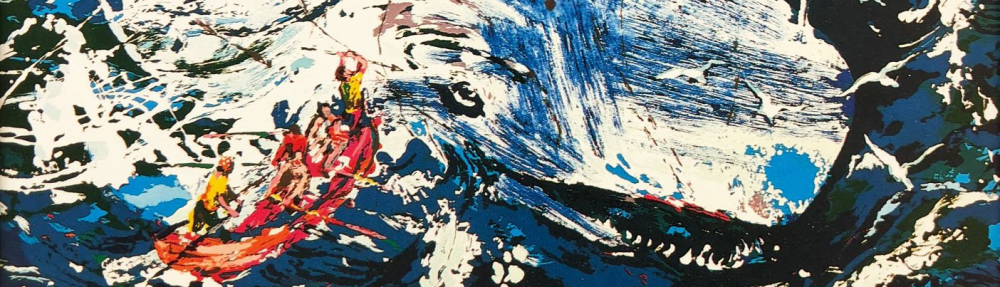
Whales have been a long obsession of humanity beginning with some of the most influential written works. For what seems like forever, whales had been tied with viciousness as a natural extension of their size. Biblical stories describe the Levianthan, aka the whale, as “the piercing serpent…that crooked serpent…the dragon of the sea” (Isaiah). Yet, in modern times whales are culturally tied with ideas of serenity and natural beauty, a completely different viewpoint from the former. Where did this initial idea about whales come from and how has it changed to what we think of today? The one constant throughout this tale is that whales are a living embodiment of nature at its most wild, its power inspiring people into the storytelling that is seen throughout ‘Etymology & Extracts’. Melville captures our own history of obsession with power through the overrepresentation of the largest living creature in our culture. The whale is the size of thousands of men in one, representing entire armies inside of one creature. Humans have a complicated relationship with power, it has led to violence more often than not, and the whale is the most powerful, and logically would be the most capable of violence. Humans have reflected their own ability to do violence onto the whale. As Melville whips up every whale reference there is simultaneously a call out to evil & power, both human constructions that explain the long history of violence engrained within us. This creature has been a projection, and as we slowly shift away from violence being a daily commonality, the whale has been rebranded in our culture as a symbol of peace and the greatness of nature. I am excited to see how Melville projects human qualities onto Moby Dick, starting with giving the whale a name in the novel. I personally never realized how far back whales have been a cultural influence for people, it’s been an icon for many different human experiences, but overall it is its power that has continuously inspired.
Moby-Dick
ECL 522: Fall 2025. Professor Pressman