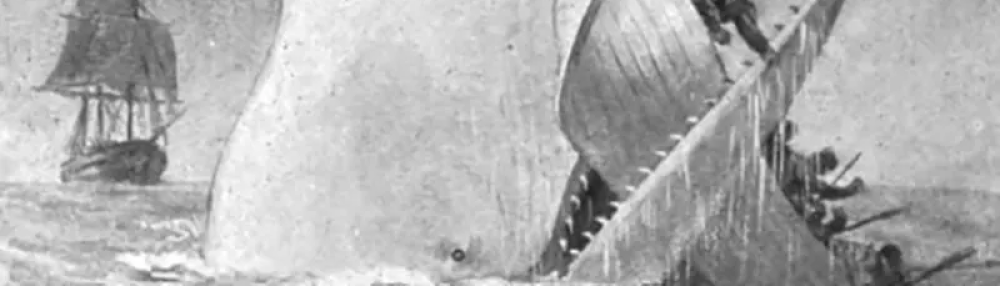
In Chapter 24, “The Advocate”, Ishmael narrates by defending the honor and dignity of whaling and argues that they deserve more respect from society ideals and see whaling as heroic . When Melville writes, “The dignity of our calling the very heavens attest. Cetus is a constellation of the South!” (122), he uses this imagery for us to see on how the whale and the people who hunt it hold like a cosmic/ divine importance. The whale isn’t just an animal, but as something powerful and important. The whales, in many cultures, often seen as divine, sacred and spiritual beings, and symbolized as creation, wisdom and strength. Melville is indicating that honor can exist in difficult, physical labor, and not just by high societal nobles, but as heroic, ” I account that man more honorable than that great captain of antiquity who boasted of taking as many walled towns,”(122). I believe Melville wants the readers (us) to see manual labor with admiration and respect and not seen as a societal norm. I feel that Melville wants for us to see the concepts on how America wanted to be demonstrated as a country with being defined as class and greatness.
So far this chapter was my favorite. Not going to lie, but the book was making me mad and confused all day after re-reading every sentences with the whole different dialect of old English.
You are starting to develop interpretive claims from the text, as here: “I believe Melville wants the readers (us) to see manual labor with admiration”. This is good work, and I would like to see you push further. Why is the not asking us to admire a manual labor? And any type of manual labor in particular? What is at stake in this focus and in this interpretation?
Hi Darian, I think this idea of how we view manual labor is important. Although this was written some 200 years ago, we still have similar views on manual labor. With the age of technology we are progressing into, and how the job market is affected by this tech, the importance of manual labor increases. One thing I’d be interested in is how military service was seen at the time–is it another manual labor job, or is it held in high regard
Hello Darian, I like how you pointed out Melville’s use of imagery, which connects whaling to being this divine thing to do. It is understandable that the work of whalers gets hyped up and recognized because of their great deal of hard work and bravery, showing them as heroic figures. In a way, Melville is also reminding readers that greatness can also come from those who are least expected, showing that effort and resilience play a much bigger role in it rather than social status.
Hello Darian! I found your thoughts on how the little people do most of the work, although I would argue both have their roles. I also like how you pointed out how whales are considered, or described as devine. Overall great work!
Hi Darian! I enjoyed reading your thoughts, I wrote about something similar a few weeks ago too! I like how you connected Ishmael’s defense of whaling to larger ideas about divinity in labor. Ishmael seems to elevate physical work to something almost like sacred. I think this also ties in to how the novel blurs the lines between spiritual and material. I like how you mentioned America’s class ideals, I would love to hear more of your ideas about that. Thank you for sharing!