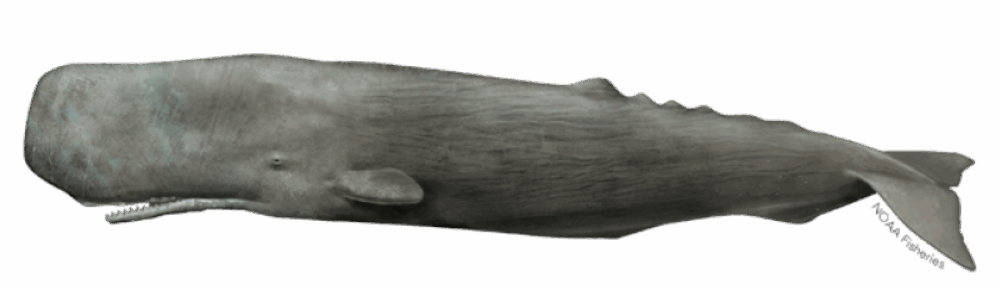
I felt very uncomfortable and tense at the end of chapter 74, where the whalers continue to carve the teeth out of the whale’s hung body by the starboard. ” This whale is not dead; he is only dispirited, out of sorts, perhaps;… so supine, that the hinges of his jaw have relaxed, leaving him there in that ungainly sort of plight…With a keen cutting spade, Queequeq lances the gums; then the jaw is lashed right down to the ringbolts…The jaw is afterwards sawn into slabs, and piled away like joists for building houses.(Melville 363)” Prior to this chapter, we already get a sense of the body’s current state and its passing of time while hung on the starboard. Interestingly, I think that the nauseating representation of its carcass and remains is critical to how Ishmael internally feels himself; after whaling, what will physically become of him? Through all the trauma and tragedies on the sea, while he is desensitized to physical danger, he becomes more and more receptively sensitive about stagnancy and the stillness of life. Because he is so wired to constantly defend the boat and maintain the lines, he fears of having no agency after whaling, equating to him being disgusted about his own self; and he has to come to terms of being human while he watches the whale’s remains, limb by limb, becoming absolute nothingness. Overall, as his journey comes into a close with the blade hitting the whale’s bone, he realizes his mortality and cannot hide in abstract stillness or the liminal space the sea offers him.
Moby-Dick
ECL 522: Fall 2025. Professor Pressman
This is an interesting reading of Ishmael’s feelings, and I’d like to see you ground it in the text because I am not sure that this really just about Ishmael’s feelings… or is the novel trying to make the reader feel queasy about the goriness and violence of this entire activity?
Your insight into Chapter 74 is strong, it shows how the whale’s disintegration becomes a reflection of Ishmael’s own fears about what he might become after the voyage. The stillness of the carcass forces him to confront the kind of stagnancy he’s been avoiding through constant motion and danger. By the time the blade hits bone, he can’t escape the reminder of his