Ralph Waldo Emerson : The American Scholar

If I am being completely honest, reading this essay was a bit difficult for me. The length and the way of writing caused the words to sort of jumble together on my first few attempts and I wasn’t able to finish it the first few times. However, after reading it again and actually making it to the end, I thank I have developed a bit more of an understanding for what Emerson was saying through this.

My main takeaway might not be what his main point was, as I am still unsure of what exactly it was, but what stood out to me the most throughout this reading was his focus on unity. He constantly referenced the way in which society is broken up, citing that as the reason for division within communities. He says that we do have a common ground and roots, yet we tend to stay divided in separate groups. One of his main arguments throughout this essay, I think, is the argument for the complete unity of the country. He says that through individuals creating and thinking and passing along information, we have the potential to unite through scholarship.

Something I noticed while reading this was how Emerson seems to reference one of Henry David Thoreau’s ideologies, which is that of the Three Chairs. I am not extremely familiar with Emerson and his inspirations, but regardless he did bring up the same idea as Thoreau. Thoreau’s Three Chairs references his belief that in order to be a truly be a well socialized and well thought out individual, it is important to embrace and act upon different methods of reflection. The chairs represent, one for solitude, two for friendship, and three for society. Thoreau emphasizes just how important each of these ‘chairs’ are and within this essay, Emerson does too. Emerson’s main focus is on the unity of society as a whole and how important doing things for your community is (chair three), but he also describes just how important the ideas of others (chair two) through more individualized groups and literature and the practice of solitude and self reflection (chair one) are. He speaks a lot about how important it is for a scholar to be introverted in a sense. He believes that the only true important thoughts come from a place of self reflection and not from the inspiration of others.

Once again, I am not sure how accurate what I pulled from the essay was, but this is what I understood of it!

The Mind’s Eye in The American Scholar

This week’s reading of The American Scholar by Ralph Waldo Emerson was particularly insightful. Emerson’s take of the first impression on the mind, nature, is reminiscent of the romantic era in literature. Emerson believes it is a necessity to open the mind’s-eye to nature: “What is nature to him? There is never a beginning, there is never an end, to the inexplicable this web of God, but always circular power returning into itself. Therein it resembles his own spirit, whose beginning, whose ending, he never can find,— so entire, so boundless” (Emerson). Emerson’s describes this interconnectedness as a circle, it’s significance being that nature and knowledge are inexhaustible. A core characteristic of romanticism is the fixation on nature as a healing power. Similarly, Emerson treats nature as a moral guide; natural beauty is accompanied by moments of reflection and truth.

Emerson’s continues in this excerpt with vivid imagery: “ “Far, too, as her splendors shine, system on system shooting like rays, upward, downward, without centre, without circumference,— in the mass and in the particle, nature hastens to render account of herself to the mind.” Like neurons firing in the brain, nature is constantly having a dialogue with itself. Pieces of information transcends time and space and we are but at it’s mercy. Later on he says, “So much of nature as he is ignorant of, so much of his own mind does he not yet possess.” In other words, the invitation of nature as a source of knowledge can bring forth self-discovery. From a more contemporary standpoint this can also encourage us to reach beyond our own borders. Cultures around the world are subjects of their landscapes, understanding it’s citizens can help us create a more unified version of society and ourselves. 

Intro

Hello folks! My name is Martin Arambula! I am 4th year transfer student from Los Angeles. This is my last semester at SDSU. I’ve really enjoyed my time in San Diego–mostly the weather. I started off as a criminal justice major at my CC but after taking English classes I decided to pursue that instead. I’ve always loved story and writing, I feel that so much can be learned about people based off of the stories that we tell each other. I like all genre’s but as of late I’ve felt myself drawn more to history and fiction. Over the summer, I spent my time reading graphic novels and the Dune series.

I am really excited to unravel and dive in-to the novel “Moby Dick.” I am also looking forward to the on-going conversation we will be having over the course of the next few weeks.

CjYKMlNuYXBjaGF0LzEzLjIyLjAuNjEgKGlQaG9uZTE2LDE7IGlPUyAxOC4xLjE7IGd6aXApIAE=

Entry on Gilbert King’s Excerpt

Between Emmerson and King’s excerpts, Gilbert King’s seemed the most interesting to me. I have always been more drawn to the horrific side of history that which some of our society’s literature is based on. Seeing as I am coming into this class having NOT read Moby Dick prior, the mention of cannibalism drew me in.

Being based on the sunken ship Essex, Herman Melville took the tragedy as an opportunity to write about the horrors of the whaling industry. Given King’s approach, both literal and hypothetical, it is difficult to imagine how a person’s mind and body would react given such circumstances. Melville’s book goes in depth about the darker side of human nature, and while King referred to a particular figure within the literature as a “thing,” I could not help but produce multiple instances to which said “thing” could be applied. The “thing” could be the whale, the ship, the sea, or man themselves, but considering a darker, more metaphysical approach, I would like to consider that he is talking about human nature. Human nature as we know it ranges through a wide variety of behavior, but being pushed to the limits as the ship’s crew is in Moby Dick, the “thing” that King talks of could very well the human nature pushed to its limits. Starved, scared, and desperate, the surviving men turn to cannibalism to stay alive. While skimming other’s posts, I could tell that some thought the same thing as I did; given a hypothetical question, we would never turn to it, but in reality, there is no saying what we would do to survive, or the “thing” that we would become to do so.

Emerson and King – Honest Review

I’m going to be honest and say that it probably wasn’t the best to be trying to write about this at around 10:30 PM, but I’m going to go ahead and do my best to break down what I understand and what I’m gathering from both. I’ll start with King purely because it is shorter. Reading about the tale that inspired Melville’s book in the first place doesn’t strike me as entirely horrifying. While it is a scary and unfortunate circumstance that occurred many many years ago, I do not find myself surprised by what has occurred. Human nature is often driven to limits and a breaking point, and it is only “natural” for dire circumstances to occur. Cannibalism thanks to extreme starvation from a lack of available/nutritious food? Yikes! I find the sort of questions that are phrased in a “Would you do this if you had to?” when it comes to scenarios like this are a little unreliable. I personally would obviously never condone or commit the act itself, but in a desperate attempt, I wouldn’t really know how my mind would justify it. If Moby Dick is actually based off of this retelling that includes the horrific nature of whaling back in the day, color me intrigued as boring as I thought the book would be based off of its initial length.

In terms of Emerson’s essay, I like how he puts this specific quote into perspective. “Man is thus metamorphosed into a thing, into many things.” The word thing seems entirely impersonal, a thing could be anything, as repetitive as that sounds. Man itself has evolved, made many advancements, and continues to strive for greater things to this day (at least I hope.) It is no surprise that it makes me think about the intriguing way he frames the way someone thinks about themselves. What purpose does someone have unless it is shaped by the very “things” around them? Ultimately, I do think his essay is something that strives to tell someone to move into action. There are a lot of phrases around there that say the world does not revolve around oneself, but even if it doesn’t, why not take knowledgeable advantages?

Emerson & King

Waking up at 6:30am to read Emerson’s ,” The American Scholar”, (TWICE) and I still don’t understand it, sadly. What I got from it was a little bit on how to be the perfect “American scholar” is the past (books), which probably means having the right understanding and be yourself because you won’t get to experience life in order to have.

Emerson kind of mentioned on how you can find knowledge by learning the real truth with books and how they are basically the key to understand life fully, “Books are the best type of the influence of the past, and perhaps we shall get at the truth,–learn the amount of this influence more conveniently,–by considering their value alone.” (Emerson) I agree with this concept becasue I actually do agree on how books open up more creative minds and ideas with a full experience on what the book mentions or the type of genre it is. “Books are written on it by thinkers, not by Man Thinking; by men of talent, that is, who start wrong, who set out from accepted dogmas, not from their own sight of principles,” this quote got to me, no words.

“There is then creative reading as well as creative writing. When the mind is braced by labor and invention, the page of whatever book we read becomes luminous with manifold allusion. ” (Emerson), this quote caught my interest because I majored in Creative Writing (even got a certificate) and enjoy creative writing because it I think creativity can expand the mind to it protentional of creativity when it comes to writing.

For some odd reason, I found King’s article interesting, but sad at the same time. The fact that those men had to endure for months in the sea and their only way to survive was cannibalism, its heartbreaking and the fact that they had to choose who to eat was just horrible to read about that. It reminded me about the Uruguayan rugby team whose airplane crashed into the Andes mountains and endured so much a traumatic event and also to recourse to cannibalism as well. To know that Herman Melville was inspired by this true event makes it more interesting, nerve-wrecking and fully grasp the need on wanting to read it now and know what the deal is with Moby Dick. It still was a bit hard to understand so hopefully can someone help me understand it a bit more in class.

Emerson’s “The American Scholar”

To talk about Emerson’s “The American Scholar” was a fun read, in a way to see how one brain works and thinks. This idea of what it means to be a man scholar, I want to focus the word man because that is all he talks about in this essay is about man, man thinker, man farmer. There was one part of the text where he talk about women and how men need women which was nice but most of the time he talked about men. Back to the idea or structure of being a scholar, it was very interesting to hear about this guideline almost because it makes me think do I agree or do I not, but he did have some great points that did have me hooked. “who can doubt, that poetry will revive and lead in a new age” love this, totally agree with this idea and think it is somewhat true, i think for it’s time it really sticks out because in a way he is right, poetry did lead into a new age of thinking and literature. He talked a lot about Shakespeare influence which in this statement that I just quoted, his influence has lead a new age of poetry such has T.S. Eliot.

His ideas of being a scholar were fun, Man Thinking which is just a bookworm, books are the mans strongest tool then he says that if there is no book a man will have a resource, which I mean yeah. Then one could argue that the book is the resource. the scholar should be free and brave to collect all this information and write freely from the brain. Many aspects of being a scholar and where it can take you almost. These thinking skills give the man soul and thats the one thing man values the most, is an active soul.

This easy was a little hard to follow but after a while I feel like I started to understand him and his thoughts, his idea and they way he portrays them, make them seem factual. I feel almost to really take in what he is saying and apply it to my way of being a scholar.

Emerson and King

Of both readings, Emerson’s was most challenging. However, I think I was still able to pick up what Emerson was laying down. Emerson points out that the American scholar’s first influence is nature. Nature draws curiosity and inspires scholars to be hungry for knowledge and search for the truth. Emerson also points out that books are thee most important thing to influence others. He writes “Each age, it is found, must write its own books; or rather, each generation for the next succeeding. The books of an older period will not fit this.” (Paragraph 14). Each generation has their own books that reflect their beliefs and values, so when the readers read the books of their time, they can continue to get inspired and eventually write their own. Something that stood out to me that Emerson wrote was “The world is nothing, the man is all…” Man is who brings curiosity into the world and also takes knowledge from it. By challenging nature and books, scholars gain their knowledge and experience. The soul in ‘man’ is what inspires us to look for the truth and answers.

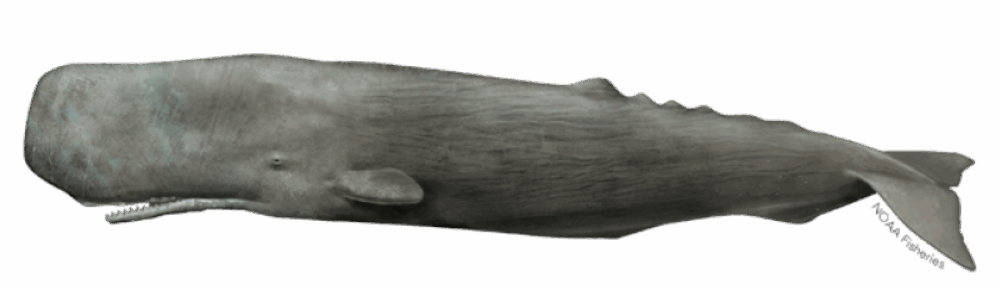
After reading King’s article, it made me wonder if Melville included any cannibalism in Moby Dick. Now, I am even more interested in reading the book to see how the real life incident shaped this story. I found King’s article both terrifying and interesting. Terrifying— because I am not very fond of the ocean. The ocean is very large plus it has a huge number of animals, both discovered and undiscovered. And interesting— because I enjoyed the history aspect of the article. In his article, King mentions that during the real life incident of the Essex being attacked, the first mate spotted a 85 feet whale. This is absolutely horrifying and not something I would like to imagine. The captain of the ship, Captain George Pollard and his men were attacked by a sperm whale and had spent 92 days without food or water, and these men eventually resulted to cannibalism. During the Captain’s journey though, they had come across an island but decided to keep moving because they said it was filled with cannibals. I found this to be pretty ironic and slightly amusing because they became exactly what they didn’t want to encounter.

Emerson’s “The American Scholar”

I’m extremely familiar with Emerson’s work due to his proximity to Louisa May Alcott in her childhood. I did my honors thesis on Alcott’s Transcendentalist background and upbringing, so a majority of Emerson’s either subtle or sometimes direct references to nature and Transcendentalism took me back to the labor of love that was my 25-page paper. It was interesting to read this specific essay and reflect on how his perspective is almost openly mirrored in Alcott’s Little Women, Flower Fables, and her personal letters as both an American author and American scholar.

Emerson points to nature as the first teacher of the American scholar, urging the audience, which extends beyond just Martin Van Buren, to return to the land to be re-inspired and literally touch grass. One of my favorite things about Emerson, and thus Alcott, is how reminiscent the writing is—I can see Emerson looking out his window at Bostonian elms or bluestem grass, recognizing the individuality of nature, and discovering that a return to these central elements is the key to correcting “the degenerate state” (Emerson). I know we discussed the historical context during one of our other sessions, but Emerson’s letter is such a time capsule to the fears that the Industrial Revolution brought. There are so many instances where Emerson warns against a copy-and-paste American scholar, who thinks what others think as if on a mass-produced conveyor belt of national intellect.

Emerson and King

I initially skimmed through Emerson’s text, then had about three headaches and took a couple Tylenol just to understand at least two points: American scholars should be thirsty for knowledge and form their own identity instead of copying others. I am probably on my 4th read before passing out again, and that’s still all I can figure out.

About the two points I did find, I… agree? I don’t really know what else to say because they seem straightforward enough. You’re not a scholar when you don’t want to learn, and America is known for using other cultures and blending them, which I guess is a tradition of its own. I don’t know, I came here because I was gaslit into thinking I’d meet Spider-Man when I was about to turn 8.

At the very least I can comprehend King’s article and, I’m probably messed up for this, but I find it amusing that they became cannibals after trying to avoid islands of them. I guess it made sense when King included “Cannibalism in the most dire of circumstances, it was reasoned, was a custom of the sea,” but it’s still a terrifying thought. There goes any hope of ridding my thalassophobia.